
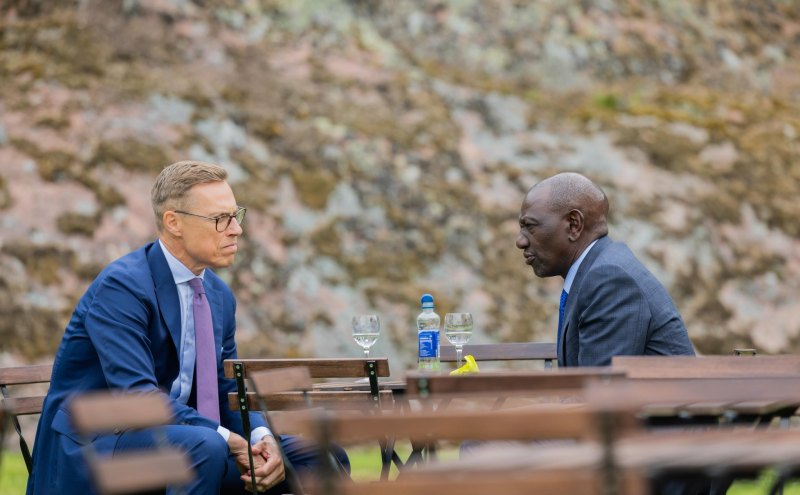
Finland has thrown its weight behind Kenya’s campaign for reforms at the United Nations Security Council.
The endorsement came during President William Ruto’s two-day reciprocal state visit to Finland on Wednesday.
Finland President Alexander Stubb described Kenya as an emerging global voice whose role in shaping international affairs is becoming increasingly significant.
The two
leaders also projected a shared commitment to reforming global governance
institutions and strengthening the role of developing countries in addressing
international challenges.
The support is
particularly significant as President Ruto prepares to participate in the G7
Summit in France, where he is expected to advance Africa’s long-standing demand
for reforms of both the UN system and the international financial architecture.
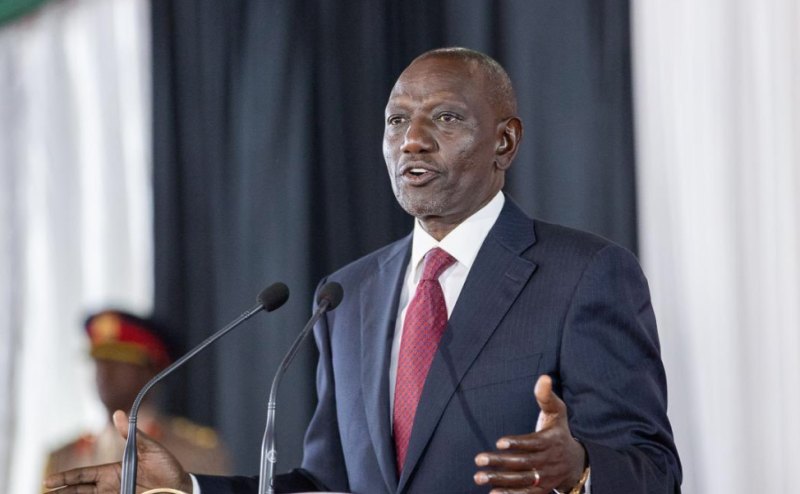
Speaking in
Helsinki, Ruto welcomed Finland’s support for changes aimed at making the
Security Council more representative of today’s
global realities.
“I thank
Finland for its principled support for the United Nations Security Council
reforms,” Ruto said, “and we reiterate the need for a more representative and
equitable Security Council, including fair representation for Africa in both
permanent and non-permanent categories of membership.”
The President
argued that existing global institutions no longer adequately reflect the
political and economic realities of the 21st century, particularly the growing
influence and aspirations of developing countries.
Asked whether
the world still needed the United Nations in its current form, Ruto was
unequivocal.
“Yes. We do
not have an option,” he said.
But he was
equally clear that reforms were necessary.
“We need
reform. It is imperative, and it is not tenable for us to continue with it as
it is. It is not just or fair,” he added.
The comments
reflect a broader African position that has gained momentum in recent years as
countries on the continent push for greater representation in global
decision-making structures.
Africa, home
to more than 1.4 billion people and 54 UN member states, lacks permanent
representation on the Security Council despite accounting for a significant
share of the issues discussed by the body.
Kenya has been
among the leading voices advocating implementation of the Ezulwini Consensus
and the Sirte Declaration, which call for Africa to be allocated at least two
permanent seats and five non-permanent seats on a reformed Security Council.
President
Stubb not only backed the reform agenda but also offered a notable assessment
of Kenya’s growing international influence.
“Kenya is an
active and influential player in promoting stability and economic development
both regionally and globally. It is very much a middle power, a voice that
needs to be heard around the globe,” Stubb said.
The Finnish
leader’s remarks — as he did in Nairobi — represent a significant diplomatic
endorsement of Kenya’s evolving foreign policy role.
Over the past
several years, Nairobi has increasingly positioned itself as a regional and
continental diplomatic actor, playing prominent roles in peace efforts in Sudan
and South Sudan, climate diplomacy, African Union reform discussions and
international security initiatives, including the multinational security
mission in Haiti.
Stubb pointed
to Kenya’s growing engagement on the international stage.
“I am
particularly happy the President has just visited Belgium to meet with European
institutions and then Norway and Finland before he heads to a very important G7
meeting in France. This is Kenyan impact at its best,” he said.
The Finnish
President said both countries share a commitment to multilateralism and the
rules-based international order at a time when geopolitical tensions and
conflicts are testing international institutions.
“Kenya and
Finland are both strong supporters of multilateralism and the rules-based
international order. We both work to bring the fight against climate change
more strongly to the global agenda,” he said.
He further
acknowledged Kenya’s role in championing Africa’s position on global governance
reforms.
“Kenya is a
strong voice for Africa in efforts to reform and strengthen the multilateral
system. I look forward to continuing this cooperation,” Stubb added.
The
discussions in Helsinki fit into Ruto’s diplomatic campaign aimed at amplifying
Africa’s voice in international institutions.
“I am
encouraged that President Stubb, in his reflection on the changing global
order, recognises Kenya among the emerging countries helping to shape a more
inclusive international system,” he said.
“This
perspective reinforces our shared belief that developing nations must play a
greater role in addressing global challenges and shaping global solutions.”
He added that
Kenya and Finland had agreed that Africa should no longer be viewed merely as a
recipient of international initiatives but as an equal partner in crafting
responses to global challenges.
The
discussions came ahead of the G7 Summit on June
15-17, where Ruto is expected to use his invitation to
press for reforms of the international financial system, including issues
related to debt, climate financing and access to development funding for
emerging economies.
The summit is
expected to provide Kenya with another platform to advance Africa’s call for a
fairer international order, one in which the continent enjoys greater
representation not only at the UN but also in global financial institutions
that shape economic outcomes for developing countries.