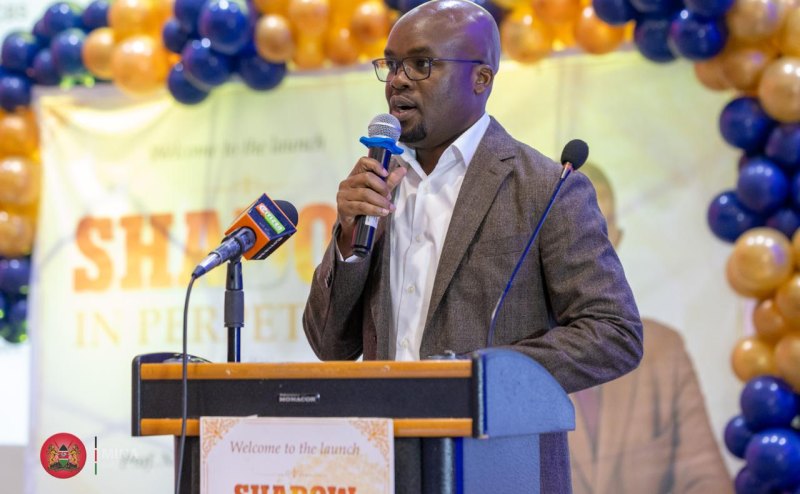
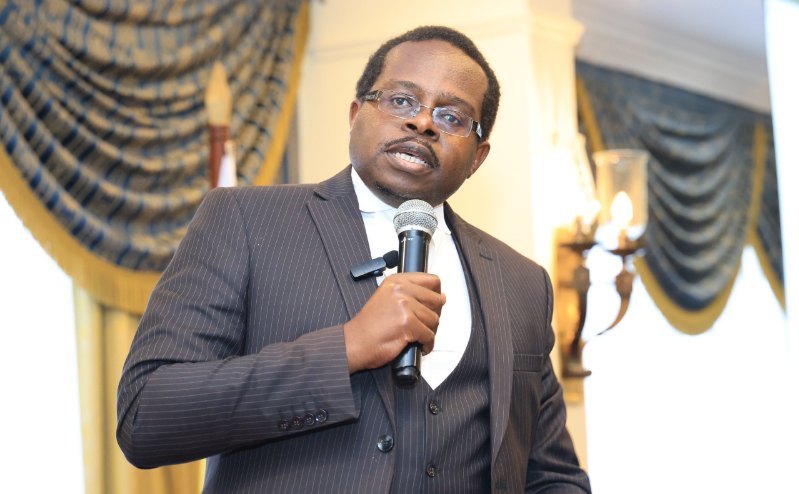
 LSK President Charles Kanjama/X
Law Society of Kenya (LSK) President Charles Kanjama has cautioned employers against implementing National Social Security Fund (NSSF) deductions under the contested NSSF Act, 2013.
In a statement, Kanjama warned that unlawful payroll deductions could expose employers to legal liability from employees.
The NSSF Act, 2013, changed the contribution system from a fixed monthly contribution of about Sh200 by both employers and employees to a salary-based structure in which contributions are calculated as a percentage of earnings under a tiered system.
The dispute over the Act has progressed through several courts. It was first heard at the Employment and Labour Relations Court, which declared the law unconstitutional. The matter was then taken to the Court of Appeal, which issued rulings allowing the law’s implementation at different stages.
The case later reached the Supreme Court, which did not make a final determination on the law’s constitutionality but referred key issues back to the Court of Appeal for further hearing.
On May 29, 2026, the Court of Appeal declined to temporarily suspend the Employment and Labour Relations Court’s 2022 decision declaring the NSSF Act, 2013, unconstitutional. The court found that the applicants had not met the legal threshold for a stay of execution pending appeal.
With the appeal still pending, various institutions have issued differing interpretations and guidance on compliance.
According to Kanjama, employers are bound by existing court orders and cannot rely on discretion to continue deductions under a law whose validity remains under judicial consideration.
He argued that where a law has been declared unconstitutional, employers must either revert to the previous statutory framework or obtain explicit consent from employees before making deductions beyond the legally permitted threshold.
“It is not open to employers to unilaterally decide to apply rates under a law that has been declared unconstitutional,” Kanjama stated, insisting that compliance must follow court determinations.
He further warned that any employer who proceeds with deductions not backed by law, contract, a collective bargaining agreement, or employee consent would be liable to refund the deducted sums.
“For clarity, any employer who makes unlawful deductions on an employee’s payslip is liable to the employee under both law and contract for the deducted amount,” he said, adding that only statutory deductions or those arising from court orders are enforceable without consent.
The LSK president was responding to guidance reportedly issued by the Federation of Kenya Employers (FKE), which advised employers to continue applying contribution rates under the NSSF Act, 2013, while litigation over the law remains unresolved in the Court of Appeal.
"FKE advises members that since the matter has not been conclusively determined in the Court of Appeal, it would be prudent for them to continue deducting and remitting the new rates prescribed by the NSSF Act, 2013," the statement said.
FKE argued that the legal uncertainty surrounding the NSSF regime had left employers in a difficult position, caught between the previous flat-rate contributions and the enhanced tiered structure introduced under the 2013 law.
The employer body further stated that continued deductions under the 2013 framework would preserve pension savings and avoid disruptions to payroll systems while awaiting a final court determination.
However, Kanjama disputed this position, insisting that employers should revert to the old rates unless there is a valid court order directing otherwise.
"Employers must revert to the old rates unless they secure their employees' consent, or they set aside the prevailing court order," he stated.