![KRA annual revenue performance [Sh trn]](https://cdn.radioafrica.digital/image/2026/05/d42dce57-5b4a-43e3-b5f3-39749a023c11.jpeg)
KRA annual revenue performance [Sh trn]
KRA has recorded steady growth in revenue collection over the last six financial years,
18d agoWILLIAM WANYOIKEInfographics
Most people imagine customs as the moment someone opens your container and inspects the contents but the reality is far more sophisticated.


Audio By Vocalize
The smell of the ocean hits you before anything else, and
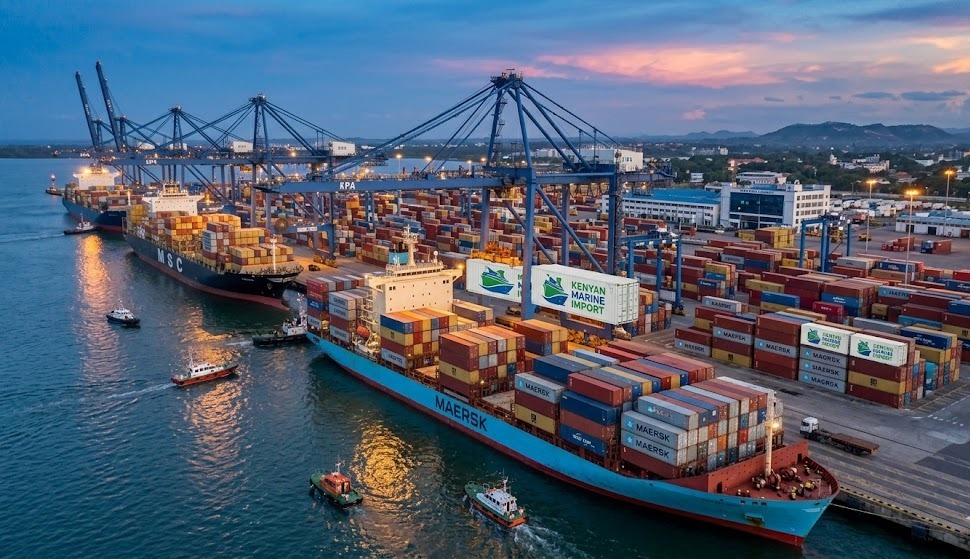
then the scale of it does. Cranes, the height of buildings. Containers stacked
like Lego bricks in every direction. Vessels from Colombo, Dubai, Rotterdam,
and Shanghai are idling at berth. The Port of Mombasa does not whisper its
importance — it announces it.
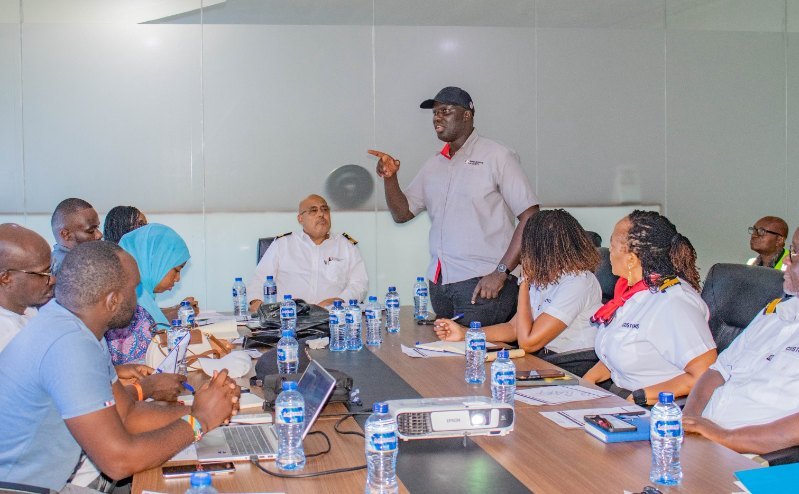
I was among a group of journalists who travelled from
Nairobi to Mombasa for a two-day media immersion programme on Customs and Trade
Facilitation, hosted by the Kenya Revenue Authority.
What I expected was a masterclass in tax policy and revenue
numbers. What I got was something much more human, a front-row seat to one of
the most complex, consequential, and quietly heroic operations in East Africa.
Where the economy begins
Long before goods land on a supermarket shelf in Nairobi, a
hardware store in Kampala, or a hospital in Kigali, they pass through here. The
Port of Mombasa handles over 90 per cent of Kenya’s seaborne trade and serves
as the primary gateway for six landlocked neighbours — Uganda, Rwanda, Burundi,
the DRC, South Sudan, and Ethiopia. It operates 24 hours a day, seven days a
week, and connects directly to more than 80 ports worldwide.
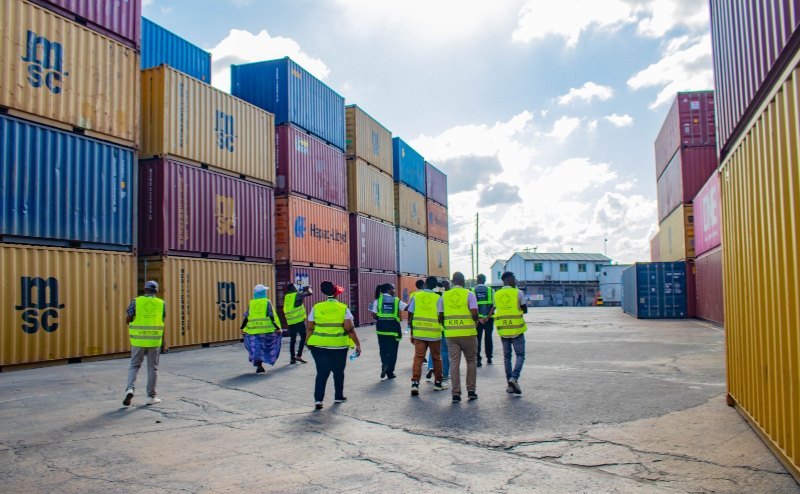
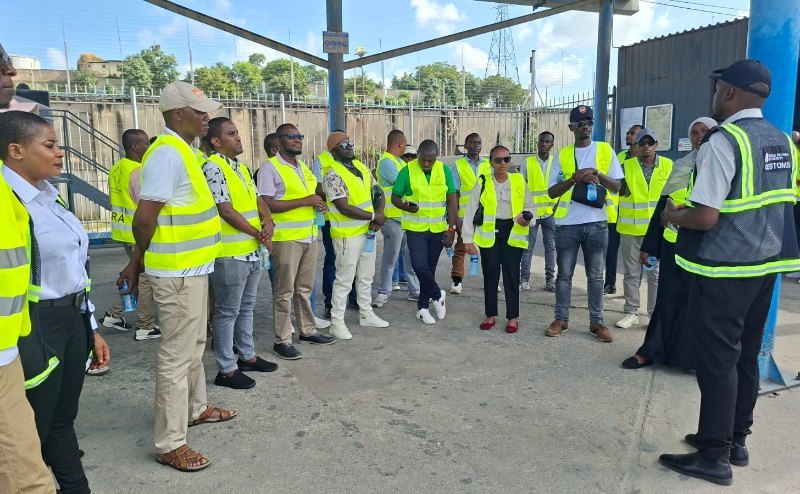
Standing on the port grounds during our guided tour, looking
out at Container Terminal 2 — the newer, larger terminal at Kipevu connected
directly to the Standard Gauge Railway — I began to understand what it means to
call this place a regional gateway.
This is not a metaphor. For much of East and Central Africa,
Mombasa is the point where the global economy becomes the local one.
KRA’s Customs and Border Control Department sits at the very
centre of that transaction.
The people behind the process
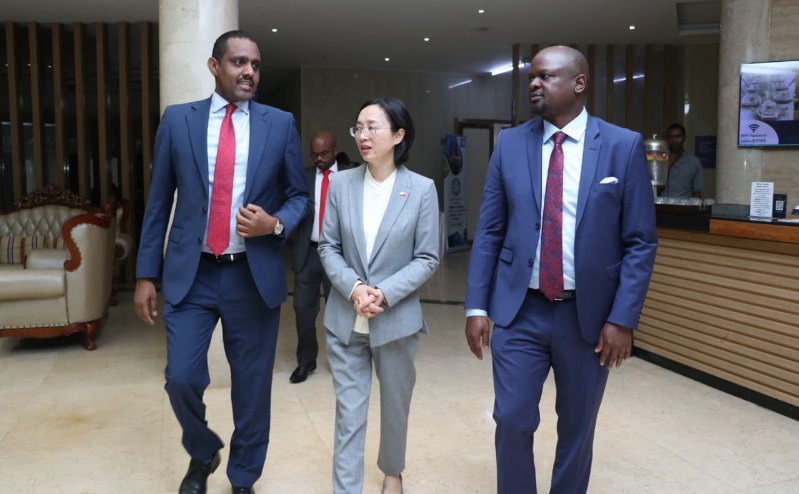
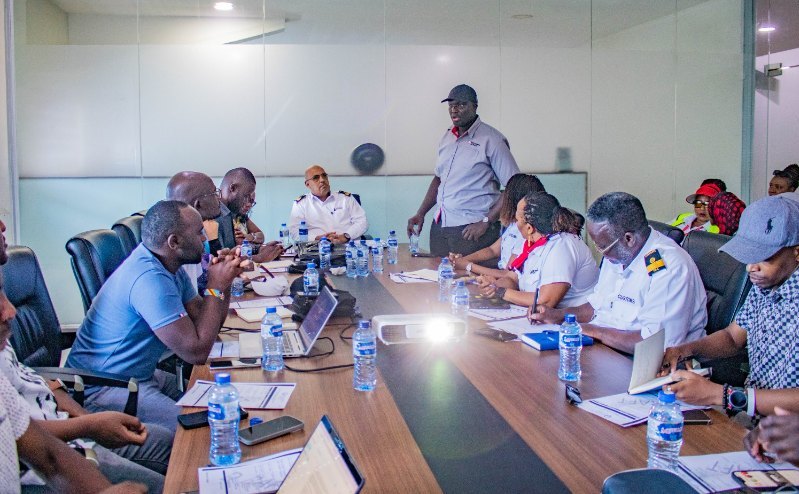
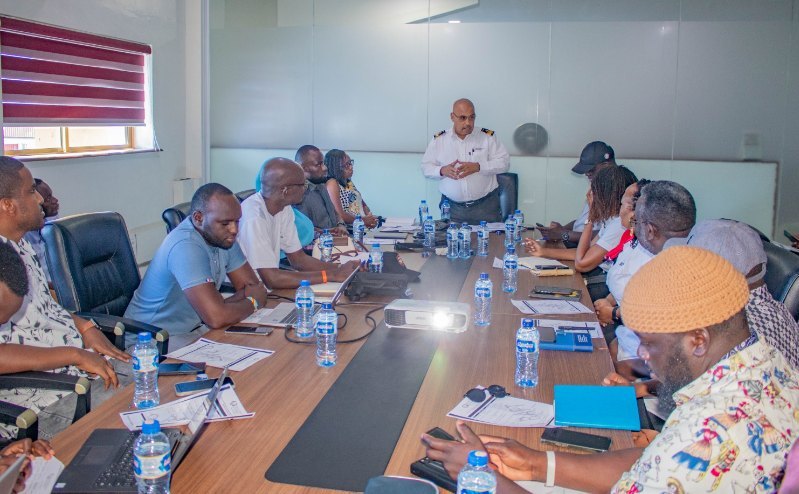
The two-day programme was anchored by presentations from
senior KRA officials, including Swalleh Faraj, Acting Deputy Commissioner for
Customs and Border Control, Southern Region; Andrew Osiany, Chief Manager for
PR and Communications; and Tabitha Wanyama, Manager for Customs Warehouse under
Customs and Border Control, Southern Region, among others.
What struck me, almost immediately, was how deeply these
officials understood the human cost of inefficiency.
This was not bureaucratic language. When Faraj spoke about
reducing cargo clearance times, he framed it in terms of the importer waiting,
the business owner with cash tied up in a container at the port, and the trader
who needs predictability to plan.
The numbers they shared were dramatic, cargo clearance times
cut from 110 hours to 42 hours, but the real story behind those numbers is
thousands of businesses breathing easier.
“Customs is not only about tax collection. It facilitates
trade, protects society, and supports economic growth,” Swalleh Faraj said.
What actually happens before a ship docks
One of the most revealing parts of the immersion was being
walked through the end-to-end customs cargo journey, from the moment a vessel
appears on the horizon to the point goods leave through the port gates.
Most people imagine customs as the moment someone opens your
container and inspects the contents. The reality is far more sophisticated, and
it begins long before any ship arrives.
Under KRA’s Pre-Arrival Processing (PAP) framework,
importers and their clearing agents can, and are actively encouraged to submit
documentation and lodge customs declarations before the vessel docks.
The system, run through KRA’s Integrated Customs Management
System (iCMS), allows for duty assessment and risk screening to happen while
the cargo is still at sea. By the time the ship berths, compliant, low-risk
cargo can be cleared and released with minimal physical intervention.
When a vessel does arrive, the shipping line submits a
Summary Declaration electronically. The iCMS logs it, validates it, and assigns
it a reference. Clearing agents then lodge a formal customs entry, inputting
Harmonized System codes, declaring the value, and uploading supporting
documents.
The system auto-calculates the duties, taxes, and levies
owed. This is not manual. It is digital, trackable, and auditable from the
first keystroke.
The risk engine: Smarter than you think
Every customs declaration filed in the iCMS is immediately
run through an automated risk assessment engine. The system analyses compliance
history, cargo type, country of origin, fraud indicators, and intelligence
alerts and assigns each declaration to one of three channels.
Green channel: low risk, fast release, minimal intervention.
Yellow channel: medium risk, documentary review required. Red channel: high
risk, physical verification.
This risk-based targeting system is one of the most
important reforms KRA has implemented in recent years, and it does something
counterintuitive to most people’s assumptions about government agencies: it
makes things faster for the honest majority while concentrating scrutiny on
those who deserve it.
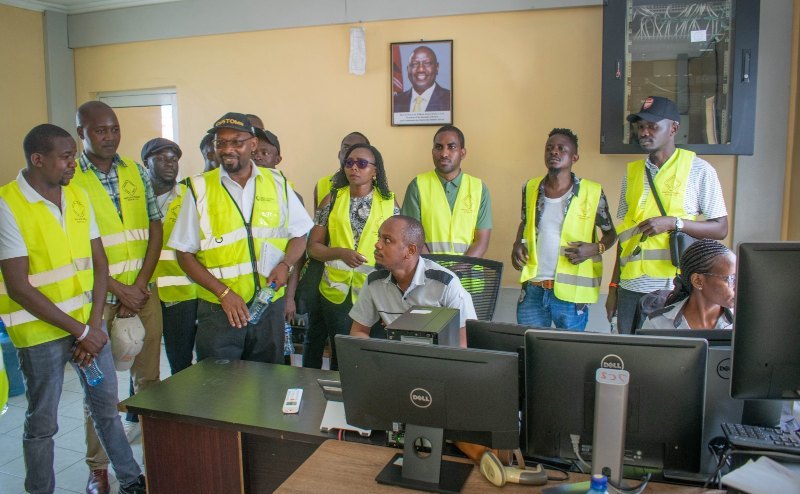
The port has seven scanners — three drive-through, two
fixed, one rail scanner, and one baggage scanner — operating on a 24-hour
basis.
When a container goes to scanning, the truck drives through,
an image is captured and transmitted to command centres for analysis, and
analysts compare the image against the declaration. The decision — suspect, not
suspect, or rescan — is made remotely, systematically, and without the cargo
needing to be physically opened unless there is a clear reason.
This is not the customs of popular imagination — the
clipboard-wielding officer rifling through luggage. This is a technology-driven
operation that processes billions of shillings of goods daily with a precision
that would impress any logistics firm.
The numbers that tell the story
KRA's Customs and Border Control department has quietly become one of the strongest revenue-performing arms of the authority. In the financial year 2024/25, customs collections surged to Sh879.3 billion.
In September 2025, the department achieved an all-time high single-month collection of Sh85.146 billion. That record was broken again in December 2025 - Sh85.927 billion in a single month, against a target of Sh83.008 billion, representing 103.5 per cent performance and a growth of 23.5 per cent compared to December 2024.
By March 2026, KRA had crossed the Sh2 trillion mark in cumulative revenue for the financial year, at Sh2.038 trillion, with Customs and Border Control delivering Sh733.7 billion of that, up 13.3 per cent over the same period the previous year.
These are not abstract figures. Every shilling collected at the Port of Mombasa and at Kenya's 50-plus customs stations - from Malaba to Namanga, from JKIA to Lungalunga-funds schools, hospitals, roads, and public services. The port is not just the gateway to the Kenyan market. It is, in a very real sense, the engine of the national budget.
Regional custodian, not just national collector
Here is something that rarely makes headlines: much of what KRA processes at Mombasa is not for Kenya at all.
Transit cargo - goods moving through Kenya en route to Uganda, Rwanda, South Sudan, the DRC, and beyond - is a significant portion of port activity.
KRA secures the tax payable on this cargo through customs bonds and monitors it in real-time using the Regional Electronic Cargo Tracking System (RECTS).
This technology tracks container movement all the way along the Northern Corridor. The route stretching from Mombasa through Nairobi to Malaba and beyond- deterring both cargo theft and the dumping of transit goods into the Kenyan market illegally.
Additionally, under the Single Customs Territory (SCT) arrangement within the East African Community, import taxes for goods destined for Uganda or Rwanda are collected at Mombasa. The cargo then moves across borders faster, because the tax question has already been resolved. This is regional integration made practical, and KRA is the institution making it work on the ground.
The fight against illicit trade
There is another dimension to the port's customs operations that deserves to be named plainly: enforcement.
Kenya loses significant revenue annually to smuggling, undervaluation, counterfeiting, and illicit trade. At the Port of Mombasa, KRA's enforcement mandate covers smuggling prevention, counterfeit goods detection, narcotics interdiction, fraud and undervaluation detection, and the control of restricted and prohibited goods.
The scanners are a key tool here. So is the intelligence-driven risk engine. So is the coordination with partner government agencies like the Kenya Bureau of Standards, KEPHIS, the Anti-Counterfeit Authority, Kenya Maritime Authority, and Kenya Police - all of whom form part of the port's multi-agency ecosystem.
Long-stay cargo - containers that have sat at the port beyond the allowed free-storage period are subject to gazettement and auction. As part of recent reforms, cargo that has remained at port for more than 21 days is being progressively evacuated to licensed Container Freight Stations to free up critical yard space and reduce congestion. It is unglamorous work. It is also essential.
The human cost of getting it wrong
One of the myths addressed during the programme: 'Customs delays cargo unnecessarily.'
The reality, as any seasoned freight forwarder will tell you, is that the majority of clearance delays trace back not to KRA but to compliance failures.
Missing documents, incorrect HS codes, undeclared values, and discrepancies between the manifest and the actual cargo. The iCMS flags these automatically. When there is no discrepancy, the system escalates the entry for release. When there is a discrepancy, the system flags it for investigation and requires payment of any outstanding taxes and penalties before release proceeds.
The system is, by design, unforgiving of error, and that is exactly how it should be. The integrity of the port's revenue function depends on it.
Reform as a living process
What stood out most about the KRA officials we interacted with was a restless commitment to improvement. The reforms they outlined were not theoretical; they were operational and ongoing.
The centralised release operations office, introduced as a specific reform to streamline cargo clearance, is credited with the dramatic reduction in clearance times from 110 to 42 hours.
The expansion of the Pre-Arrival Processing framework, now prioritising bulk cargo, low-risk shipments, and Authorised Economic Operators, promises to reduce those times further.
The integration of KPA's KWATOS system with KRA's iCMS means that a release order generated at customs is automatically transmitted to the port's cargo management system. No manual handover. No delay.
Twenty-one Container Freight Stations serve as extensions of the main port, handling both vehicular and containerised cargo beyond the port's primary boundaries. Authorised Economic Operators, importers, customs agents, and transporters who have demonstrated a high level of compliance receive platinum-tier service, with their cargo cleared with minimal intervention and faster turnaround times.
The direction of travel is clear: a port that is faster, more transparent, less congested, and harder to game.
What the port taught me
There is a version of KRA that lives in public consciousness as a tax-collecting machine - cold, impersonal, relentless. Two days in Mombasa complicated that picture significantly.
The officials I met were professionals who had spent years, in some cases, careers - wrestling with some of the most complex logistics in the region.
They talked about trade competitiveness, the cost of doing business, protecting Kenyan consumers from counterfeit goods, and supporting the government's development agenda.
They also talked about the people on the other side of every declaration: the importer, the exporter, the trucker, the small business owner waiting for their goods.
The Port of Mombasa may be the physical gateway to East Africa, but KRA’s Customs and Border Control Department is the invisible force ensuring that gateway remains secure, efficient, and open for business.
And perhaps that is the biggest lesson from the immersion programme: KRA’s mandate at the Port of Mombasa is not simply about collecting taxes. It is about facilitating trade, protecting society, enabling regional integration, and ultimately supporting the economic growth that powers Kenya and its neighbours.
KRA has recorded steady growth in revenue collection over the last six financial years,