


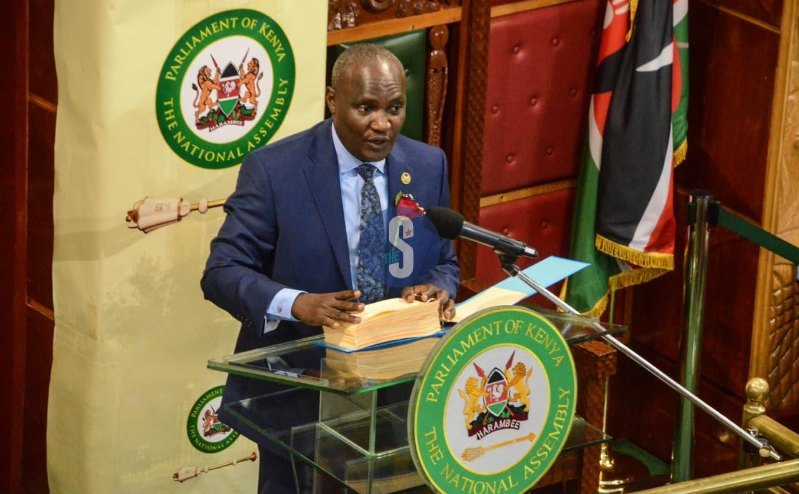
 Education CS Julius Ogamba / FILE
The Ministry of Education will shorten the second school
term, Education Cabinet Secretary Julius Ogamba announced on Wednesday.
The move comes amid concerns that the current second term is too long and may be contributing to learner fatigue, stress and indiscipline in schools.
The review is among a raft of interventions announced after disturbances were reported in 204 senior secondary schools across the country.
“Starting next academic year, the ministry shall rationalise the school calendar to ensure the terms are balanced and that the second term is not as long as it has been,” Ogamba said.
The Kenyan academic calendar follows a standard three-term system for basic education institutions.
Term 1 runs from January 5 to April 2, covering 13 weeks. Term 2, which is ongoing, runs from April 27 to July 31, covering 14 weeks. Term 3 runs from August 24 to October 23 and lasts only nine weeks, making it the shortest term.
In both the first and second terms, students enjoy a five-day mid-term break in late February and mid-June respectively.
This year, however, the second-term mid-term break will proceed as scheduled from June 24 to June 28.
Parents and guardians have been urged to use the break to engage with their children and provide guidance and support.
Ogamba said addressing the causes of student unrest requires a collective effort from the government, parents, teachers, school managers, community leaders and policymakers to ensure schools remain safe and conducive environments for learning.
At the same time, the government will establish a multi-stakeholder team to investigate the causes of school unrest and recommend long-term solutions to what has become a recurring challenge in the education sector.
The task force will bring together key players in education to examine factors driving student unrest and propose practical interventions to improve discipline, learner welfare and school management.
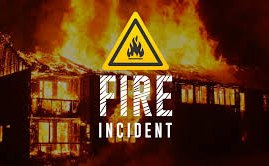
The announcement follows weeks of concern over student strikes, dormitory fires and destruction of property in various schools.
Despite the incidents, Ogamba sought to reassure parents and the public that the situation remains largely under control, noting that less than two per cent of the country’s senior schools have been affected.
According to data from the ministry, 204 senior secondary schools have reported cases of unrest, while about 98 per cent of institutions continue to operate normally.
“Most of our schools remain stable and continue with their normal operations,” he said.
The ministry’s preliminary assessment shows that the majority of affected institutions are boarding schools, while day secondary schools have largely continued with learning uninterrupted.
Of the affected schools, 59 have already resumed classes after restoring normalcy, with more expected to reopen in the coming days.
Ogamba also emphasised that learning in primary schools and junior schools has not been disrupted.
“Learners in Grades 1 to 9 are proceeding with their studies with no interruption reported. Our basic education system is running smoothly except for the disruptions in some boarding senior schools,” he said.
While condemning the destruction of property and violence witnessed in some institutions, the CS acknowledged that students may have genuine concerns that require attention.
However, he maintained that grievances must be addressed through lawful and established channels.
“Whatever grievances our learners may have, there can never be justification for causing death and destroying property. Any grievances must only be addressed through appropriate channels without resorting to unlawful actions,” he said.
He warned all those found responsible for violence, arson and destruction of school property would be dealt with firmly in accordance with the law.
The ministry’s preliminary review has linked the unrest to several factors, including leadership challenges within schools, examination-related anxiety, poor boarding conditions, alcohol and drug abuse, strenuous school routines, peer influence and copycat behaviour.
The ministry has also observed increasing demands by students for the early closure of schools, a trend that has featured prominently in some recent incidents.
Ogamba called on principals and school administrators to take proactive steps in addressing concerns raised by learners before they escalate into unrest.
“Heads of institutions are reminded that it is their statutory and moral responsibility to ensure that challenges in their institutions are addressed in good time and that the safety and security of learners are guaranteed,” he said.
As part of the government’s response, schools have been directed to urgently convene parents’ association meetings to discuss learner welfare and review the state of affairs in their institutions.
Guidance and counselling programmes will also be strengthened, while grievance-handling mechanisms are expected to be improved.
County and subcounty education officers have been instructed to carry out targeted safety audits and monitor institutions considered vulnerable to unrest.
INSTANT ANALYSIS
School unrest remains a recurring challenge in Kenya, particularly in boarding secondary schools. This year, the Ministry of Education reports disturbances in 204 senior secondary schools, representing less than two per cent of institutions nationwide. Most schools continue operating normally, with primary and junior schools unaffected. Authorities have linked the unrest to factors such as examination pressure, leadership challenges, poor boarding conditions, drug and alcohol abuse, demanding routines, peer influence and copycat behaviour. Several affected schools have already resumed learning.











![[PHOTOS] The Star, Chinese Embassy host Kenya-China media dialogue](https://cdn.radioafrica.digital/image/2026/06/215e29cd-5ca2-4faf-bb4e-d1686b2c3dad.jfif)