


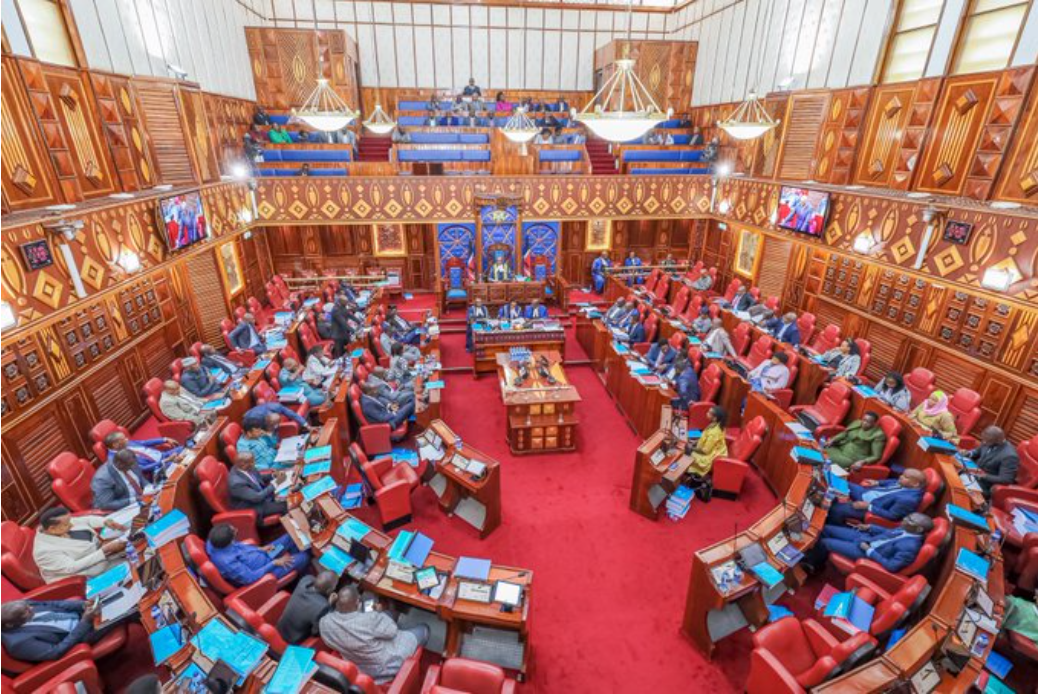
 Kitui Senator Enoch Wambua says counties have no say in CAIPs funding and must comply with national arrangement / FILE
Kitui Senator Enoch Wambua has expressed concern over what he describes as growing involvement by the national government in the budgeting processes of county governments.
He said counties are required to comply with funding arrangements they do not directly control.
“The National Treasury gives with the right hand and takes away with the left,” Wambua said. “Through the back door, the national government is increasingly budgeting for county governments.”
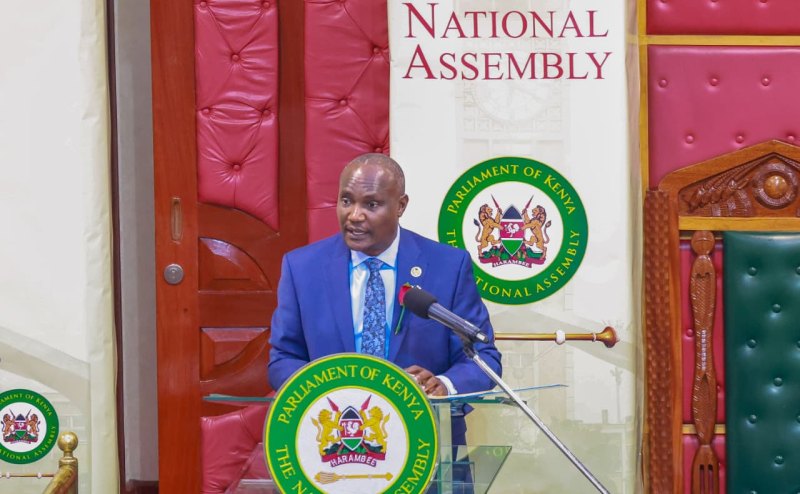
He made the remarks in the Senate on Wednesday while addressing county funding arrangements, arguing that decisions on certain development projects are made at the national level.
Wambua cited the County Aggregation and Industrial Parks (CAIPs) programme as an example. CAIPs are joint national and county government projects established across all 47 counties to support industrial development, value addition, and economic growth through aggregation centres and industrial zones linked to agriculture and manufacturing.
He said under the programme, each county is required to contribute Sh250 million, matched by Sh250 million from the national government.
“The national government will put in Sh250 million and the county government will put in Sh250 million,” he said.
Wambua argued that the decision on the programme is made at the national level, leaving counties with no input in the arrangement.
He further told the Senate that while counties had received an additional Sh13 billion in allocations, a significant portion of the funds is tied to the CAIPs programme.
“Out of the 47 county governments, each county is supposed to give Sh250 million for its own CAIP. If you multiply Sh250 million by 47, you get Sh11.75 billion,” he said.
“So yes, we have gotten Sh13 billion more. But the national government has decided that Sh11.75 billion of all this money that we’ve given you is going to CAIPs. And there’s nothing the county governments can do about it," the senator said.
The Senate debate comes amid ongoing discussions on how national and county governments share responsibilities in development financing, particularly on large-scale projects implemented across the 47 counties.









![[PHOTOS] The Star, Chinese Embassy host Kenya-China media dialogue](https://cdn.radioafrica.digital/image/2026/06/215e29cd-5ca2-4faf-bb4e-d1686b2c3dad.jfif)