


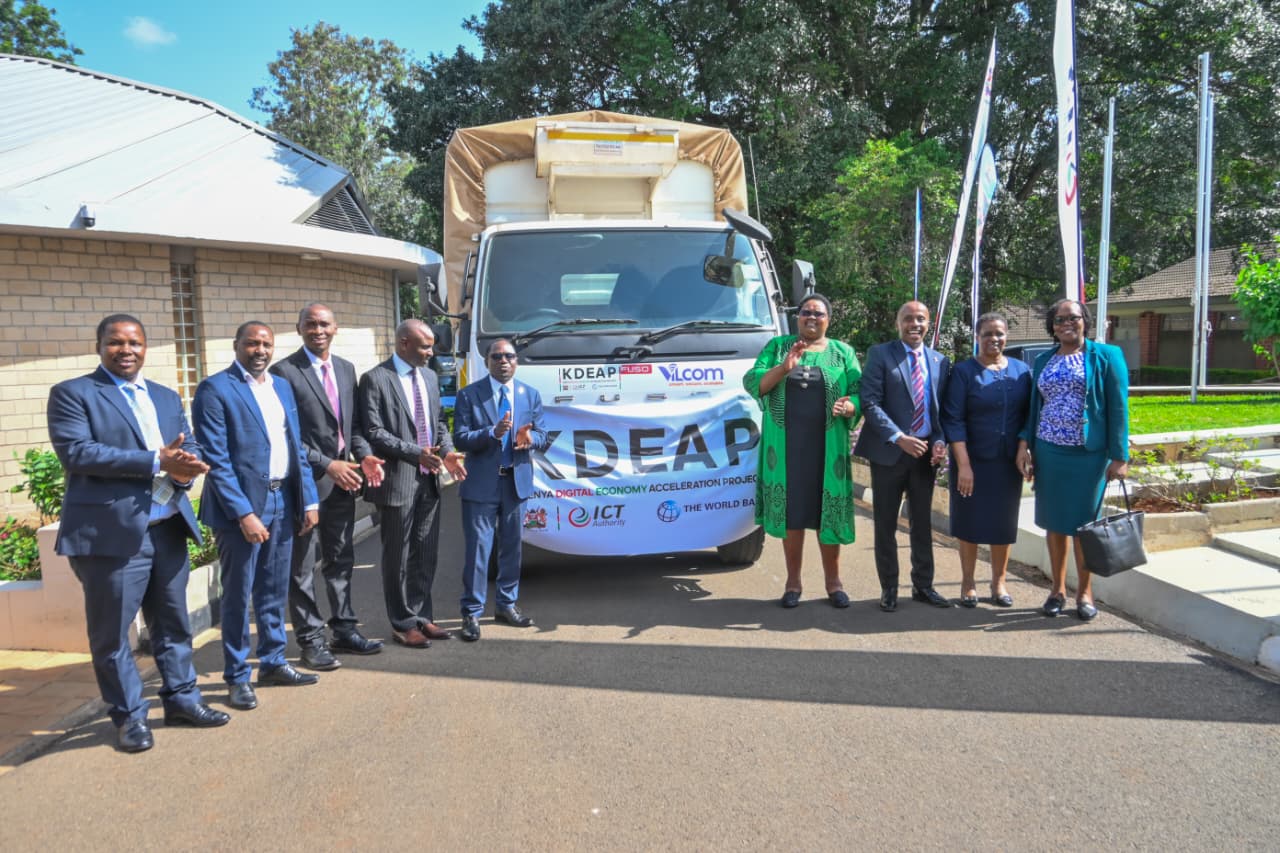
The government has kicked off the distribution of laptops and interactive smart boards to more than 10,000 Junior Secondary Schools (JSS) in a major push to digitise learning and support the Competency-Based Education (CBE) curriculum.
The nationwide rollout, launched Tuesday at the Centre for Mathematics, Science and Technology Education in Africa (CEMASTEA) in Nairobi, will see 10,382 schools receive a teacher laptop and a 65-inch interactive smart board under the Kenya Digital Economy Acceleration Project (KDEAP).
The programme is being implemented by the ICT Authority with support from the World Bank.
Speaking during the launch, Broadcasting and Telecommunications Principal Secretary Stephen Isaboke said the initiative was aimed at preparing learners for the digital economy and equipping them with skills needed in the future workplace.
"Today, we are not merely flagging off devices; we are investing in human capital, digital skills and the future prosperity of our children," Isaboke said.
"We want our learners not to merely consume technology, but to create it, innovate through it and apply it to solving challenges facing their communities and our nation."
The launch featured a live demonstration of the smart boards, including a remote lesson with pupils from New Mukuru Primary School, one of the institutions already using similar technology.
Isaboke said the government was committed to ensuring no learner was left behind in the digital transformation agenda through investments in connectivity, digital infrastructure and skills development.
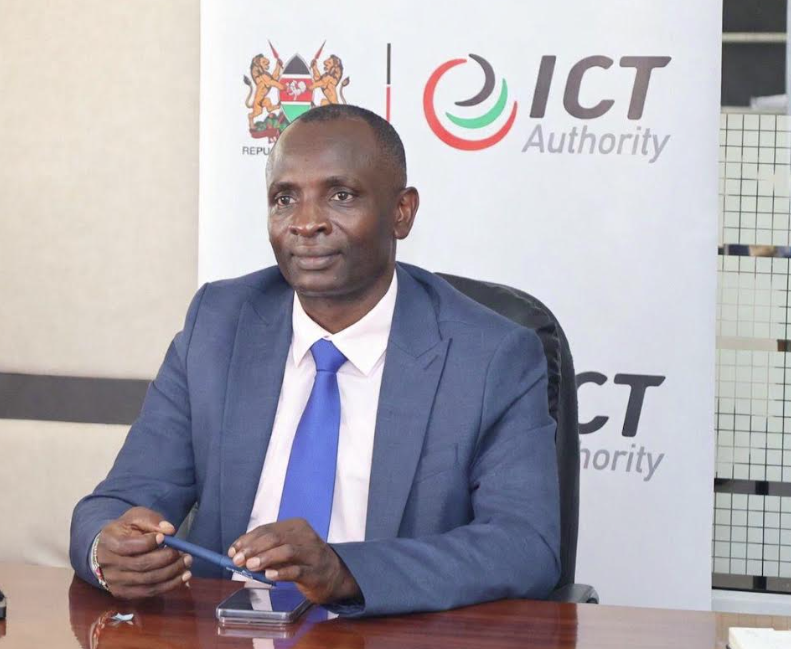
ICT Authority chief executive Jessy Maruti said the success of the programme would be measured by its impact in classrooms rather than the number of devices distributed.
"The true value of this programme will not be measured by the number of devices delivered, but by the impact they create in classrooms," Maruti said.
"We envision teachers delivering more interactive lessons, learners accessing richer educational content and schools becoming centres of innovation and digital excellence."
Maruti said the authority would monitor the deployment to ensure all devices reach the intended schools while continuing efforts to expand internet access, particularly in underserved regions.
World Bank KDEAP task leader Aneliya Muller said the devices would make learning more engaging while helping students acquire digital skills increasingly required in the labour market.
"These devices will make lessons more visual, interactive and engaging, supporting digital literacy from an early stage and helping young Kenyans develop the skills increasingly required in today's labour market," Muller said.
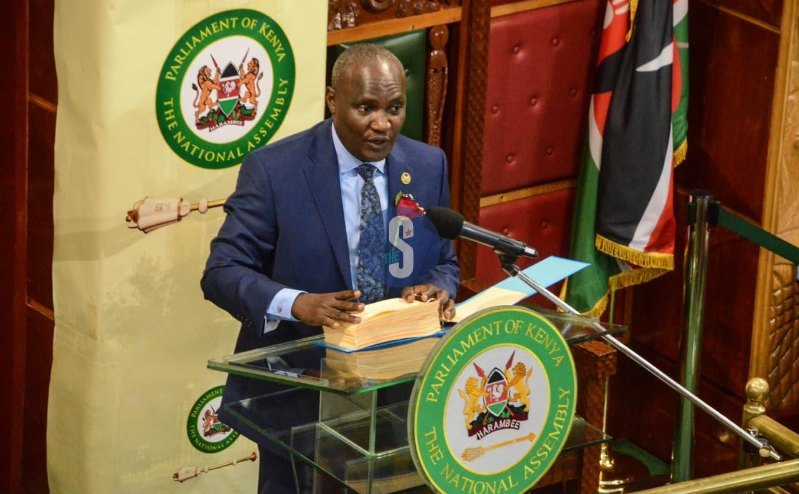
Dagoretti South MP John Kiarie, who chairs the National Assembly Committee on Communication, Information and Innovation, described the rollout as a strategic investment in Kenya's future competitiveness.
"By integrating technology into our classrooms, we are equipping learners with the skills needed to thrive in the Fourth Industrial Revolution and reinforcing Kenya's position as a leader in ICT and the digital economy," Kiarie said.
The government said the devices form part of a broader digital learning ecosystem that includes teacher training, digital content, internet connectivity, maintenance and technical support.
Officials noted that more than 30,000 kilometres of fibre optic cable have already been laid across the country towards a target of 100,000 kilometres, while over 8,000 public institutions have been connected to the internet.
The rollout is expected to accelerate digital learning in public schools as the government seeks to build a knowledge-based economy powered by technology and innovation.










![[PHOTOS] The Star, Chinese Embassy host Kenya-China media dialogue](https://cdn.radioafrica.digital/image/2026/06/215e29cd-5ca2-4faf-bb4e-d1686b2c3dad.jfif)