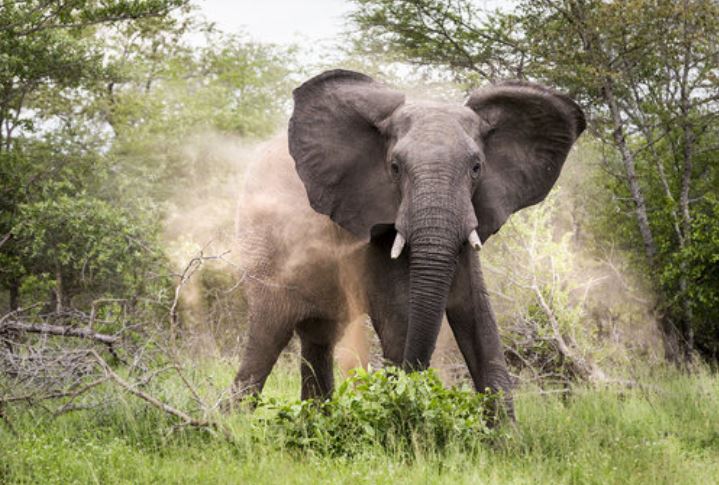
A 27-year-old woman was killed by an elephant in Samburu County while returning home from Maralal Town.
According to police and Kenya Wildlife Service personnel, Veronica Lesajore was attacked by the wild animal at about 7 pm on June 6, 2026, as she crossed Kirisia Forest on her way to Lpartuk 2 village.
Concerned family members launched a search after she failed to return home and traced her to the scene on the morning of June 7, where they found her dead.
Police officers and personnel from the Kenya Wildlife Service (KWS) responded to the scene and confirmed the fatal elephant attack.
The area was processed as part of investigations before the body was removed to Samburu County Referral Hospital Mortuary for preservation and a post-mortem examination.
The incident is being treated as a wildlife-related fatality, with KWS officers in Maralal leading further investigations.
Human-wildlife conflicts remain a recurring
challenge in parts of Samburu County, where communities frequently share
grazing and movement corridors with wild animals, including elephants.
Police advised the family to file a compensation claim.
In May 2025, Kenya introduced the third phase of its Human–Wildlife Conflict Compensation Programme, an initiative aimed at addressing these incidents and supporting affected families.
During its launch at Meru National Park, President William Ruto unveiled the innovative Wildlife Conservation Card, a new tool designed to help fund conservation efforts.
“Compensation is justice, but prevention is progress,” Ruto said, emphasising the need for long-term solutions that benefit both people and wildlife.
“Through the Conservation Card, fencing, and community‑led tourism, we are turning conflict into opportunity,” he added.
Developed in partnership with KCB Bank, the Wildlife Conservation Card is available in three tiers—Platinum (Elephant), Gold (Lion), and Silver (Cheetah).
A portion of every transaction made with the card (Sh10, Sh5, and Sh3, respectively) goes directly to the Wildlife Conservation Trust Fund.
The initiative aims to enable Kenyans and international supporters to contribute to wildlife conservation while fostering economic benefits for local communities.
With this new approach, Kenya hopes to build a future where humans and wildlife can coexist more safely and sustainably.