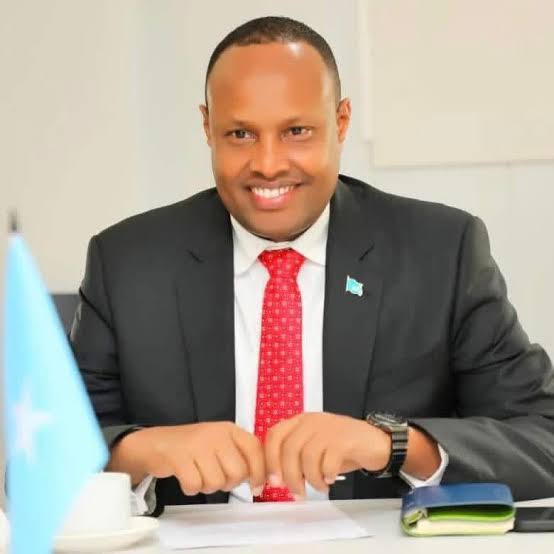
Growing political tensions in Somalia are fueling concerns
over investor confidence and the security of private enterprises after a
controversial security operation at a prominent Mogadishu hotel triggered
accusations of pressure against businesses linked to opposition figures.
The incident, involving the Elite Hotel in the Somali
capital, has become a focal point in the country’s escalating political
dispute, with analysts warning that continued confrontations between the
federal government and opposition groups could have broader economic
consequences.
Hotel owner Abdullahi Mohamed Nuur, a former security
minister, said armed security personnel entered the property on Friday and took
control of the premises during what authorities reportedly described as a
security operation.
Nuur said the operation caused significant losses and
disrupted business activities at the establishment.
“We have invested heavily in this property over many years.
What happened has left us counting huge losses, and we are deeply concerned
about the future of the business and the livelihoods of those who depend on
it,” he said.
He further alleged that heavily armed personnel restricted
the movement of staff members who were inside the hotel during the operation
and called for an independent investigation into the incident.
The raid comes at a time of heightened political uncertainty
in Somalia, where disagreements over governance and electoral issues have
strained relations between the federal government and opposition leaders.
Authorities have recently warned against unauthorized
demonstrations, citing security concerns, while opposition figures have
demanded greater political dialogue and adherence to constitutional processes.
The incident has reignited debate over whether political
disputes are beginning to affect the country’s business environment.
Opposition leaders have alleged that businesses and
properties associated with government critics are facing increasing pressure,
claims that remain disputed but have nevertheless raised concerns among
observers.
Political analyst Muhammad Mohammed said maintaining
political stability is critical to protecting economic gains made in recent
years.
“Somalia needs peace and political consensus to safeguard
both political and economic stability. Investors, entrepreneurs, and ordinary
citizens require a predictable environment in which businesses can operate and
communities can thrive,” Mohammed said.
He warned that unresolved political disputes risk creating
uncertainty that could undermine investor confidence and slow economic
activity.
“Political disagreements should be addressed through
established democratic institutions and inclusive consultations rather than
confrontational actions that may deepen divisions,” he added.
The developments have also intensified scrutiny of the
administration of Hassan Sheikh Mohamud, whose government has faced mounting
criticism from opposition groups over the management of the country’s political
transition.
President Hassan Sheikh’s constitutional term ended on May
15, 2026, and discussions over Somalia’s political future remain unresolved,
adding to uncertainty in the Horn of Africa nation.
International partners have urged restraint as tensions
continue to mount. The United States and the United Kingdom have called on
Somali stakeholders to seek a peaceful, lawful and timely resolution to the
political impasse through dialogue and respect for democratic processes.
With political negotiations ongoing, business leaders and
investors are increasingly concerned that prolonged uncertainty could threaten
the stability needed to sustain Somalia’s economic recovery and attract future
investment.

![[PHOTOS] Linda Mwananchi takes Trans Nzoia by storm](https://cdn.radioafrica.digital/image/2026/07/0d132395-ad4b-4671-867e-880c9f8144f5.webp)