Cooking oil is
staple in nearly every Kenyan household and is used daily at homes, restaurants
and food processing industries across the country.
Yet despite its importance in the national food system, Kenya relies heavily on imports to meet the product’s domestic demand.
Government data shows that more than 90 percent of the edible oil consumed in the country is sourced from international markets, exposing the economy to global price fluctuations and supply disruptions.
The scale of this dependence is reflected in the country’s rising import bill.
According to the Ministry of Agriculture and Livestock Development, Kenya imports hundreds of thousands of tonnes of edible oil each year to bridge the gap between local production and consumption.
In 2023 alone, the country imported over 900, 000 metric tonnes valued at more than KShs.139 billion, making edible oil one of Kenya’s most significant food imports.
This is according to the Ministry of Agriculture and Livestock Production Cabinet Secretary, Sen. Mutahi Kagwe.
With demand continuing to grow alongside population growth and expanding food industries, the government is now intensifying efforts to boost local production of oil crops such as sunflower and soybean to counter the high imports.
Sen. Kagwe says the Government launched the Sunflower-soybean initiative with the aim to curb the Kshs.145 Billion edible oil bill through the Agriculture and Food Authority (AFA).
“This initiative is designed to increase local production of oilseed crops that can be processed into edible cooking oil within the country,” the CS explains.
The Agriculture and Food Authority plays a key role in regulating and promoting the development of oil crops in Kenya through its Nuts and Oil Crops Directorate.
The Authority oversees the production, processing and marketing of crops such as sunflower, soybean, sesame, and canola to ensure quality standards and sustainable growth in the sector.
Through these efforts, AFA helps expand local oilseed production and supports national strategies aimed at reducing Kenya’s reliance on imported edible oils.
By encouraging farmers to cultivate sunflower and soybeans on a larger scale, the government hopes to boost the supply of raw materials needed by local oil processors.
The programme is also focusing on improving productivity among farmers by providing certified seeds, extension services, and better access to markets.
Many smallholder farmers have historically produced oilseed crops at very low yields due to poor seed varieties and limited technical support.
With improved inputs and training, the initiative aims to significantly increase yields per acre, enabling farmers to supply more sunflower and soybean to processors.
This approach not only supports national food and nutrition security but also creates new income opportunities for farmers in regions suitable for oilseed cultivation.
“Scaling up production of these crops can cut imports, build local agro‑processing, and raise farmer incomes,” CS Kagwe adds.
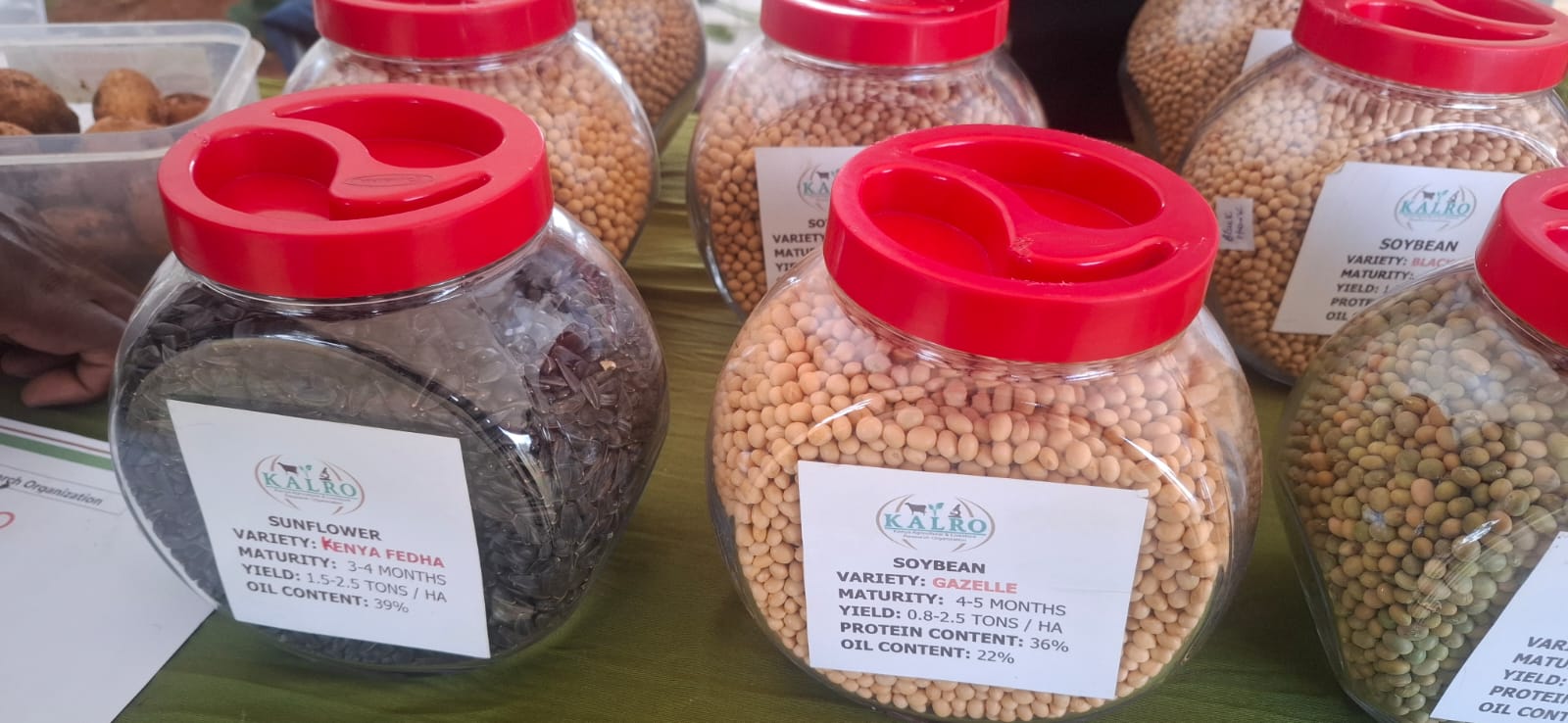
It is commendable that the government is also partnering with the Kenya Agricultural and Livestock Research Organisation (KALRO) and other stakeholders to strengthen the entire oilseed value chain.
The collaboration focuses on developing and distributing high-yielding seed varieties, improving seed multiplication and dissemination systems, and supporting farmer groups and cooperatives to scale up production.
In addition, the initiative seeks to attract private investment in oil processing and value addition while strengthening market linkages between farmers and processors, ensuring that increased production translates into reliable markets and sustainable growth for the sector.
By scaling up domestic production, the government aims to close the gap between local supply and national consumption, minimising the risk of shortages caused by global market fluctuations.
The government is also strengthening farmer groups and cooperatives to create a more organised and resilient production system.
Farmers are supported with bulk procurement of inputs, linked directly to processing facilities and encouraged to participate in oil crop farming.
Special emphasis is placed on youth and women participation, which not only boosts production but also creates employment opportunities in rural areas.
Beyond farming, the government is investing in agro-processing and value addition to ensure that crops are efficiently converted into edible oil for local consumption.
These measures help maintain a steady supply of oil to markets while reducing dependency on costly imports vulnerable to international supply disruptions.
Finally, regulatory and monitoring efforts by agencies like AFA, ensure that stocks are tracked, prices are stabilised and distribution channels remain functional.
The government’s multi-pronged strategy which focuses on boosting domestic oil crop production, supporting farmers and cooperatives, expanding agro-processing, and strengthening market linkages, signals a determined effort to transform this dependency into a sustainable, locally driven industry.
By increasing the acreage under sunflower, soybean, and other oil crops, providing farmers with high-yield seeds, and offering technical guidance, officials aim to ensure that production meets growing national demand.
Additionally, supporting farmer groups and cooperatives, particularly initiatives that engage youth and women, creates an organised and resilient system capable of delivering consistent supplies throughout the year.
Concurrently, investment in processing infrastructure and value addition ensures that raw crops are efficiently converted into edible oils, reducing post-harvest losses and making the commodity more readily available across the country.
Looking ahead, these measures are expected to not only cut the nation’s import bill, which currently runs into billions of shillings annually, but also unlock economic opportunities across the agriculture and agro-processing sectors.
With research institutions, government agencies and private investors working together, Kenya is gradually moving toward a future where cooking oil is produced locally, available year-round, and contributes to both food security and rural development.
This approach positions the edible oil sector as a vital component of the country’s broader economic growth and resilience strategy.