
Kenya has secured a major trade breakthrough with South
Africa after Pretoria lifted suspended duties on Kenyan tea, coffee, and
spices.
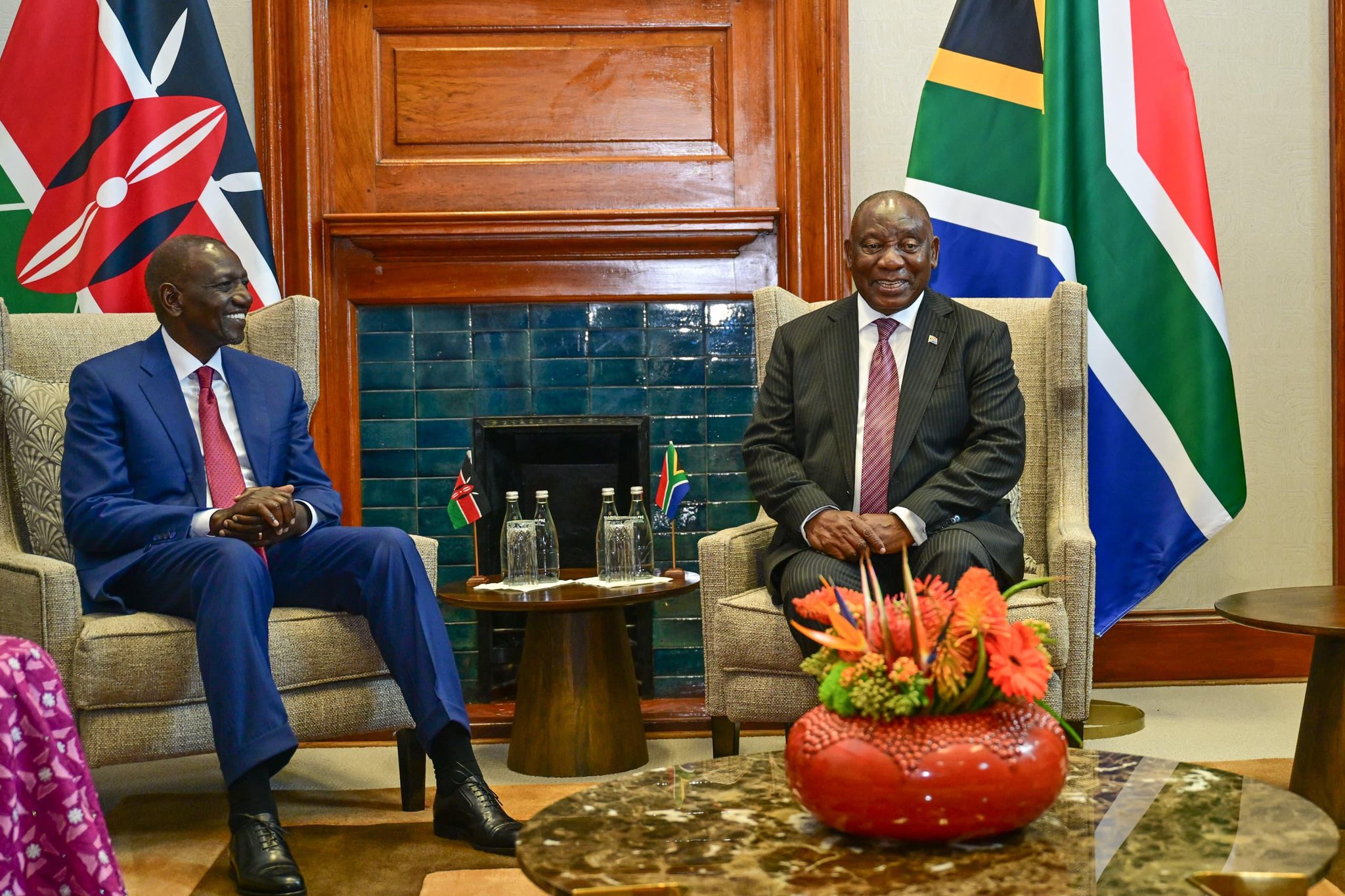
The deal was secured during President William Ruto’s state visit to South Africa, opening the door for expanded access to one of Africa’s largest consumer markets.
The concession, announced by South African President Cyril Ramaphosa, is expected to ease access for Kenyan agricultural exports under the Southern African Customs Union tariff arrangement while helping address a trade imbalance that has long favoured South Africa.
President Ramaphosa made the announcement during the Kenya–South Africa Business Forum in Pretoria.
The development emerged during President Ruto’s return state visit to South Africa, following Ramaphosa’s State Visit to Kenya in November 2022.
Officials from both governments described the move as a major step towards strengthening intra-African trade and accelerating regional integration.
Kenya’s Ministry of Trade said the lifting of the duties would boost market access for Kenyan products while strengthening bilateral trade relations.
“South Africa has lifted the suspended duties on Kenyan tea, coffee and spices that were imposed in November 2025, giving market access to the products under the SACU tariff offer,” the ministry said in a statement.
“The concession is intended to strengthen trade ties between the two countries and reduce the trade imbalance that currently favours South Africa.”
The announcement came alongside the signing of six bilateral agreements between Kenya and South Africa covering shipping and maritime cooperation, gender equality and empowerment, technical and vocational training, arts and culture, and sports and recreation.
President Ruto described the agreements as evidence of growing cooperation between the continent’s two largest economies in eastern and southern Africa.
“The agreements are aimed at elevating our partnership, building on the existing strong foundation of cooperation we have nurtured over the past three decades.”
Ruto also linked the agreements to wider continental ambitions under AfCFTA, saying Kenya and South Africa were positioning themselves to unlock greater trade opportunities, expand markets, boost investment, and drive inclusive growth across Africa.
Kenya has for years pushed for improved access to South African markets, arguing that non-tariff barriers and trade restrictions have limited the potential of bilateral commerce despite strong diplomatic relations between the two countries.
South Africa remains one of Kenya’s largest trading partners on the continent, with Nairobi importing significantly more manufactured goods, machinery, and industrial products from Pretoria than it exports.
Trade Cabinet Secretary Lee Kinyanjui said improved connectivity and logistics would be key to unlocking greater trade flows between African countries.
“At the South Africa–Kenya Business Forum, I emphasised the need to strengthen trade and investment ties between our two countries,” Kinyanjui said.
“I called for enhanced connectivity among African countries, particularly in logistics and transport, to reduce cargo transit times and facilitate the smooth movement of goods across the continent.”
The state visit also highlighted growing efforts by both countries to position themselves as strategic regional economic hubs.
While South Africa remains the continent’s industrial and financial powerhouse, Kenya continues to market itself as the gateway to East and Central Africa through sectors such as logistics, finance, technology, and services.
President Ruto said the economic complementarity between the two economies presents “massive opportunities for business.”
“South Africa is a financial and manufacturing powerhouse in the Southern Africa region while Kenya is the gateway to East and Central Africa. That complementarity represents massive opportunities for business,” he said.
The two leaders also agreed to leverage regional blocs such as the East African Community, the Southern African Development Community, and the Common Market for Eastern and Southern Africa to deepen integration and expand trade.
Foreign Affairs PS Korir Sing’oei said the visit reaffirmed the strong partnership between Nairobi and Pretoria.
“The two leaders agreed to deepen cooperation in trade, investment, industrial development, education, transport, health, and skills development,” Sing’oei said.
He added that the two Presidents also underscored the importance of strengthening private sector engagement through the newly established Joint Business Council and advancing the implementation of AfCFTA.
Among the notable agreements signed during the visit was a maritime cooperation pact expected to strengthen collaboration in shipping, port development, maritime safety, and training.
Mining and Blue Economy CS Hassan Joho said the agreement would enhance cooperation in maritime education, research, innovation, and recognition of seafarers’ certifications.
“These agreements reflect our shared commitment to deepening economic ties, expanding trade opportunities, creating jobs, and advancing regional integration for the prosperity of our people,” Joho said.
Education CS Julius Migos also signed an MoU on Technical and Vocational Education and Training aimed at promoting staff and student exchanges, joint research, and skills development cooperation.