Kenya has for decades built a strong global reputation as one of the leading exporters of cut flowers, with its roses and other horticultural products shipped daily to markets across Europe, the Middle East and Asia.
The sector has grown into a key pillar of the country’s economy, earning billions in foreign exchange, creating employment for hundreds of thousands of Kenyans and positioning the country as Africa’s top flower exporter.
However, as global competition intensifies, climate pressures rise, and production costs increase, industry players are increasingly turning to technology as the next frontier for survival and growth.
It is within this context that Israel says it is ready to deepen its partnership with Kenya.
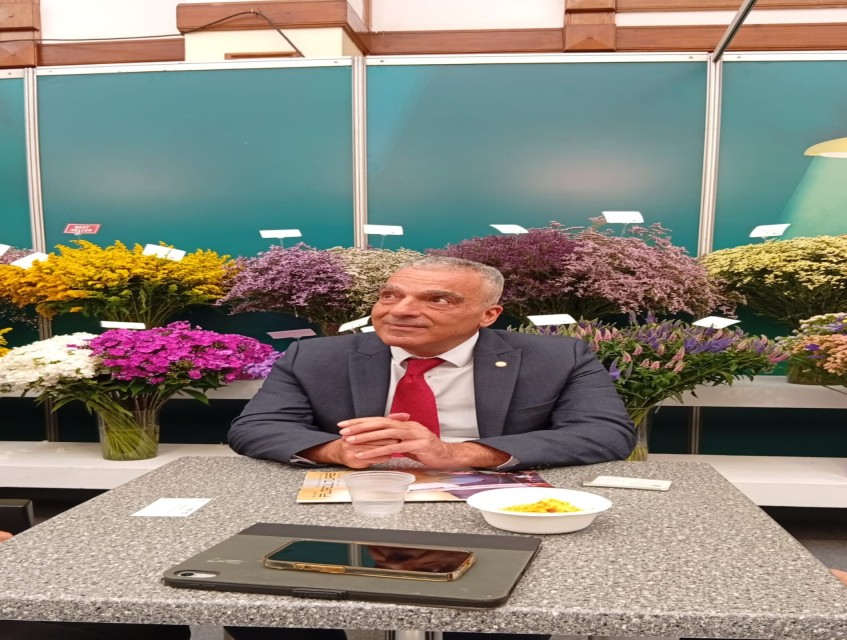
Speaking in an interview with The Star on the sidelines of the 13th International Flower Trade Exhibition (IFTEX) 2026 at the Visa Oshwal Centre in Nairobi, Israel’s Ambassador to Kenya, H.E. Gideon Behar, said his country is committed to supporting Kenya’s agricultural transformation through technology.
“Kenya has a very strong agricultural base, and we see great potential in working together to improve productivity through innovation and technology,” he said.
The ambassador noted that Israel’s experience in agriculture, particularly in water management, irrigation systems and greenhouse farming, could play a critical role in strengthening Kenya’s floriculture sector.
He said Israel has spent decades developing technologies designed to maximise agricultural output under challenging environmental conditions, especially water scarcity.
“We have developed advanced solutions in precision irrigation, greenhouse technology and climate-smart agriculture, and these are areas we believe can significantly support Kenyan farmers,” he added.
Behar said Israel’s interest in Kenya’s agricultural sector is not new, noting that relations between the two countries have grown steadily over the years through training programmes, technical cooperation and institutional partnerships.
However, he said there is now a stronger push to expand the collaboration into more structured and impactful initiatives that directly benefit farmers and agribusinesses.
“The goal is to strengthen cooperation so that knowledge transfer, training and technology can reach farmers more practically and sustainably,” he said.
Kenya’s floriculture industry remains one of the country’s most successful export sectors, with farms spread across Naivasha, Nanyuki, Timau and other horticultural zones producing millions of stems daily for export.
The sector contributes an estimated Sh110 billion annually and supports more than 200,000 direct jobs, while indirectly sustaining millions of livelihoods across the value chain.
Behar acknowledged Kenya’s position in the global flower trade, noting that the country is among the top exporters in Africa and a key supplier to European markets. “Kenya is a major player in the global floriculture industry, and that is something that can be strengthened further through innovation, sustainability and technology,” he said.
He added that Israel views agriculture as a central pillar in its diplomatic engagement with Kenya, alongside trade, investment and innovation.
According to him, the future of Kenya-Israel relations lies in expanding beyond traditional diplomacy into practical cooperation that delivers measurable economic impact.
“We are looking forward to deepening diplomatic ties, especially in agriculture, trade and innovation. Many opportunities can benefit both countries,” he said.
The ambassador said Israeli agricultural technology is particularly relevant at a time when Kenyan flower producers are grappling with rising production costs and global market pressures.
He noted that technologies that improve efficiency, reduce water usage, and increase yields could help Kenyan growers remain competitive in international markets.
“Water efficiency and productivity are key. These are challenges we understand very well in Israel, and we are ready to share solutions that can help Kenyan farmers,” he said.
Behar further said that climate change continues to reshape agricultural production globally, making innovation not just an advantage but a necessity.

Industry stakeholders at IFTEX 2026 raised similar concerns, pointing to rising freight costs, delayed VAT refunds and regulatory pressures as major constraints affecting competitiveness.
The government has already reaffirmed its commitment to addressing these challenges, including improving VAT refund efficiency, streamlining regulations and strengthening logistics infrastructure to support exporters.
Speaking during the official opening of the exhibition, Trade and Investments Cabinet Secretary Lee Kinyanjui said the floriculture sector remains a strategic component of Kenya’s economic transformation agenda.
He noted that the industry generates about Sh110 billion annually, making it one of the country’s most valuable export earners.
At the same time, stakeholders continue to raise concerns over high air freight costs, which in some cases consume up to 40 per cent of production expenses, alongside rising fuel prices that have further increased operational costs.
These challenges, industry players argue, threaten profitability even as global demand for Kenyan flowers remains strong.
Behar acknowledged these pressures but said they also highlight the importance of innovation in reducing production inefficiencies.
“Even in difficult economic conditions, technology can help industries adapt, reduce waste and improve resilience,” he said.
Beyond agriculture, the ambassador said Kenya and Israel are seeking to broaden cooperation into trade, investment and innovation-driven partnerships.
He said there are growing opportunities for private sector collaboration between the two countries that could open new markets and create jobs.
“The potential is huge. We want to see more partnerships between Kenyan and Israeli businesses that can create real economic value,” he said.
At IFTEX 2026, more than 210 exhibitors from across the world showcased products, technologies and services aimed at improving efficiency and sustainability in the floriculture sector.
The event highlighted the growing importance of innovation in shaping the future of global flower production.
European partners also reaffirmed their support for Kenya’s floriculture industry, which supplies a significant share of flowers imported into the European Union.
Kenya remains one of the world’s most important horticultural exporters, with its flowers reaching international markets within 24 hours of harvest.
As the sector continues to evolve, stakeholders agree that its future will depend heavily on the adoption of technology, improved logistics and stronger global partnerships.
For Israel, Kenya represents not just a diplomatic partner but a strategic agricultural ally with vast potential.
For Kenya, Israeli technology offers an opportunity to strengthen one of its most important export sectors at a time of rising global pressure.
As Behar concluded, the future of cooperation lies in shared growth and innovation.
“We believe that by working together, we can build stronger agriculture systems that benefit both our countries,” he said.