As heavy rains continue to trigger flooding across parts of Nairobi, businesses in low-lying areas are once again being forced to count losses, salvage damaged stock and adjust operations in the face of repeated disruptions.
For 23-year-old entrepreneur Alwiya Sharif, the reality of the floods became clear when messages from her staff began coming in while she was stuck in traffic during heavy rainfall. “They were telling me they couldn’t leave the shop,” she says. “Cars were being abandoned outside and people were stranded.”
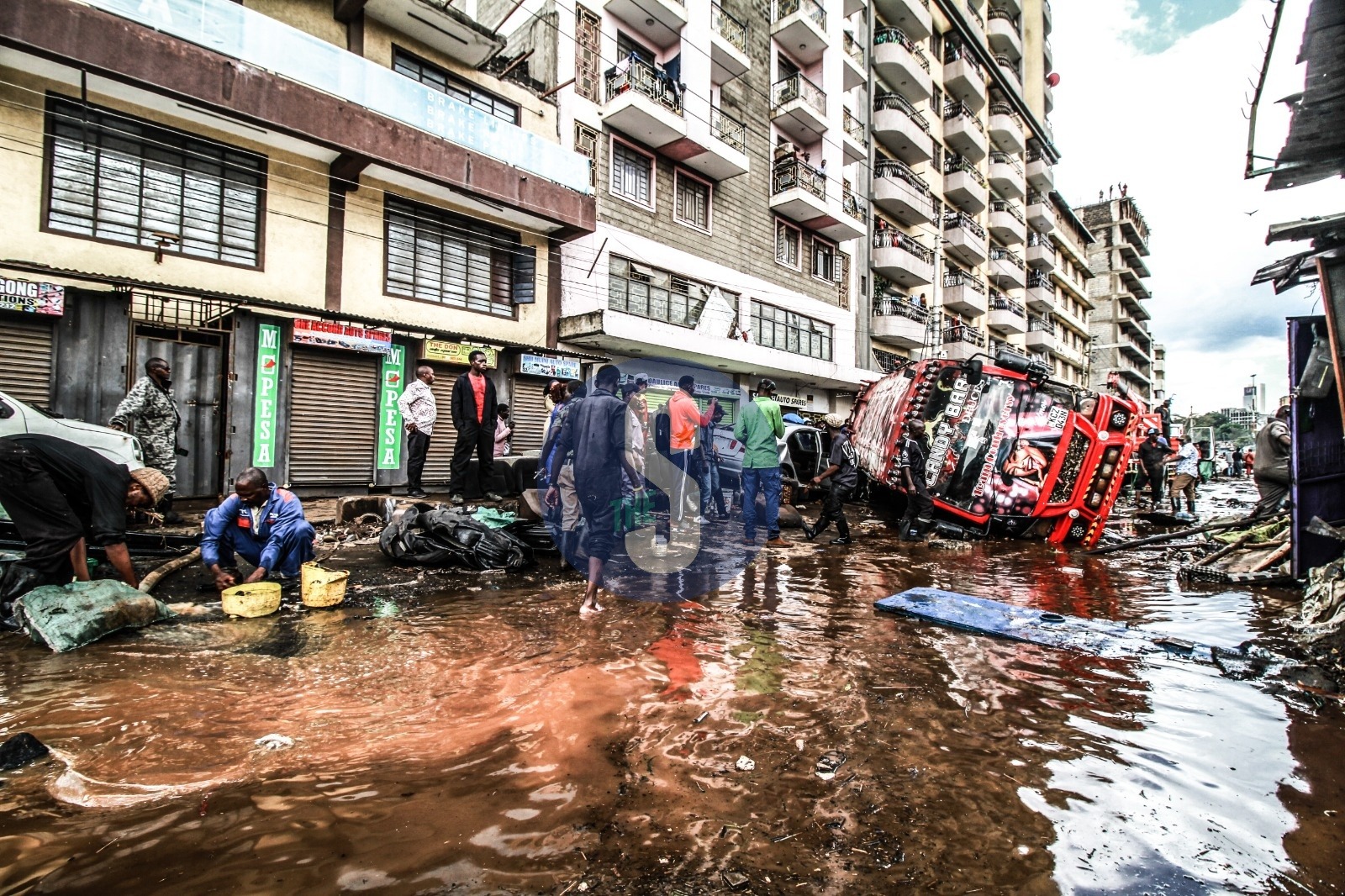
By the time Alwiya made her way back to South C later that night, sections of the area had descended into confusion. Roads were flooded, crowds had gathered outside buildings and movement had slowed as motorists attempted to navigate rising water levels. “There were so many people outside and there were security concerns as well,” she says. “Everything just felt chaotic.”
The following morning, the scale of the damage became clearer. When she arrived at the building where her business, Veda Fashion, operates, waterlogged vehicles still lined parts of the road while floodwater continued being pumped out of underground parking spaces. Beneath the building, an underground storage area containing most of her stock had been submerged.
“They were pumping water out for almost 24 hours,” Alwiya says. “The bags were underwater for nearly 48 hours.”
Inside were handbags, shoes and thousands of branded packaging materials, much of it soaked in muddy water after hours underground. All the packaging was completely destroyed, and by her estimate, the losses came close to KSh 1 million.
Other businesses in the area also experienced losses after floodwater entered shops and storage spaces.
Ahmed Noor, a wholesale food supplier operating in south C, says the flood destroyed nearly all his stock after water entered his storage room. Most of the goods were perishable food items, which became unsalvageable within hours once they were exposed to contaminated floodwater.
“Once the water got in, there was nothing we could recover,” he says. “Everything had to be written off because you can’t sell food that has been contaminated like that.”
Elly Gitau, who runs a small electronics repair and accessories shop, was also affected by the floods. She says it left both her stock and equipment exposed to damage, forcing her to shut down temporarily as she assessed losses. Some of the electronics, including phones and small appliances, were beyond repair after coming into contact with water, while others required testing and repairs before they could be resold.
“When water gets into electronics, you never really know what will survive,” he says. “Some items were completely gone, others we had to open up and try repair, but it takes time and money. The business basically stops during that period.”
The flooding highlighted the vulnerability of businesses operating in parts of the city that frequently experience drainage problems during heavy rains.
What began as a small online business run while studying civil engineering at the University of Nairobi had grown into a physical store supported largely through social media marketing on platforms such as Instagram and TikTok.
But like many young business owners operating in Nairobi, Alwiya says the floods exposed how quickly setbacks outside a business owner’s control can disrupt operations. “We need the right environment for things to work,” she says.
Relocating entirely, however, is not always realistic. Alwiya says customers already associate the brand with its current location in South C, making it difficult to move despite the risks associated with the area. Instead, the business has adjusted its operations by relocating storage to higher ground and putting new protective measures in place in preparation for future flooding.
The experience reflects a wider challenge facing many small businesses across Nairobi during the rainy season, where flooding continues to interrupt transport, damage property and force traders to absorb major losses. For businesses operating with limited margins, recovery often depends on how much stock can be salvaged and how quickly operations can resume.
Despite the damage, Veda Fashion has since resumed normal operations, with new stock gradually replacing damaged items and sales continuing both in-store and online. Still, Alwiya says the experience changed how she thinks about running a business in the city.
In response to persistent flooding in the city, authorities have previously announced a range of drainage and flood-mitigation measures, including desilting of drainage systems and identification of flood-prone zones for targeted intervention. Longer-term infrastructure improvement plans have also been discussed aimed at strengthening Nairobi’s resilience to recurring extreme weather events.
However, even after the floodwaters receded, sandbags, damp storage rooms and memories of submerged stock remained part of daily business operations in South C, a reminder of how quickly heavy rains can undo years of work.