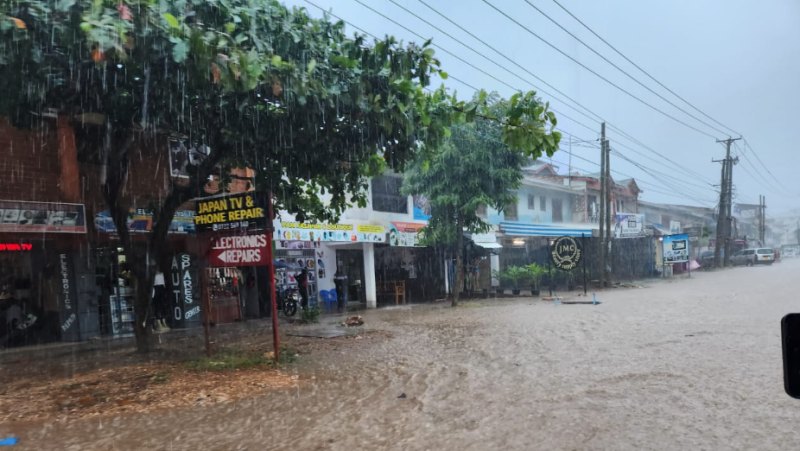
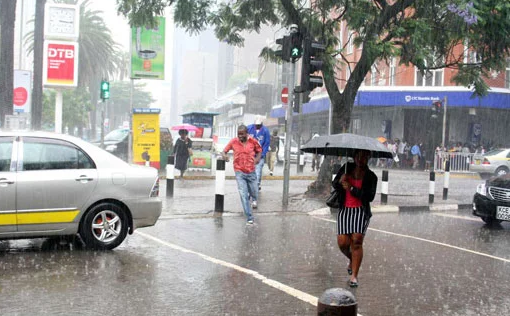
 Kenyans shied themselves from rainfall / FILE
The dry and sunny weather conditions being experienced in most parts of the country are forecast to come to an end from March.
The IGAD Climate Prediction and Applications Centre (ICPAC) says the March–April–May (MAM) season has a 45 per cent probability of receiving wetter conditions across most African countries, including Kenya.
The forecast is contained in ICPAC’s latest regional climate outlook released on Tuesday, following the 72nd Greater Horn of Africa Climate Outlook Forum (GHACOF 72) held in Nairobi between January 26 and 27.
The forum brought together climate scientists, national meteorological agencies, humanitarian partners and policymakers to assess seasonal climate risks and guide preparedness across the region.
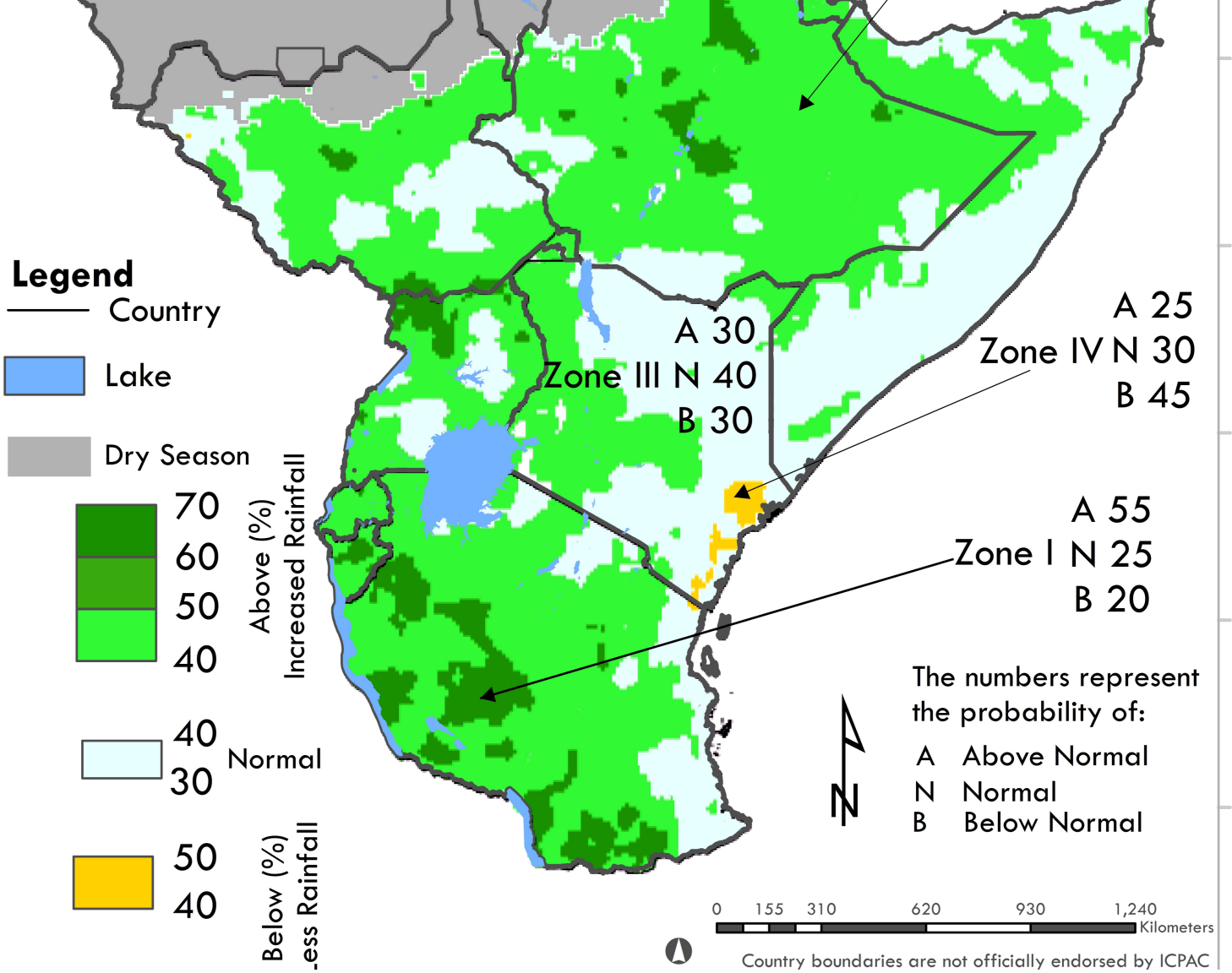
ICPAC projects a 45 per cent likelihood of wetter-than-normal rainfall over most parts of the Greater Horn of Africa, including Uganda, Rwanda, Burundi, Tanzania, central to western Kenya, Ethiopia, South Sudan, northern Somalia and Djibouti.
The MAM season is the region’s primary rainfall period and plays a critical role in crop production, pasture regeneration, water availability and hydropower generation.
At the same time, the outlook shows a 40 per cent probability of near-normal rainfall over western and eastern South Sudan, north-eastern and south-western Kenya, most of Somalia, coastal Tanzania, and isolated areas of Uganda and Ethiopia.
Coastal Kenya is expected to experience drier-than-normal conditions, a forecast that could have implications for agriculture and water supply in the area.
On the timing of the rains, ICPAC indicates a normal to early onset across most parts of the region. However, delayed onset is forecast in localized areas of Ethiopia, South Sudan and Somalia.
The climate centre cautions that seasonal forecasts do not eliminate variability, noting that dry spells may still occur in areas forecast to receive above-normal rainfall, while wet spells could be experienced even in areas projected to receive below-normal rainfall.
Temperature projections for the season point to warmer-than-average conditions across much of the Greater Horn of Africa, with higher probabilities over Sudan, Djibouti, Tanzania and parts of Ethiopia, Somalia and Kenya. Cooler-than-average temperatures are expected over parts of central to northern Ethiopia.
Beyond the forecast, ICPAC has issued advisories to guide users and decision-makers.
Member states, humanitarian organisations and development partners have been urged to actively use the regional seasonal outlook alongside national and sub-national forecasts issued by National Meteorological and Hydrological Services (NMHSs).
Users were also advised to closely track updated seasonal, sub-seasonal and short-range forecasts to support timely planning.
ICPAC further called for the scaling up of preparedness and anticipatory actions to reduce the impacts of floods and droughts, protect lives and livelihoods, and safeguard critical infrastructure.
The centre said it will continue issuing regular regional updates, while NMHSs will provide detailed country-specific advisories.
Emphasising the value of regional coordination, ICPAC Director Abdi Fidar said: “GHACOF remains a critical regional platform for building consensus on climate risks and translating seasonal forecasts into early action that protects lives, livelihoods and development across the Greater Horn of Africa.”
Kenya Meteorological Department Director Edward Muriuki highlighted the role of early warnings, noting:
“Early warning services are critical in mitigating climate risks, providing timely information that enables governments, communities and institutions to prepare for and respond effectively to climate-related hazards.”
From a policy perspective, Principal Secretary for the State Department for Environment and Climate Change, Dr Eng. Festus K. Ng’eno, underscored the importance of climate services, saying:
“Climate services, when timely, credible and user-driven, provide a powerful bridge between climate science and practical actions that protect lives, livelihoods and support sustainable development.”
As the region edges closer to the long rains season, ICPAC says the focus must remain on informed planning and early action to maximise benefits while reducing climate-related risks.
![[PHOTOS] The new Ngong –Naivasha Road viaduct](https://cdn.radioafrica.digital/image/2026/06/64d4f771-4432-4aee-ba3c-2f304c4436ec.jpg)