The party is divided over whether
it should continue supporting President William Ruto’s administration or break
away and chart an independent political path ahead of next year’s general
election.
The rift, which has increasingly
spilled into the public arena, has split the party into two main rival camps.
One faction is pushing for
sustained engagement in the broad-based government formed between ODM and
Ruto’s United Democratic Alliance (UDA), arguing that partnership in government
offers the party relevance and influence.
The opposing camp insists that ODM
risks losing its identity if it remains tethered to the ruling coalition and
should even filed its own presidential candidate next year.
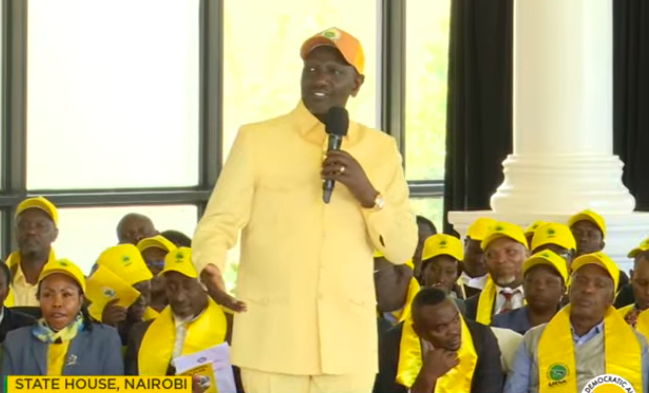
The debate comes even as UDA has
formally cleared Ruto, who is also the party leader, to enter structured
negotiations with ODM aimed at crafting a coalition agreement ahead of the
elections.
ODM’s Central Committee has
indicated that the party would open structured negotiations with other
political formations, including UDA, as it positions itself strategically for
the upcoming electoral cycle.
At the centre of the internal
wrangles are calls by some leaders to have the party convene a National
Delegates Congress (NDC), which they argue is the only legitimate forum that
can determine its future direction.
Over the weekend, leaders allied to
this position said the NDC should decide whether ODM remains in a broad-based
government with UDA or charts an independent course.
However, ODM party leader Oburu
Odinga has maintained that the party will deepen its relationship with UDA,
dismissing calls from the faction led by Sifuna to disengage from the
government.
Oburu has consistently argued that
ODM’s future lies in partnership rather than opposition politics.
Deputy party leader Godfrey Osotsi
has publicly rejected the notion that ODM leaders can be coerced into backing
Ruto’s re-election bid.
“I must sit down and understand and
decide on my own. Why is someone trying to force us to support Ruto?” he asked.
Osotsi said several party officials
are serving on interim capacities, insisting the leadership question can only
be settled at the NDC.
“Oburu is interim party leader and
the plan was that we have national elections. And as Deputy Party leader, I am
not scared of elections,” he said.
Suba South MP Caroli Omondi said
two distinct groups had clearly emerged within ODM, each pursuing a different
political vision.
“There is one group that has
already decided to take up the party leadership, they even have a line up.
Elections have not been called but they have already said these are the results
of that election,” Omondi said.
He accused the same group of
committing to working with UDA while adopting a hardline stance against
dissenting voices within the party.
“They have made up their minds they
will work with UDA, they have made up their mind anybody who opposes them will
be fought and crashed,” he said, warning that “there is going to be a bigger
storm coming.”
Omondi cautioned that ODM risks
drifting away from its founding ideals and the legacy of its longtime leader
Raila Odinga.
“We are moving away from our
purpose as a party. We are moving away from the lessons that Raila Odinga left
us with, already part of the leadership has made up their minds on these
issues. Let them go ahead, we wish them well,” he said.
Narok Senator Ledama Olekina
dismissed claims that ODM is on the brink of a split, insisting the internal
debate reflects a party trying to survive in a shifting political landscape.
“ODM isn’t splitting. It’s survival
mode. That’s why my friends are pushing back hard. Nairobi politics does not
control ODM’s future,” he said.
Sifuna and Embakasi East MP Babu
Owino draw much of their influence from cosmopolitan and liberal city voters,
particularly in Nairobi, Olekina said.
Former Kakamega Senator Cleophas
Malala, though not a member of ODM, argued that the party appears to have
abandoned the 10-Point Agenda that underpinned its cooperation with UDA.
“They have abandoned the 10-point
agenda and they are busy looking at how they will share power,” Malala, who is
now the deputy party leader of the Democracy for the Citizens Party (DCP) said.
The 10-Point Agenda is a framework
agreed between Ruto and the late Raila to guide cooperation between UDA and ODM
and steer key governance and reform priorities ahead of the 2027 elections.
Critics within ODM argue that the
slow or selective implementation of the agenda undermines the rationale for
continued partnership with the government.
Despite the growing criticism,
Oburu has maintained that ODM will no longer operate as an opposition party,
insisting that its role as a partner in government will extend beyond 2027
under the broad-based arrangement.
That position has been sharply
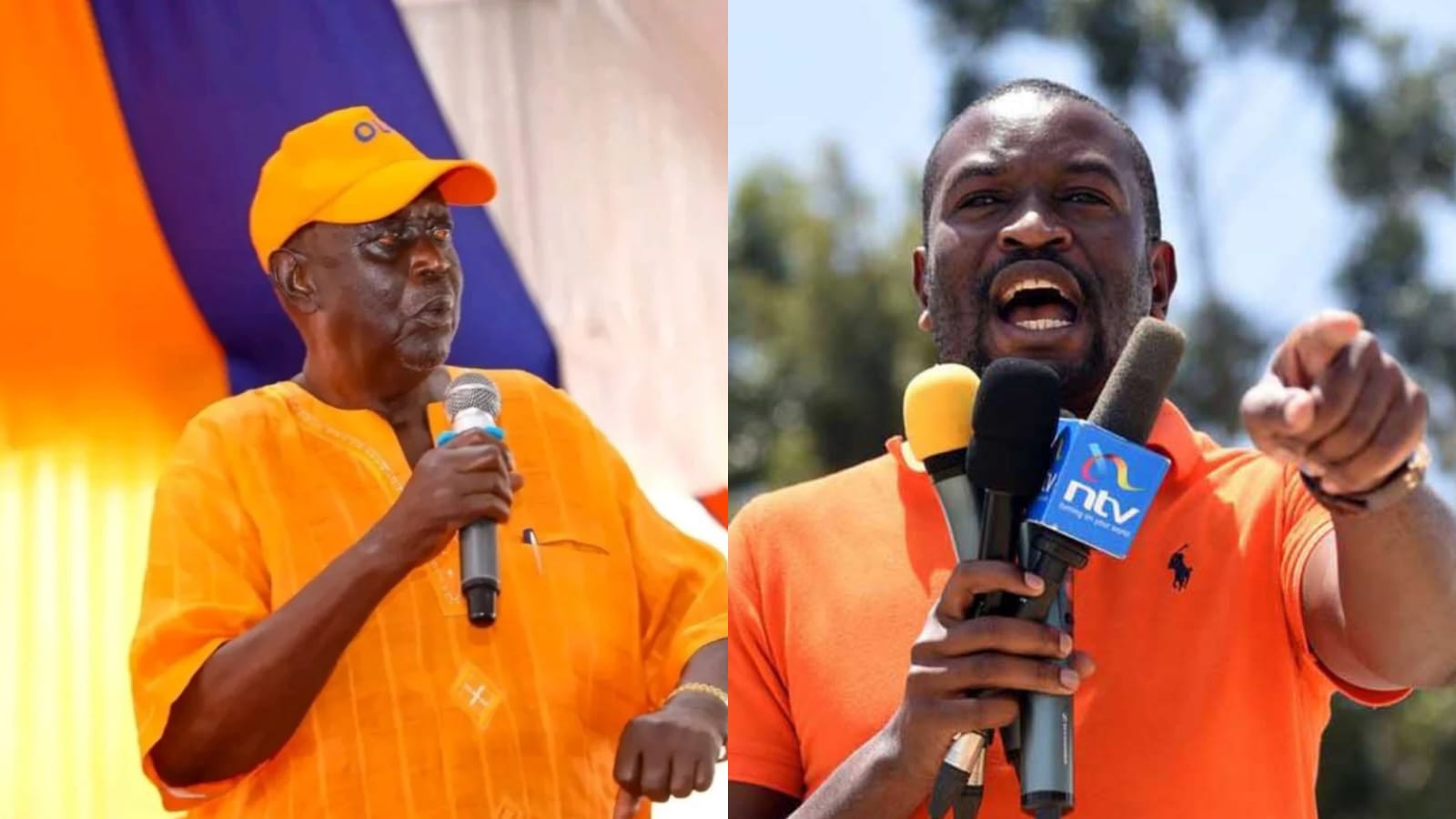
challenged by Siaya Governor James Orengo, a key ally of Sifuna, who has
renewed calls for ODM to field its own presidential candidate next year.
Orengo has cautioned against
entering into any coalition talks with UDA before the full implementation of the
10-Point Agenda.
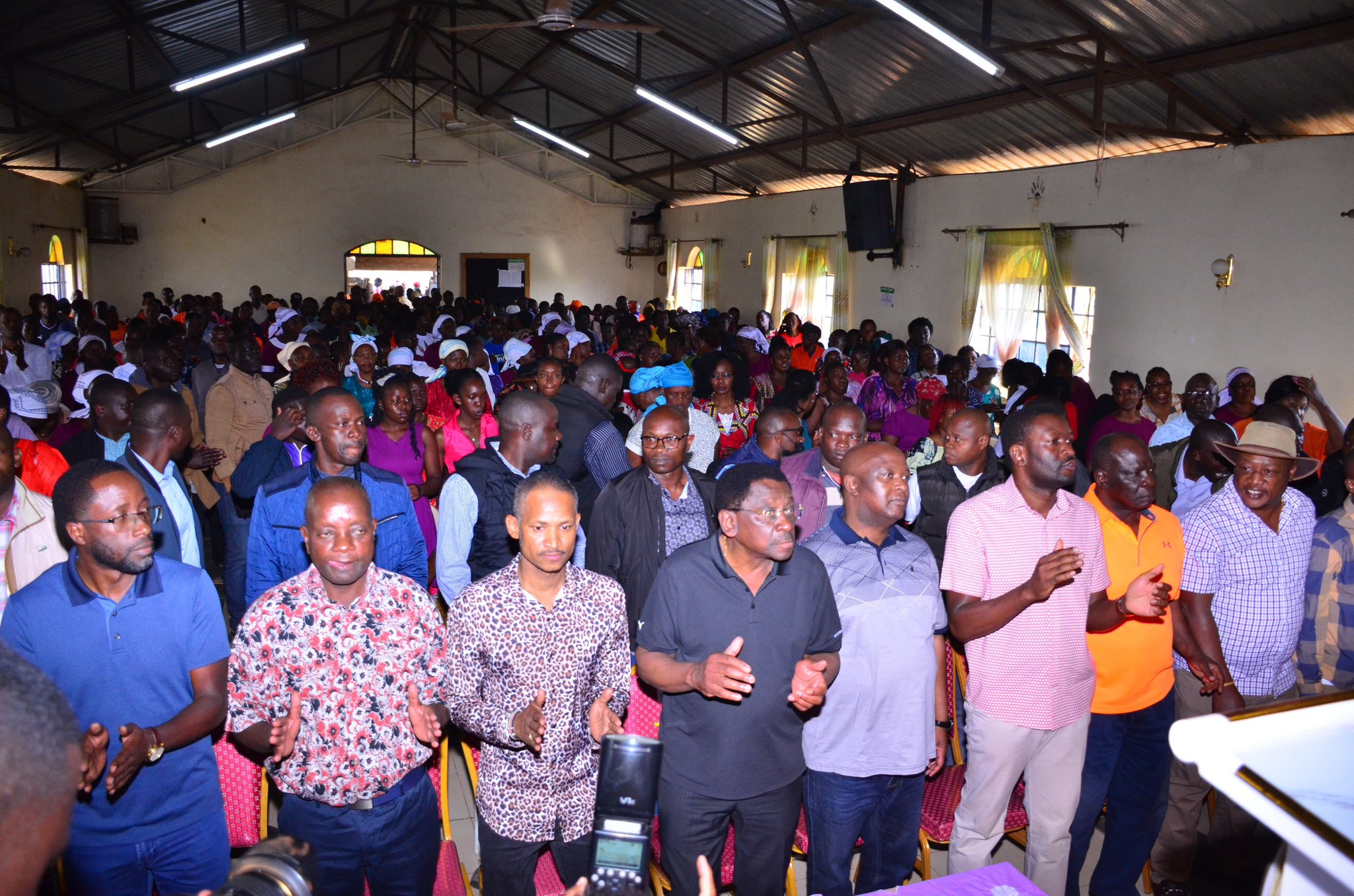
“We cannot go into any agreement
before the conditions are met,” Orengo said over the weekend at a rally in
Nairobi.
Sifuna, Osotsi, Babu and Saboti MP
Caleb Amisi attended the rally.
The group reiterated calls for an
NDC to elect new party leaders, with Amisi launching a scathing attack on
Oburu’s leadership.
“He is steering the bus but cannot
drive, he does not know where the brakes are and he does not know where Baba
was headed,” Amisi said.
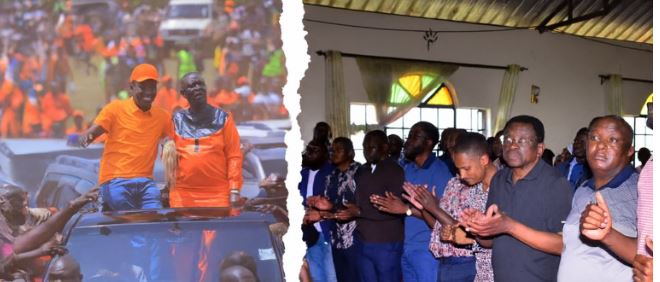
Speaking in Kisii over the weekend,
Oburu, accompanied by Deputy Party Leader Simba Arati, chairperson Gladys Wanga
and Minority Whip Junet Mohamed, accused Orengo of sowing division among
younger party leaders and undermining his authority.
“As a party leader, I do not want
to lose focus on the fundamentals left by our deceased leader, regarding our
engagement in the broad-based arrangement,” Oburu said.
Junet expressed confidence that the
looming wrangles would be resolved at the anticipated NDC.