
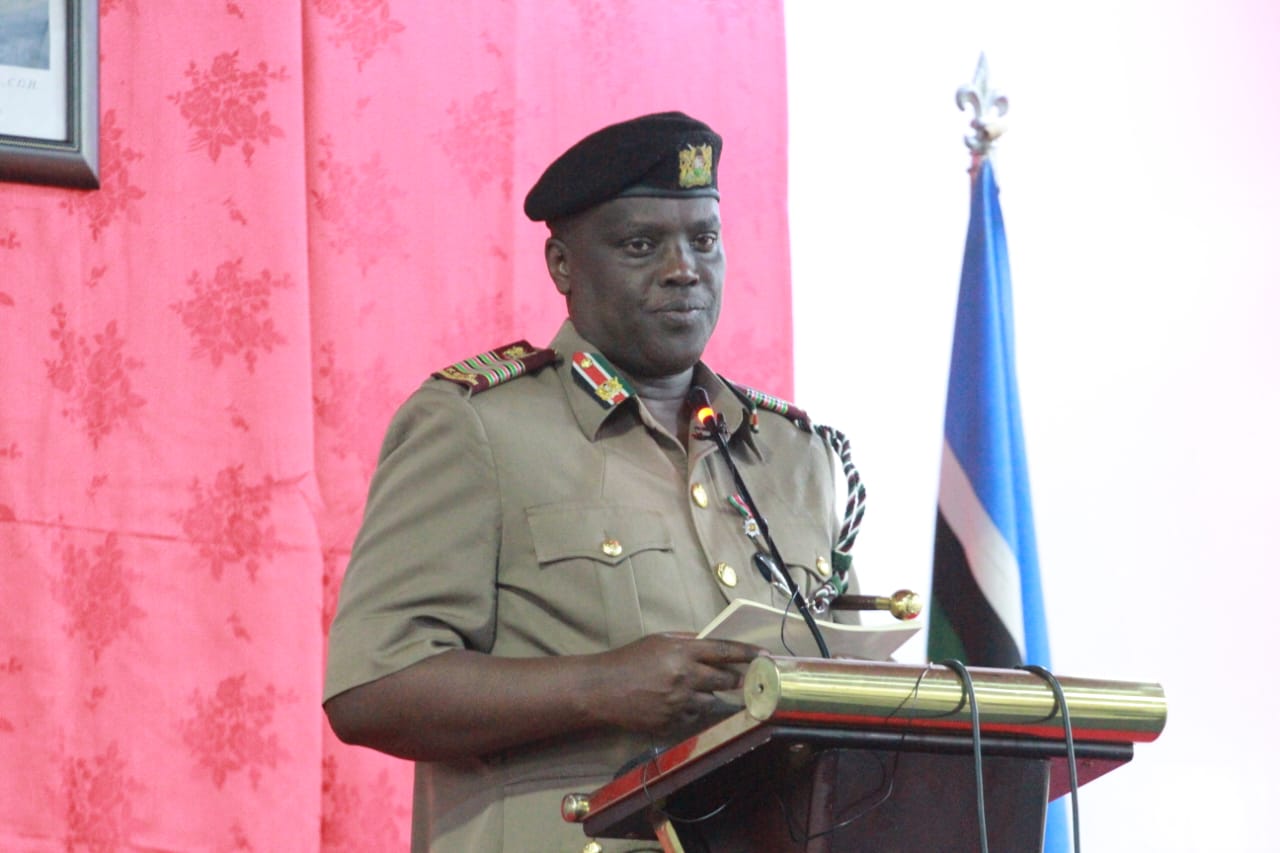
 Nairobi Regional Commissioner Gilbert Kitiyo, during a press briefing on December 11, 2025/ENOS TECHE
The government has identified at least 126 organised criminal gangs
operating within Nairobi, following an extensive intelligence-led mapping
exercise aimed at dismantling insecurity networks in the capital.
Nairobi Regional Commissioner Gilbert Kitiyo said the gangs were uncovered
through a targeted programme focusing on organised crime and emerging security
threats.
Speaking on Radio Generation,
Kitiyo said the authorities had already moved from intelligence gathering to
enforcement, with arrests ongoing across the city.
“When it comes to organised crime, these are criminals who use all manner of
tricks and ways to reach out to people,” Kitiyo said.
“In Nairobi we have recorded almost 126 criminal gangs using various names.”
According to the regional commissioner, the gangs operate in defined zones
across the city and rely on structured leadership, communication networks, and
social spaces to recruit and coordinate criminal activity.
He said security agencies have undertaken detailed profiling of the groups,
including identifying their leaders, operational areas, and methods.
“What we normally do is very clear mapping where we identify those groups
and even gang leaders, their telephone numbers, where they operate and how they
operate, and then we take care of them,” Kitiyo said.
The mapping exercise is part of a broader government initiative launched on
October 15 this year under the Rapid Results Initiative (RRI) on insecurity and
organised crime.
Kitiyo said the programme was designed to deliver quick, measurable gains in
the fight against criminal networks through coordinated, multi-agency action.
“On October 15 this year, we launched a programme called RRI on insecurity
and organised crime,” he said.
“We did the mapping to understand these groups and that's how we came up
with the 126 groups.”
Following the intelligence phase, the operation has shifted to targeted
enforcement.
Kitiyo said security agencies are now focusing on individual gang members
and leaders, leading to a series of arrests in recent weeks.
“Now we are targeting individuals and so many of them have been arrested,
and we continue arresting them even now,” he said.
The RRI approach, according to the commissioner, goes beyond gang arrests to
address enablers of crime within communities.
Kitiyo said authorities identified specific locations commonly used by
criminal groups to plan, recruit, and hide from law enforcement.
“With that RRI, there are a number of things we were focusing on including
criminal gangs, cartels, illicit brew dens,” he said, adding that many gang
members “hang around there.”
Pool tables and informal entertainment joints were also flagged as key
congregation points used by criminal elements to coordinate activities and
recruit young people into gangs.
Kitiyo said security teams have intensified patrols, inspections, and
crackdowns in such locations as part of the wider operation.
The commissioner said the ongoing efforts are aimed at restoring public
safety, disrupting organised crime networks, and deterring youth from joining
gangs.
He urged residents to cooperate with law enforcement by sharing information and reporting suspicious activities, saying community support remains critical to sustaining gains made through the RRI programme.