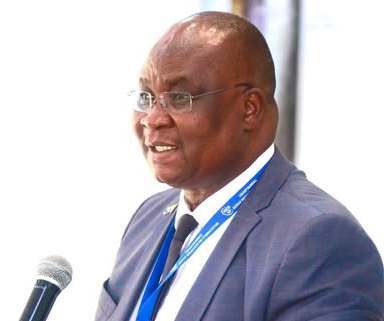
The Kenya Institute of Curriculum Development (KICD) has urged publishers to prioritise the printing and delivery of textbooks to schools ahead of the January reporting of Grade 10 learners.
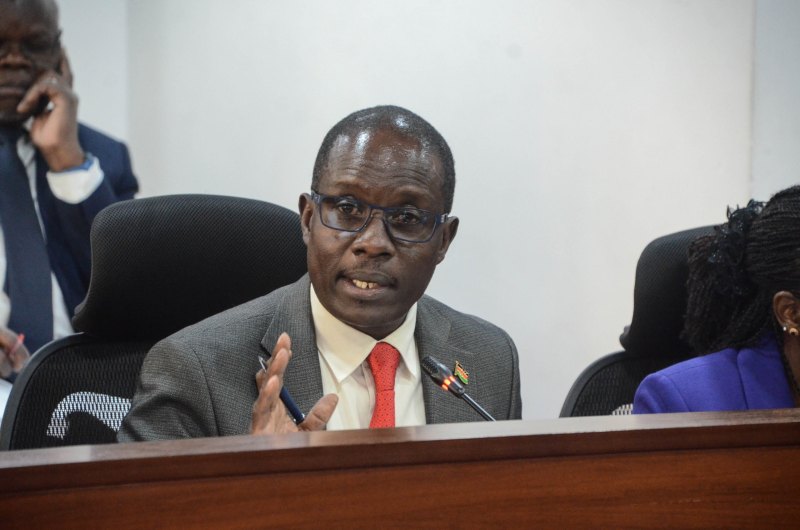
KICD Chief Executive Officer Charles Ong’ondo assured publishers that all outstanding payments would be settled.
“The government is committed to the dues. It has never failed to pay,” Ong’ondo told The Star, acknowledging that publishers also have financial obligations of their own.
He urged publishers to put learners first as the country transitions students into the next phase of the Competency-Based Curriculum (CBC).
“We understand publishers have bills to take care of, but we appeal to them to consider prioritising delivery to schools,” Ong’ondo said.
“If they need commitment letters from us, we are ready to provide them.”
Grade 10 learners are expected to report to schools in January, marking the rollout of senior school under the CBC. Ong’ondo noted that delays in textbook delivery could disrupt learning at this critical stage.
Last month, printing firms reportedly turned away publishers over outstanding debts for Grade 8 and 9 books supplied in 2022.
The pioneer CBC class set to join senior school in January requires seven million copies of textbooks and literary works.
Publishers say the Grade 10 curriculum includes 35 different textbooks and literary works, to be supplied by 21 publishing firms, all of which must be delivered before schools reopen.
Ong’ondo also addressed concerns about media coverage following the release of the Kenya Junior School Education Assessment (KJSEA) results.
He said excessive focus on subject-by-subject performance and perceived weaknesses had caused anxiety among parents and, in some cases, learners themselves.
“It is troubling parents and even learners when we profile them based on key competencies, what they did best and what raised concern,” he said.
On performance, Ong’ondo noted that science, previously an area of concern, recorded encouraging results, with most learners meeting expectations.
However, he added that mathematics and Kenya Sign Language did not perform as anticipated.
“For us as curriculum developers, those are areas we must review. What prevented learners from achieving the expected outcomes? Is it the curriculum, teaching approaches, or what is happening in schools?” he said.
He indicated that quality assurance mechanisms would be reviewed to identify gaps, including infrastructure challenges, curriculum overload, and teaching methodologies.
Ong’ondo also highlighted the need for enhanced teacher retooling and capacity building.
“Generally, out of the 12 learning areas, we are moving in the right direction,” he said.
“Not all learners will exceed expectations, but all learners should meet expectations. The key question is why some are not getting there.”
Overall, Ong’ondo said the KJSEA met its objectives but called for strengthened multi-agency collaboration, including continuous professional teacher development under the Teachers Service Commission (TSC), to improve learning outcomes as CBC implementation progresses.