

Kenya could be losing significant economic opportunities by exporting raw minerals instead of investing in local processing and value addition, engineers have said.
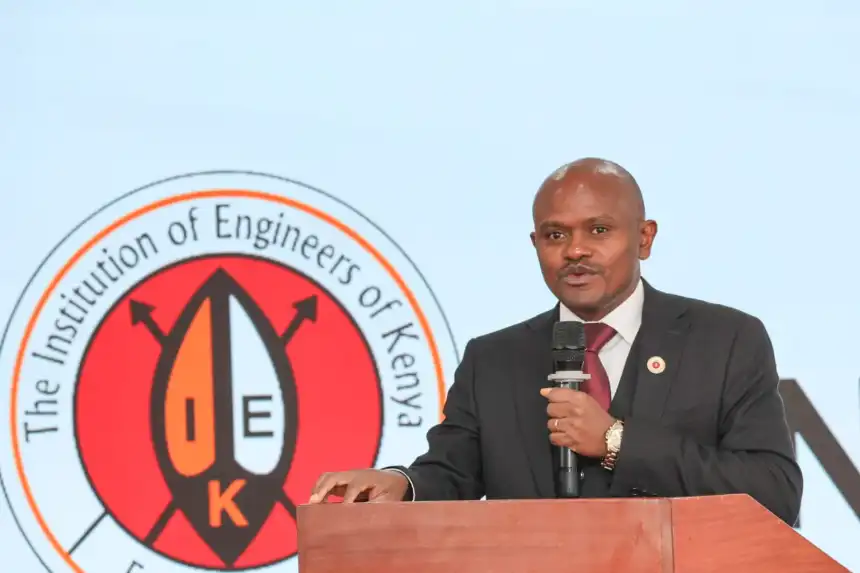
Institution of Engineers of Kenya (IEK) President Shammah Kiteme urged professionals in the extractive sector to take a more active role in safeguarding the country’s mineral resources and influencing policy reforms.
Speaking at an event organised by the Mining Engineers Society of Kenya (MESC), Kiteme questioned the long-standing model in which minerals are extracted locally and processed abroad, arguing that this approach limits the benefits retained within the country.
He expressed concern that Kenya largely relies on taxes and royalties from mining operations, which he said may not fully reflect the value of the extracted resources.
“What role are professionals playing when mining licences are issued in a way that leaves the country mainly dependent on royalties?” Kiteme posed, framing the issue as a policy and governance challenge within the sector.
Kiteme argued that Kenya has the technical expertise and skilled workforce to support local mining, processing and export of finished mineral products, which he said could create employment and contribute more substantially to economic growth.
He cited what he described as underutilised or stalled mineral projects, including titanium mining and coal deposits in the Mui Basin, as examples of untapped potential.
According to Kiteme, if effectively managed, the mining sector could make a stronger contribution to national development financing, reducing pressure on public borrowing. He emphasised that this view reflects his assessment of the sector’s long-term potential rather than current fiscal outcomes.
He called on engineers to go beyond technical work and engage in advocacy to push for reforms aimed at strengthening local value addition and accountability in the extractive industry.
Kiteme also cautioned that global demand for Africa’s mineral resources is increasing, underscoring the need for policies that prioritise domestic industrialisation.
He said some infrastructure investments on the continent have raised questions about whether they sufficiently support local processing and manufacturing.
He pointed to policy measures adopted in some African countries to limit the export of raw materials in favour of domestic value addition, urging Kenya to consider similar strategies.
“We have the technical skills across multiple engineering disciplines,” Kiteme said.
“The question is how we align policy, investment and governance to ensure those skills translate into local processing and broader economic benefits.”