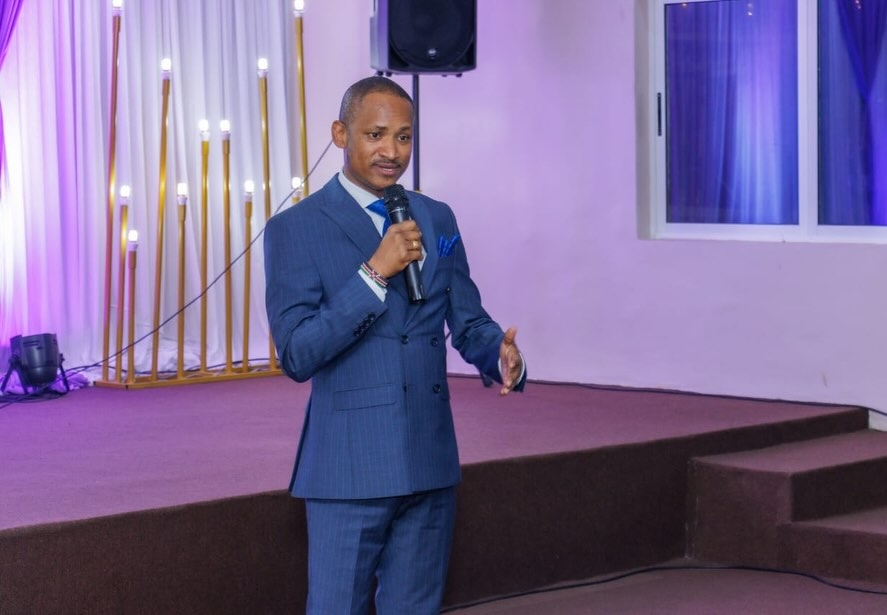


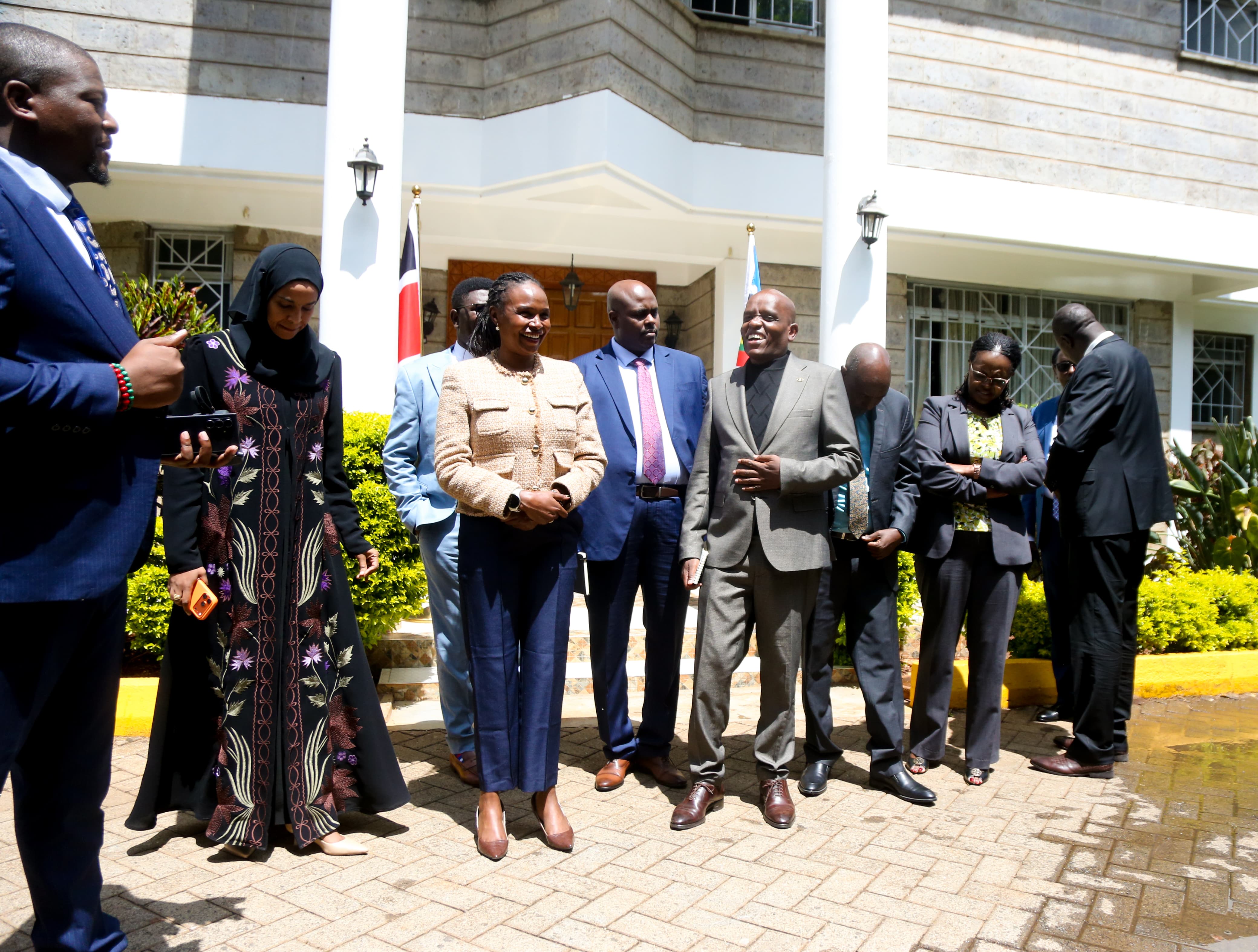
 Presidential Special Projects head Dennis Itumbi with a group of PSs at his Nyari office on December 15, 2025/HNADOUT
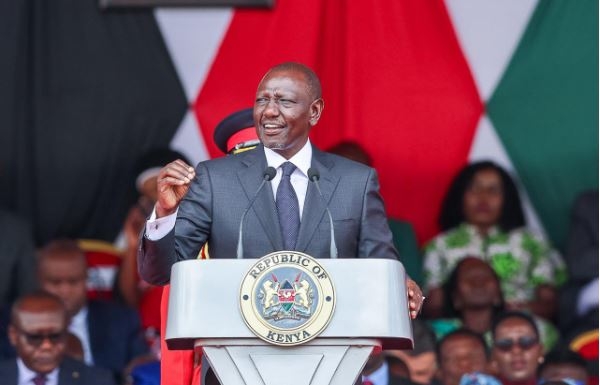
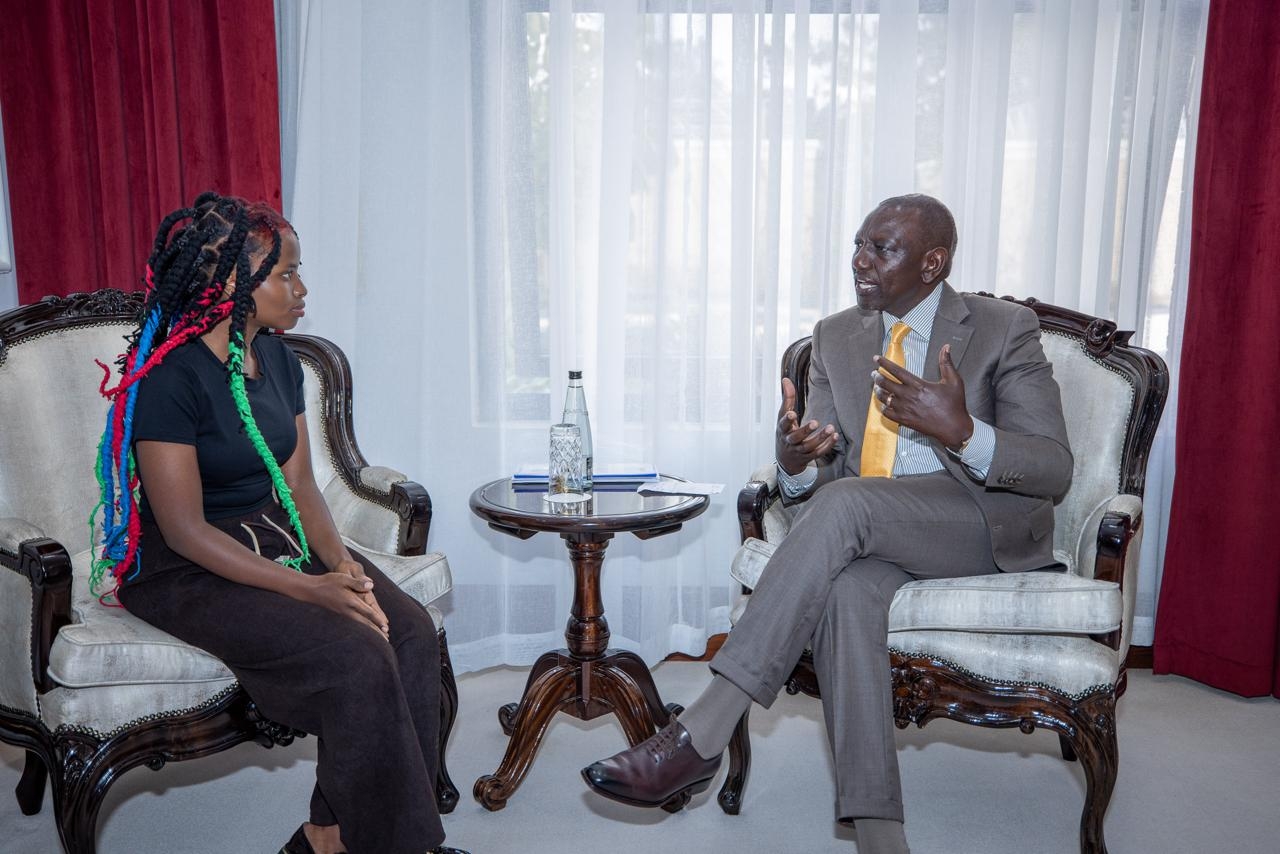
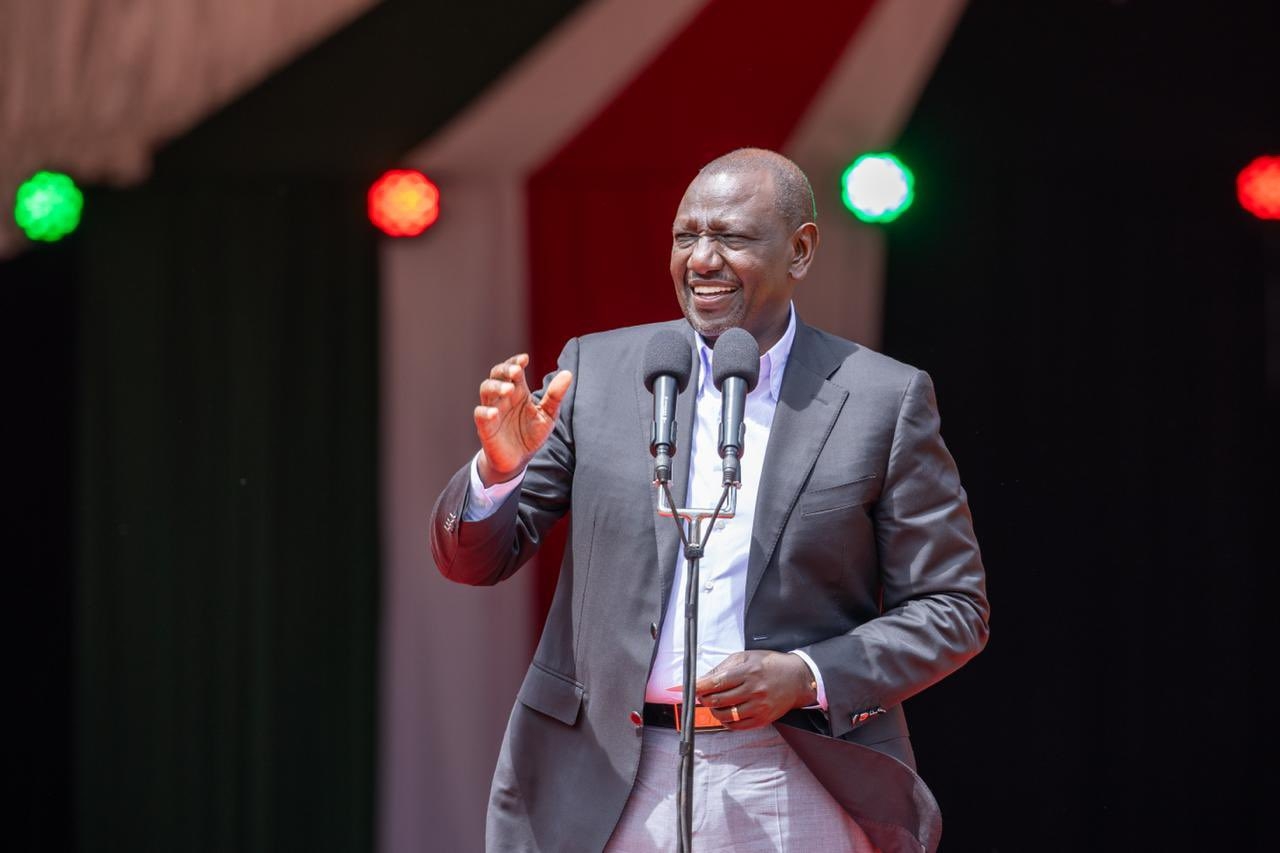
President William Ruto will host 5,000 delegates from marginalised and minority groups on Thursday in an event marking the International Day for Minority Rights.
The delegates, drawn from various communities, are expected to arrive dressed in their traditional regalia at State House, Nairobi.
The government says Thursday’s event is part of President Ruto’s policy of mainstreaming minorities, in line with UN requirements for the day, which was established in 1992.
The day, marked on 18 December, was established by the United Nations to promote and protect the rights of persons belonging to national, ethnic, religious, and linguistic minorities.
On Monday, eight Principal Secretaries (PSs) met with Presidential Head of Special Projects and the Creative Economy, Dennis Itumbi, at his Nyari office to fine-tune the programme for Thursday’s events.
The group announced that the delegates will be transported from at least 38 of the country’s 47 counties to attend the State House fete.
Among the communities to be represented are the Ndorobo, Ogiek, Dasenach, Njemps, Walwana, Rendille, Burji, El Molo, Sakuye, Suba, Kuria, Makonde, Shona, Nubians, among others.
“This is the first time in 30 years that minorities are getting the recognition they require,” Wildlife PS Sylvia Museiya said.
On his part, Itumbi announced that Ruto has since created a department to handle issues of minorities in the Office of the President, while asking persons identifying with minority groups, including journalists, to grace the day.
“I am asking even you journalists to identify a colleague from the minority communities to dress in their traditional attire and attend the event,” Itumbi said.
PSs who attended the meeting include Ms Museiya, Umi Bashir (Culture, Arts and Heritage), Fikirini Jacobs (Youth and Creative Economy), Idris Dakota (Cabinet Office), Director of the Minority and Marginalised Affairs Unit Abdihakim Kahiya, among other representatives.
Article 56 of the Constitution mandates the State to put in place affirmative action programmes designed to ensure that minorities and marginalised groups participate in and are represented in governance and other spheres of life.
Minorities are also to be provided with special opportunities in educational and economic fields, as well as special opportunities for access to employment.
The State is further required to help them develop their cultural values, languages, and practices, and to ensure reasonable access to water, health services, and infrastructure.
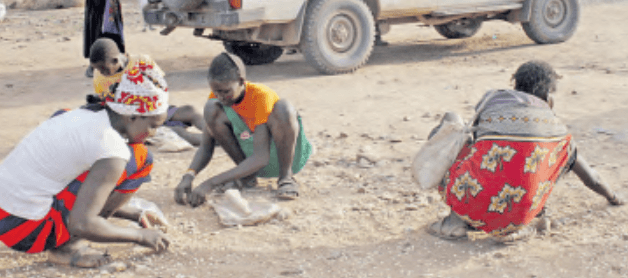
Many marginalised groups in Kenya, however, continue to face systemic discrimination, socio-economic exclusion, inadequate representation in governance, and limited access to essential services.
In counties such as Turkana and Mandera, for example, the net enrolment rate for primary schools is just 43 per cent, compared to a national average of 91 per cent, according to the Kenya National Bureau of Statistics (KNBS, 2022).
The Kenya Integrated Household Budget Survey (KIHBS, 2020) also reports that poverty rates in these counties exceed 65 per cent, compared to the national average of 36.1 per cent.
“Climate change, technological gaps, and urbanisation further exacerbate these disparities, leaving these groups more vulnerable and marginalised,” National Gender and Equality Commission (NGEC) Chairperson Rehema Jaldesa said.