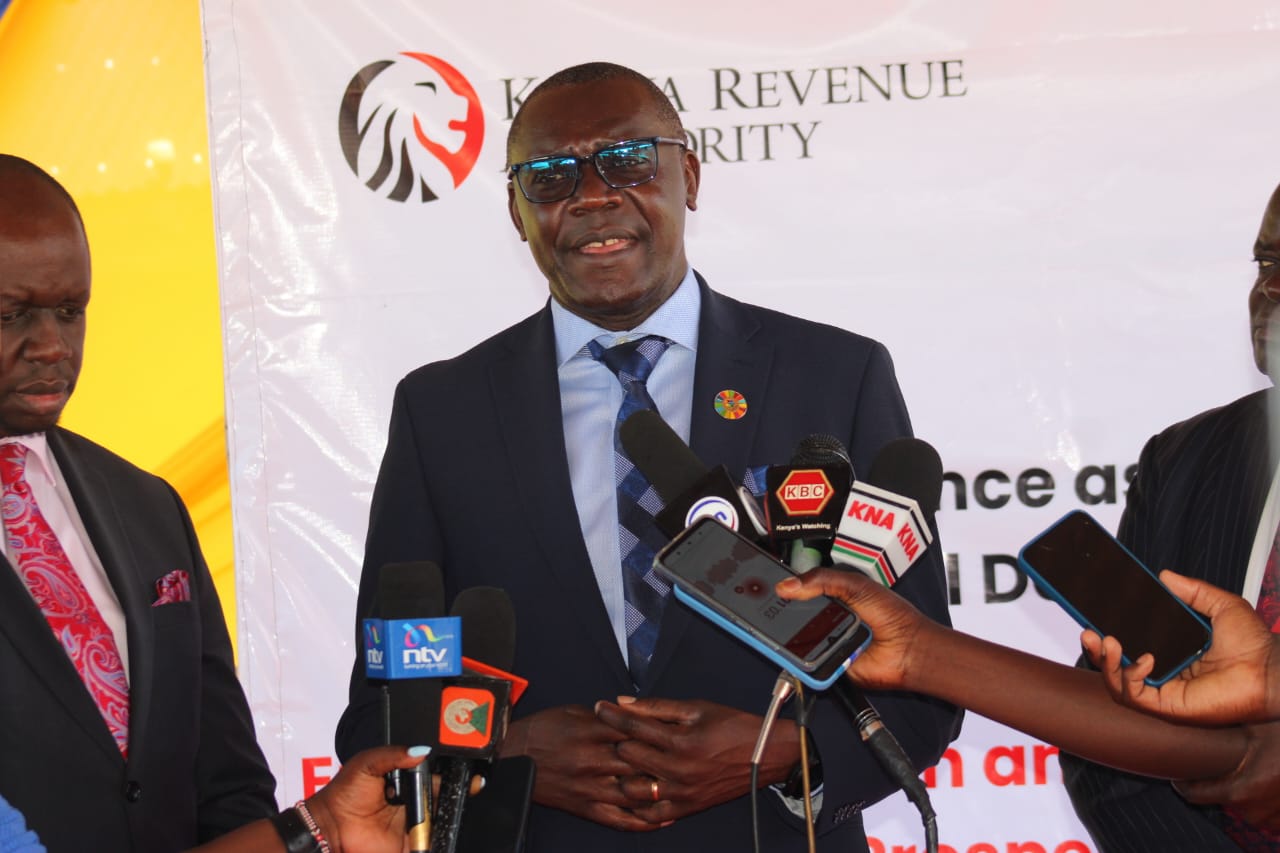
 KRA Commissioner in charge of Micro and Small Taxpayers George Obell speaking during a public lecture at the Kendu Adventist School of Medical Sciences (KASMS) on December 15, 2025./FAITH MATETE
The Kenya Revenue Authority (KRA) has stepped up efforts to bring young people unto the tax net early, citing data showing that individuals aged between 21 and 30 accounts for 42 per cent of taxpayers.
Speaking during a public lecture at the Kendu Adventist School of Medical Sciences (KASMS) on Monday, December 15, KRA Commissioner in charge of Micro and Small Taxpayers, George Obell, said most people in this age bracket are either entering employment or starting small businesses and require targeted support rather than enforcement-heavy approaches.
“Our demographics show that the 21 to 30 age group is the majority. These are young people just getting into business or employment, and they need guidance and support to understand tax obligations,” he said.
Obell noted that low-income earners benefit from existing reliefs, including the tax-free threshold for monthly incomes below Sh25,000.
“We want to bring taxpayers in early, give them tax education in good time, so compliance becomes natural rather than forced,” he said.
 Students during a public lecture at the Kendu Adventist School of Medical Sciences (KASMS) on December 15, 2025./FAITH MATETE
The commissioner said KRA is expanding continuous tax education through partnerships with institutions, communities and professional groups, including health workers and those in the gig economy.
The authority is also training community-based tax ambassadors to extend its reach beyond KRA offices.
“We are going to the ground. We want trained people within the taxpayer system who can explain obligations, benefits and filing requirements in a language people understand,” he said.
Obell acknowledged feedback from young taxpayers who recognise tax payment as a civic duty but find the system complicated and information inaccessible.
In response, KRA is enhancing community engagements, sector-specific training and institutional outreach programmes.
 Students during a public lecture at the Kendu Adventist School of Medical Sciences (KASMS) on December 15, 2025./FAITH MATETE
“If your annual turnover is between Sh1 million and Sh25 million, you qualify for turnover tax at 1.5 per cent. You don’t have to pay anything else,” he said.
The commissioner also revealed plans to introduce tax education as early as high school through discussions with education stakeholders, while maintaining focused engagements with colleges and training institutions.
“We want this to be systematic and consistent, not ad hoc. People should understand what it means to have a PIN, to file returns and to obtain a tax compliance certificate, especially when doing business with government,” she said.
On enforcement, Obell said KRA has taken administrative measures to prevent taxpayers from being pushed to extreme situations due to tax debts arising from delayed government payments.
These include allowing payment plans and issuing agency notices to government institutions owing taxpayers, instead of attaching bank accounts.
“If your tax debt arises from pending government bills, you can come forward and agree with us on how the tax will be settled. Tax should not be the reason someone is forced to the extreme,” he said.
He added that regulatory changes will be communicated to taxpayers to clarify their rights. Addressing concerns over the high number of nil returns filed by young people,Obell said filing remains a legal requirement even for those without income.
However, KRA is rolling out simplified digital solutions to make nil return filing easier.
“We are simplifying the process so that if you have no income, you just click a button, declare and close. By February, we will be rolling out these tools to make compliance easy and accessible,” he said.
He emphasised that the authority is also analysing data to distinguish between genuine nil filers and those earning income but under-declaring, noting that those with income must pay their fair share.
“Our goal is simple, make compliance easy, build a culture of tax responsibility early, and support young taxpayers as they grow,” he said.