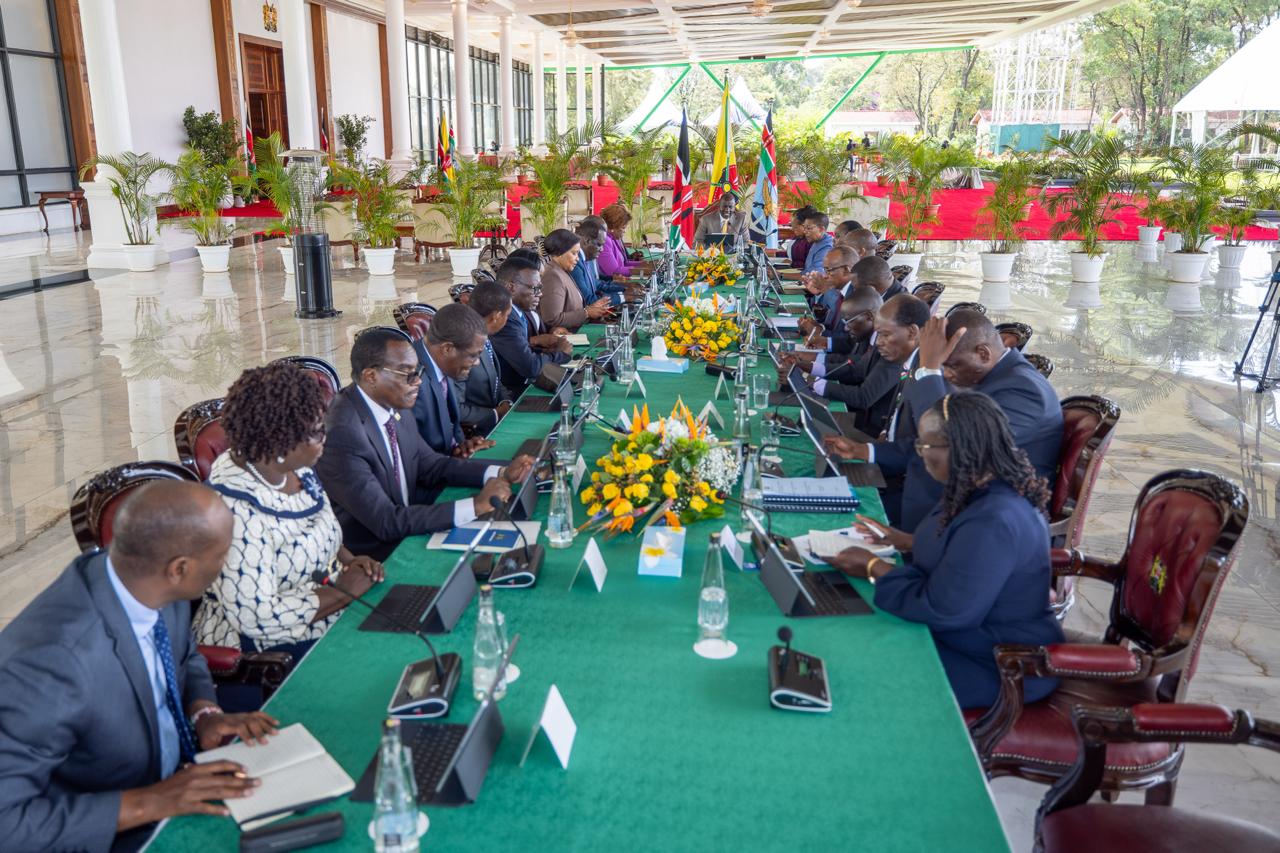
 President William Ruto chairs cabinet meeting on December 15, 2025 / PCS
The Cabinet has approved the National Energy Policy, a move aimed at guiding reforms in the energy sector and accelerating access to modern, reliable, and sustainable energy across the country.
According to a Cabinet dispatch released on Monday, December 1, the policy responds to long-standing challenges that have constrained energy development, including low electricity access, heavy reliance on traditional biomass, unreliable power supply, limited private investment, and growing climate-related risks.
It sets out measures to expand renewable energy, strengthen private sector participation, and promote climate-resilient energy infrastructure to support economic growth and social development.
“In support of energy expansion, the Cabinet approved the National Energy Policy to guide sector reforms and accelerate access to modern, reliable and sustainable energy,” the dispatch read.
During the same meeting, Cabinet endorsed the National Petroleum Policy, updating a framework that has remained largely unchanged since 2004.
The revised policy aligns the petroleum sector with the Constitution and reflects recent developments, including oil discoveries and evolving global energy markets.
The petroleum policy seeks to strengthen governance and regulatory oversight, attract investment, enhance national energy security, and promote value addition within the sector.
It also prioritises increased uptake of liquefied petroleum gas (LPG) to reduce reliance on traditional fuels, improve revenue management, and ensure environmental protection across upstream, midstream, and downstream activities.
Beyond energy reforms, Cabinet noted progress in settling outstanding obligations in the roads sector.
All pending bills for certified works and accrued interest in the Ministry of Roads up to December 31, 2024, have now been fully paid, with total disbursements amounting to Sh123 billion.
The government said the payments have restored contractor confidence and enabled stalled works to resume.
Overall, the settlement programme has unlocked or accelerated 875 road contracts since April 2025, easing pressure in the construction sector and supporting infrastructure delivery across the country.
President William Ruto-led Cabinet also approved the rollout of second-generation smart driving licences through a public–private partnership.
The new system will integrate smart licences with an instant fines platform, a mobile licence wallet, and a driver merit and demerit points framework.
The initiative is intended to enhance road safety, improve compliance, and modernise driver licensing and enforcement.