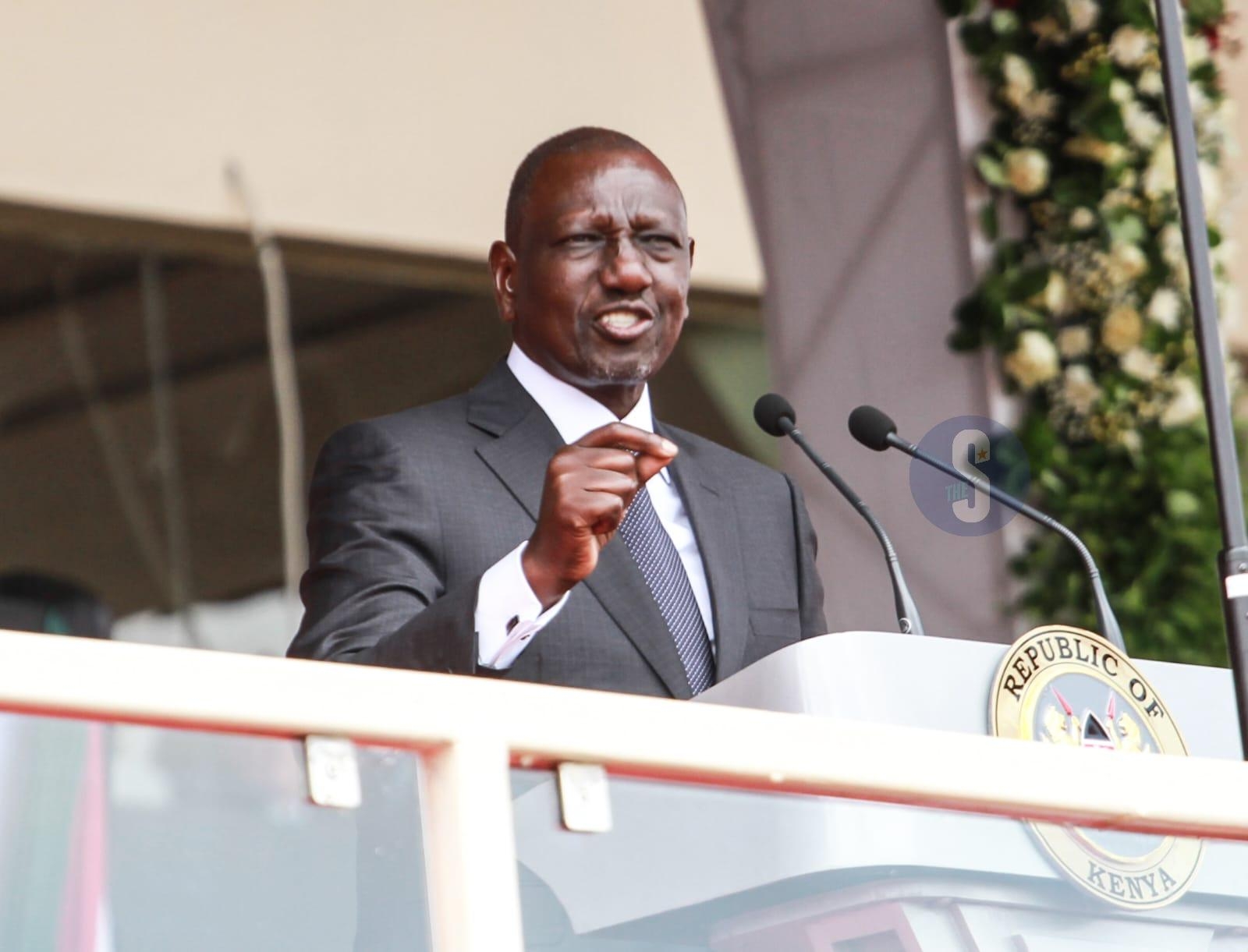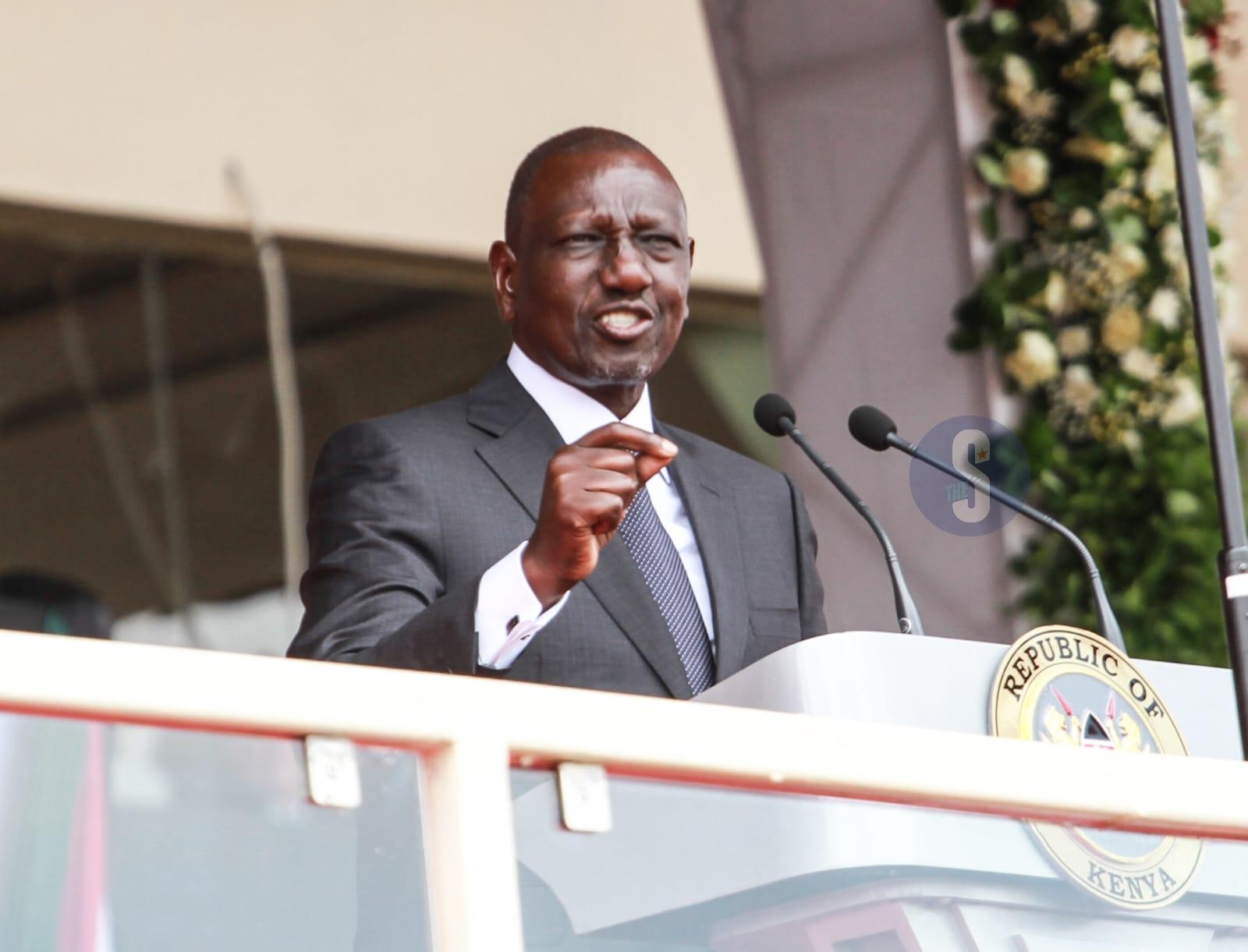


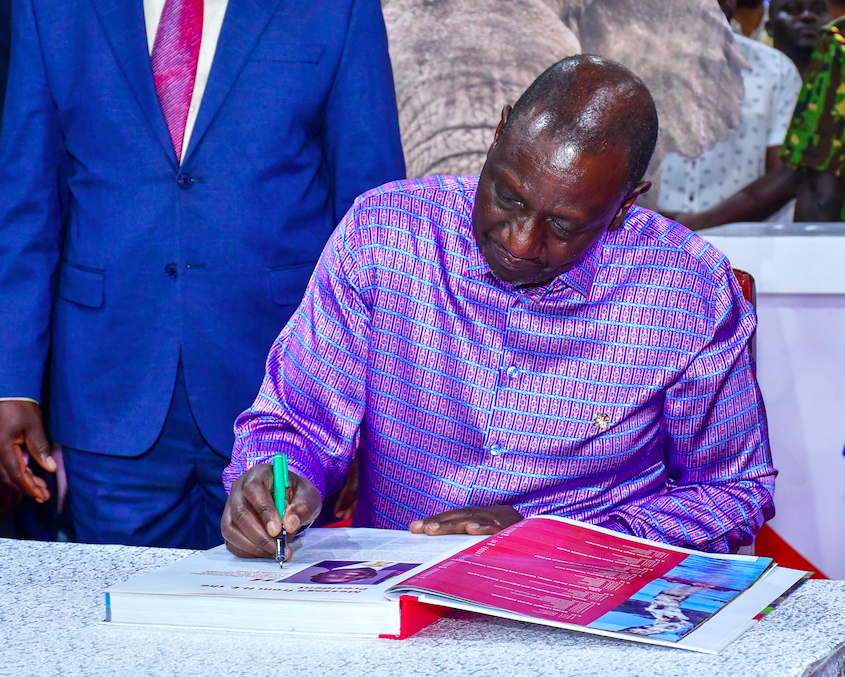
President William Ruto appends his signature on the National Wildlife Census 2025 report at KICC on December 11.
The latest report has shown that Kenya’s iconic species are
thriving, with the population of elephants hitting 42,072.
The 2021 report showed that there were 36,280 jumbos, meaning there is an annual change of 3.99 per cent.
The 2025 National Wildlife Census report that was unveiled on Thursday by President William Ruto shows that the rhino population in the country is now 2,102.
The report shows that there are 1,059 Black rhinos, 1,041 and two Northern white rhinos.
This means there is an annual change of four per cent.
Ruto lauded the new report, saying it shows the wildlife in the country are thriving.
He announced a number of initiatives meant to promote tourism in the country, such as the ongoing construction of a modern conference centre at Bomas that he said should be ready by next year in May.
Ruto said the government targets to bring five million tourists by 2028 and rake in a trillion shillings.
During the event that was also attended by Tourism CS Rebecca Miano, a number of products seeking to promote tourism were launched.
The second National Wildlife Census covered 264,258 square kilometres, about 45 per cent of Kenya’s land area. This was achieved in 1,518 flight hours of aerial survey work, complemented by ground counts, camera traps, spatially explicit capture-recapture methods and coastal and marine assessments. The data are robust, replicable and integrated into our national statistics systems.
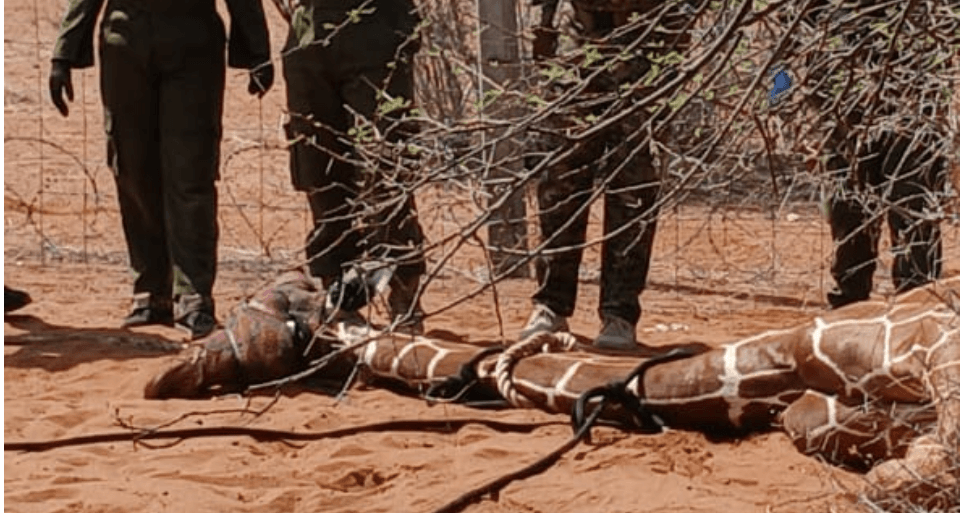
The report shows that the population of giraffes has also increased.
The report shows that there are 10,410 Maasai giraffes, 1,388 Nubian giraffes and 31,201 reticulated giraffes, bringing a total population to 43,002.
The 2021 report showed that there were 35,355 giraffes, meaning there is an annual change of 5.41 per cent.
The report shows there is, however, a decrease in the population of Grevy's zebra.
The report shows there are 2,465 Grevy's zebra as opposed to 2,649 that were recorded in 2021, meaning there is an annual change of -1.74 per cent.
The report shows there were 21 Roan antelopes as opposed to 15 that were captured in the 2021 census, meaning there was a 10 per cent change.
The report shows there were 179 mountain bongos.
In 2021, the census captured 150 mountain bongos, meaning there was an annual change of 4.83 per cent.
Ninety-three of the mountain bongos were in captivity, while 86 were in the wild.
The report shows there were 40 Sable antelope in 2025 as opposed to 51 in 2021, meaning there is an annual change of -5.4 per cent.
It also shows there were 245 hirolas in 2025 as compared to 497 in 2021 meaning there is an annual change of - 12.68 per cent
In 2025, the Rangeland Buffalo numbered 27,389, while the 2021 report captured 41,659, meaning there is an annual change of -8.58 per cent.
Wildlife Research and Training Institute CEO Dr Patrick Omondi said the second National Wildlife Census covered 264,258 square kilometres, about 45 per cent of Kenya’s land area.
“This was achieved in 1,518 flight hours of aerial survey work, complemented by ground counts, camera traps, spatially explicit capture-recapture methods and coastal and marine assessments. The data are robust, replicable and integrated into our national statistics systems,” Omondi said.
The reports, however, show that Kenya’s wetlands are in distress.
Lake Elementaita recorded a 97 per cent decline in selected waterbird populations, while Lake Bogoria recorded a 60 per cent decline.
Mida Creek showed a 49 per cent increase, but across 11 Important Bird Areas, counts fell by 80 per cent.
Omondi said there is a need to integrate the National Wildlife Corridor Mapping initiative and wildlife census data into national and county spatial and land-use plans and strengthen mechanisms that promote human-wildlife co-existence
He said there is a need to accelerate enactment and implementation of the Wildlife Conservation and Management Bill (2025) and complementary amendments to the Wildlife Act, 2023.
The census was spearheaded by Wildlife Research and Training Institute in collaboration with the State Department for Wildlife, the Kenya Wildlife Service, the Directorate of Resource Surveys and Remote Sensing and other partners.
It was carried out in two phases covering some of the country’s most important wildlife landscapes.
The first phase spanned the Maasai Mara ecosystem, the Amboseli-Magadi ecosystem, the Naivasha-Nakuru ranches, the Mwea National Reserve and the Solio Conservancy, as well as the Ruma and Nakuru national parks.
The second phase extended to the Laikipia-Samburu-Marsabit-Isiolo ecosystem, the Tsavo ecosystem, Turkana’s Nasalot, Garissa and Wajir counties, the Lamu and Tana River ecosystem, Shimba Hills National Reserve and Sibiloi and Lake Turkana national parks.
Kenya conducts a national wildlife census every three years to monitor populations, habitats and migration patterns. The last one, undertaken in 2021, revealed encouraging increases in special species, including lions, giraffes, elephants, Grevy’s zebras and rhinos.