


The government has unveiled plans to construct five high-end hotels in Tsavo West National Park, with nightly rates of up to US$1,000 (Sh130,000).
The move is as part of a broader strategy to elevate Kenya’s wildlife tourism offering and strengthen conservation financing.
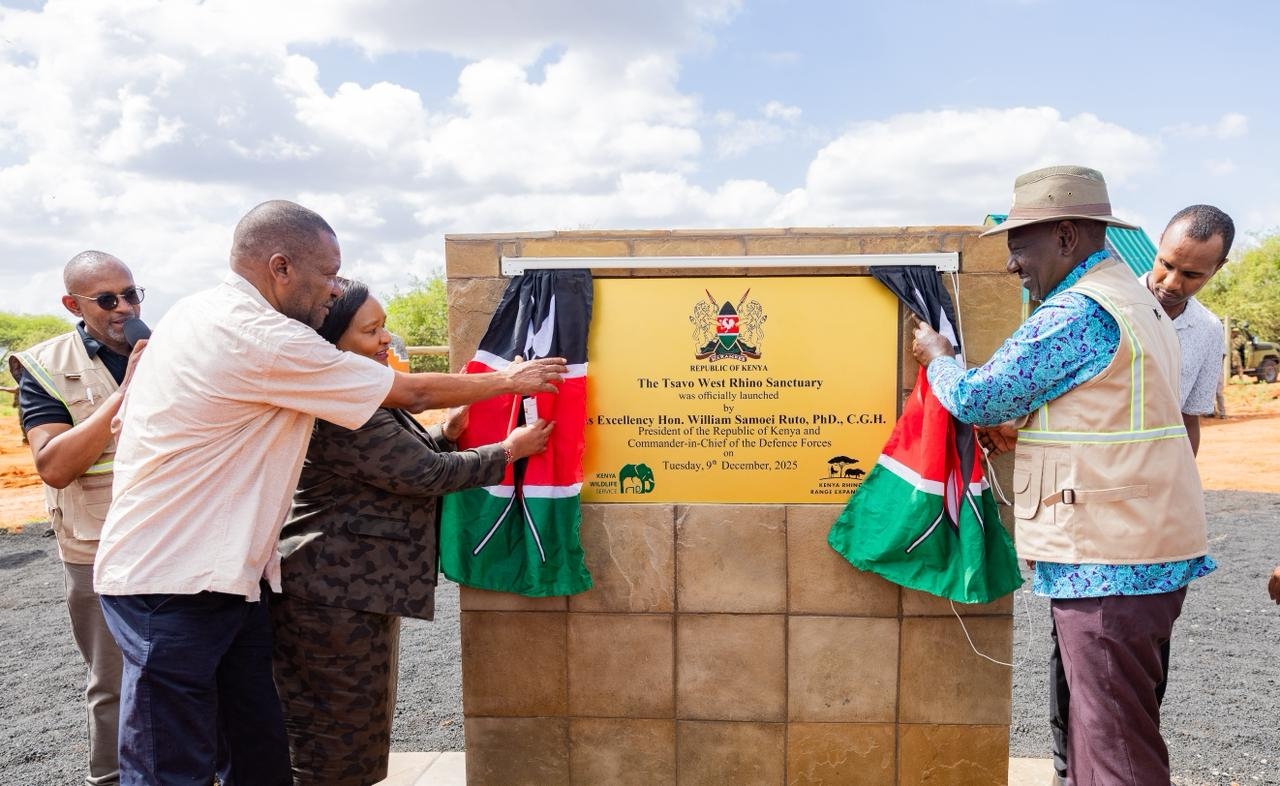
President William Ruto announced the plan during the launch of what is now the world’s largest rhino sanctuary, a vast 3,200-square-kilometre wildlife protection area in Tsavo West.
He said the hotels would target premium tourists, similar to those visiting the Maasai Mara.
“I have been informed by KWS that we will have five new hotels here. The five hotels will be high end and visitors will pay US$500 or US$1,000 per night,” the President said.
He added that the pricing model mirrors existing high-end accommodation in Kenya’s flagship reserves. “The amount is the same that hotels in Maasai Mara charge.”
Ruto defended the premium rates, arguing that the cost reflects the heavy investment and logistical demands required to maintain and secure the sanctuary.
“Coming here to see these animals is not a small thing. I have told you all we have done to make this place what it is; 300 officers, radios, planes. All that work and then someone thinks it will be easy to spend the night here. It will not happen.”
He firmly ruled out the development of low-cost accommodation inside the protected area, saying such establishments would be restricted to nearby towns.
“We have agreed with KWS, we will not have hotels here charging Sh2,000 or Sh3,000. For those kind of hotels, you will have to go to Voi,” he added.
The launch of the sanctuary marks a historic milestone for conservation in Kenya, significantly expanding rhino habitat in a bid to revive breeding success and reduce pressures resulting from overcrowding.
For decades, the Ngulia Rhino Sanctuary , measuring just 92 square kilometres, has hosted nearly 150 black rhinos, more than two and a half times its ecological capacity.
The congestion has hampered breeding, increased territorial conflict, lowered calf survival, and caused severe stress to the animals.
Across Kenya, more than 80 per cent of the country’s black rhino population also lives in similarly constricted protected areas, which conservationists say has restricted efforts to boost rhino numbers nationally.
“With this expansion, the 150 rhinos in Ngulia will now merge with 50 rhinos in the Tsavo West Intensive Protection Zone to form a single founder population of 200 black rhinos, the largest black rhino population in Kenya and among the most significant on the African continent,”Ruto said.
The Tsavo landscape once served as one of Africa’s greatest
black rhino havens, home to more than 8,000 rhinos in the early 1970s.
However, decades of relentless poaching, prolonged droughts, and intensifying human land pressure triggered a devastating collapse, leaving fewer than 20 rhinos in the ecosystem by 1989.