
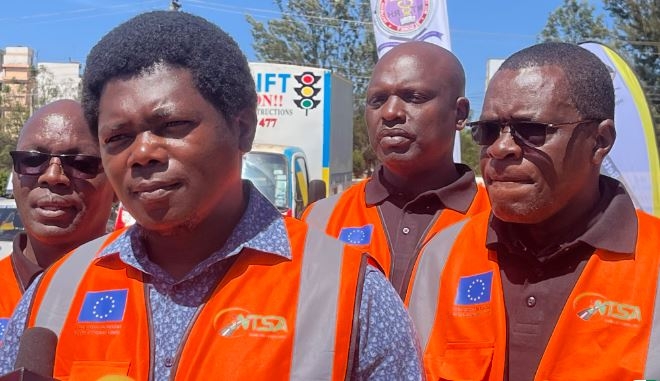
Police, NTSA intensify traffic operations to curb accidents
Additional teams are being deployed on key highways, police boss said
14d agoBY MATHEWS NDANYIRift-valley
Matatus and long-distance buses are often at the centre of road accidents in December.
In Summary

Audio By Vocalize
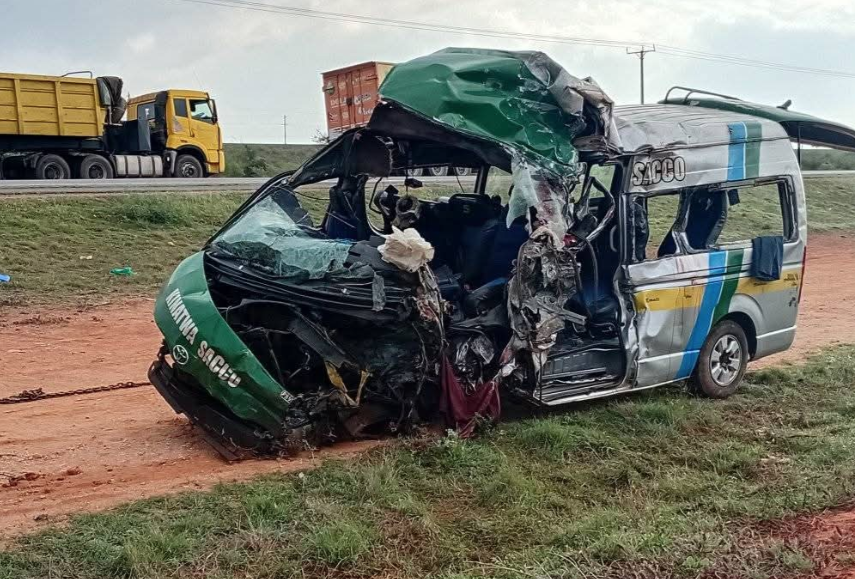
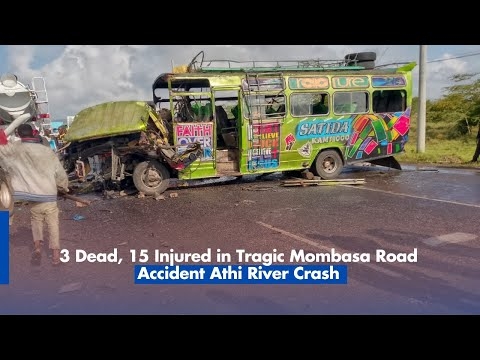
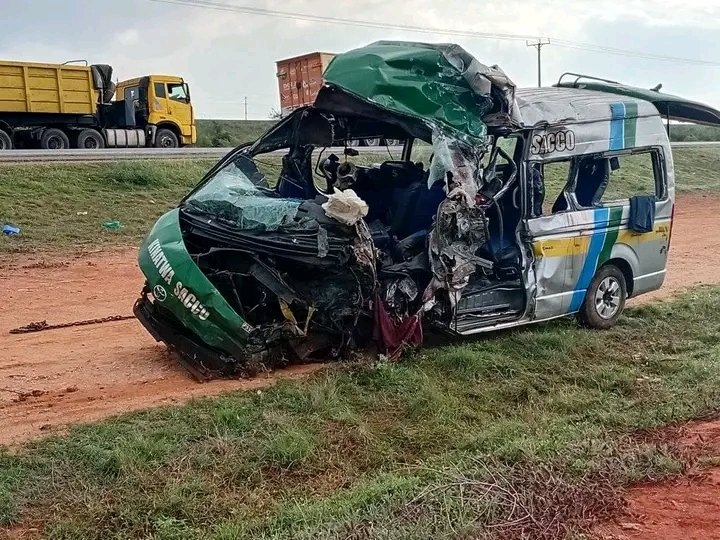
A deadly Sunday morning crash along the Nairobi–Mombasa Highway that claimed seven lives has once again underscored the grim reality of rising road carnage during the holiday season.
The accident, which occurred at Miasenyi in Taita-Taveta County, involved a matatu that collided head-on with a truck, instantly killing several passengers and injuring others.
It happened at a time when authorities are mounting nationwide efforts to curb the spike in accidents that typically accompanies the festive travel rush.
With more than 3,000 fatalities already recorded this year, the National Transport and Safety Authority (NTSA) and the National Police Service have activated joint operations to stem the loss of lives on Kenyan roads.
As Kenyans prepare to travel for Christmas and New Year holidays, the two agencies have launched a two-month 2025 Festive Season National Road Safety Awareness Campaign, themed “Road Safety and Precaution During the Festive Season in Kenya.”
The campaign is aimed at combining data-driven enforcement with public sensitisation to prevent what has, in recent years, become an annual surge in deadly accidents.
NTSA data shows the gravity of the situation. Between January 1 and October 22, 2025, a total of 3,890 people died in road crashes, surpassing the 3,805 fatalities recorded during the same period in 2024.
Among those killed were 351 drivers, 378 pillion passengers, 57 cyclists and an alarming 1,000 motorcyclists. Vulnerable road users remain the most affected, accounting for the majority of the lives lost.
NTSA acting director general Angele Wanjira said the agency is intensifying preventative measures anchored on the Safe System Approach—an internationally recognised framework that focuses on designing a transport system resilient enough to reduce the chance of human error resulting in death.
She said NTSA will work closely with the police in running targeted, multi-agency operations that prioritise prevention over reaction.
“We intend to strengthen real-time monitoring, roadside checks, public sensitisation and collaboration with passengers themselves,” Wanjira said.
She noted that NTSA is enforcing IRSMS (Intelligent Road Safety Management System) data transmission for public service vehicles and commercial fleets. The digital platform tracks vehicles in real time, monitors driver behaviour—including speed, harsh braking and route patterns—and flags violations that can then trigger interventions such as retraining or sanctions.
Wanjira added that NTSA will also localise road safety awareness drives and expand the Usalama Barabarani programme focusing on seat belt compliance, speed control and fatigue management.
The agency plans to empower passengers through education campaigns at bus terminals, encouraging them to report cases of speeding, drink driving, dangerous overtaking and other violations that often go unreported.
As part of the festive season efforts, NTSA will conduct free pre-travel inspection clinics at bus termini to ensure long-distance vehicles are roadworthy.
Drivers flagged by IRSMS or those found flouting regulations during roadside enforcement will undergo re-testing to assess competency before being allowed back on the road.
“Working together, we can turn this season into a model for Vision Zero, ensuring Kenyans arrive home safely,” she said.
Yet experts warn that enforcing rules alone will not be enough. Matatus and long-distance buses, which carry thousands of travellers daily during December, remain at the centre of many fatal crashes.
The holiday period sees a surge in passenger numbers, prompting operators to increase the number of trips and maximise profits.
This leads to fierce competition on highways, where speed often becomes the determining factor in attracting passengers or meeting operational targets.
As a result, overloading becomes rampant. Some vehicles pick up excess passengers or luggage, compromising their stability, braking capacity and overall safety.
Overloaded buses, especially during nighttime highway travel, struggle to manoeuvre effectively, making crashes more catastrophic. Rogue driving behaviour also spikes.
Many matatu and bus drivers engage in speeding, reckless overtaking and outright disregard for traffic rules in a bid to complete as many trips as possible.
Pressure from owners, who demand high daily returns, further exacerbates this behaviour.
Compounding the problem is driver fatigue. Long-distance bus crews sometimes drive non-stop for 10 to 18 hours, with minimal rest breaks.
On poorly lit highways, exhausted drivers are more prone to misjudgments, delayed reactions and loss of control—factors that significantly heighten the likelihood of fatal accidents.
Fatigue-related crashes tend to be severe, often involving multiple casualties.
Bribery on major routes further undermines road safety efforts, allowing rogue operators to evade enforcement.
Some matatu and bus crews reportedly pay corrupt officers to avoid penalties for speeding, overloading or operating unroadworthy vehicles.
This breakdown in enforcement enables vehicles with malfunctioning brakes, worn-out tyres, faulty lighting systems or weak structural integrity to continue operating during the busiest travel period of the year.
The result is a predictable and deadly pattern of accidents
that peak every December.
December remains particularly dangerous due to the sheer volume of travel. As families journey to rural homes or holiday destinations, the highways become congested, increasing the likelihood of collisions.
Tired drivers push themselves to cover long distances, sometimes working double shifts to meet demand. Drunk driving, speeding, and careless overtaking also spike during festive celebrations as motorists hurry to join family gatherings or nightlife events.
Kenya’s road infrastructure and enforcement systems also struggle under the pressure. Potholes, inadequate signage, poor lighting and narrow road shoulders make certain routes hazardous, especially at night.
Even so, authorities hope the intensified campaigns will curb the rising trend of holiday road deaths.
Additional teams are being deployed on key highways, police boss said