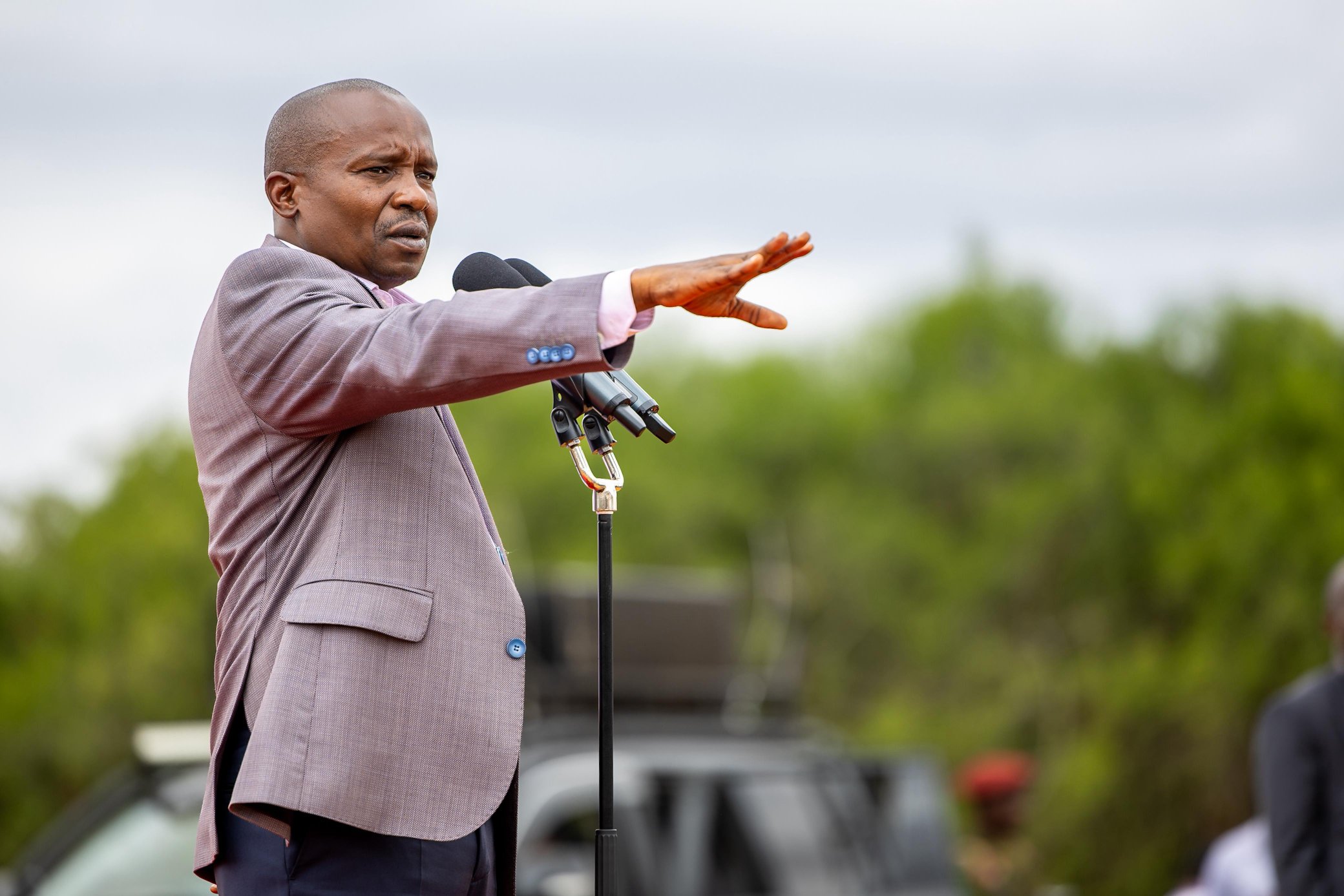

Deputy President Kithure Kindiki has said the government has opted for privatisation and Public Private Partnerships (PPP) to finance development and ease pressure on the national budget.
Speaking in Eldoret on Monday, Kindiki said the shift to PPPs and privatisation will also help ease the pressure of taxation on Kenyans to fund the government’s development programmes.
The DP said most of the ongoing major projects, especially in the infrastructure sector, are being financed through the shift that will also hasten development programmes across the country.
“The vision of our President is to enhance development in all sectors across the country, and we have now found a way out to get financing for the initiatives,” Kindiki said.
Kindiki was speaking at Moi Girls High School in Eldoret during the closing ceremony of the 98th Kenya Music and Cultural Festival.
He was accompanied by the Uasin Gishu Governor Jonathan Bii, among others.
Kindiki said the shift to PPPs and privatisation will also help the government allocate more resources to local initiatives aimed at building national unity, cohesion, and patriotism.
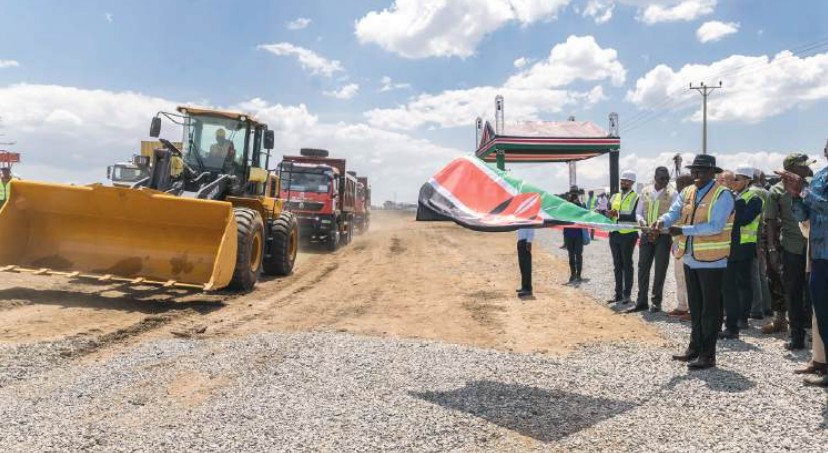
The DP said the dualing of the Rironi–Mau Summit highway was just one of the many infrastructure projects to be rolled out soon.
He said in February, President William Ruto would commission the dualing of Mombasa Road through the same model of funding.
Kindiki said JKIA was being modernised to make it world-class and increase traffic through the facility.
“We target to increase the traffic flow at JKIA from the current about 10 million to over 100,000 annually, matching developed airports like in Dubai,” Kindiki said.
He said about 22,000 kilometres of roads had been tarmacked in the country, but the government planned to develop more roads as part of measures to make the country a first-world nation.
Kindiki said that to enhance access to other services like water, the government would speed up the construction of 50 mega dams to help supply water to Kenyans.
The DP said the projects were part of developing the country’s hardware but added that there was a need to also invest in building the nation’s software.
The software includes building a cohesive and patriotic country where citizens value their unity, diversity, and culture, and are more patriotic.
“The building of our hardware is on course, but we must also invest more in building our software which is necessary. Ethics and values are as important as the roads and dams,” Kindiki said.
He said developed nations are more stable because of development and also because of stronger systems that promote values like patriotism.
“We must have Kenyans love their country, their culture and traditions so that we have a more cohesive society that can withstand shocks like politics and even climate change,” he said.
He said music and culture play a role in nation-building, considering the current challenges in the social and family space.
Social media, he said, had caused children to lack respect for traditions and culture, including respect for the old.
Kindiki noted that language and culture are stronger values for national unity than education.
“Our identity is in language and culture and we have to develop the same as we grow as a nation,” he said.
Kindiki said there must be deliberate efforts to invest more resources in building morals among children and the younger generation, which he noted had been negatively affected by the advent of social media.
“We must have patriotic people. Love our country as our motherland. Teach our children about the promotion of good morals and respect,” he said.