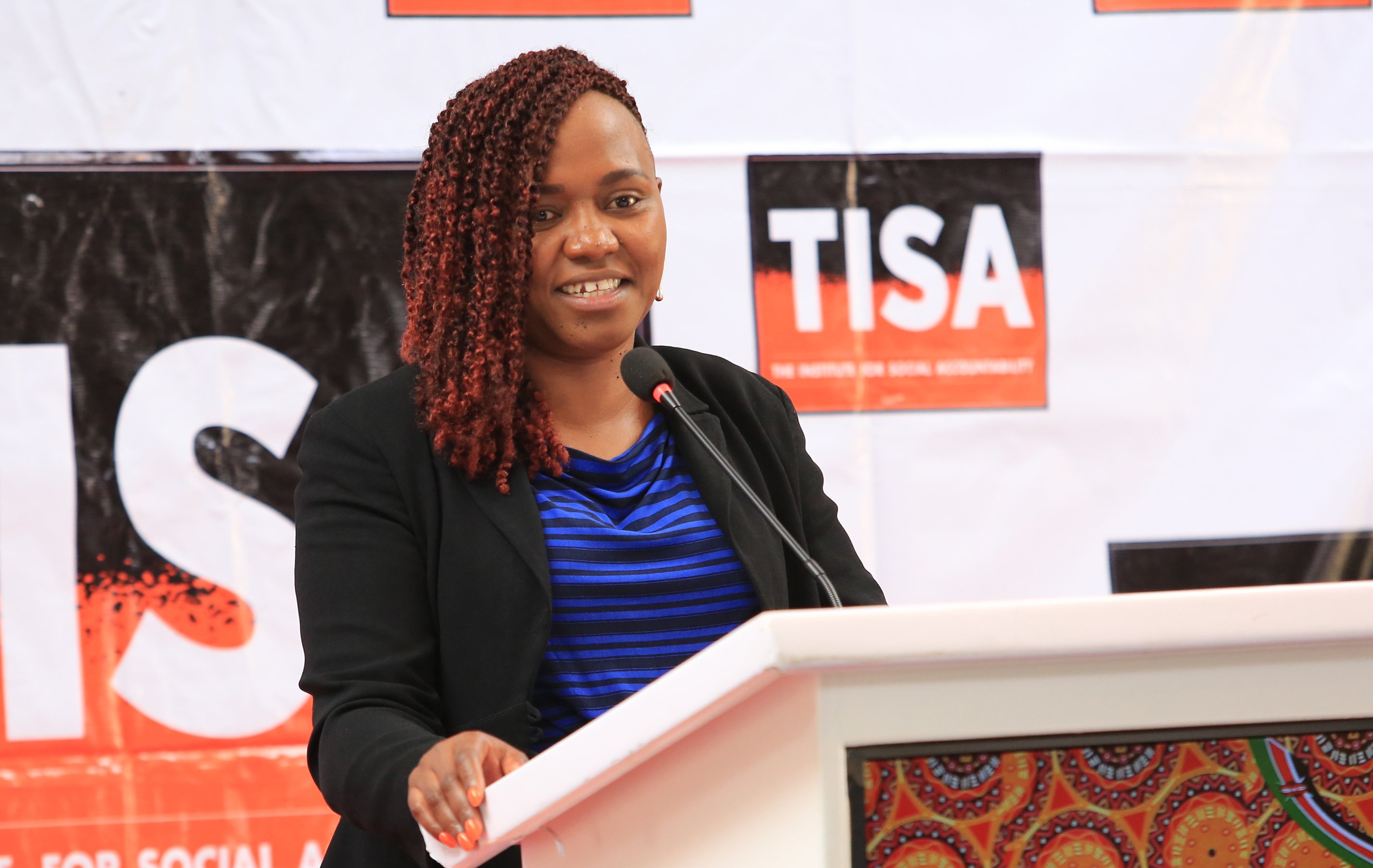


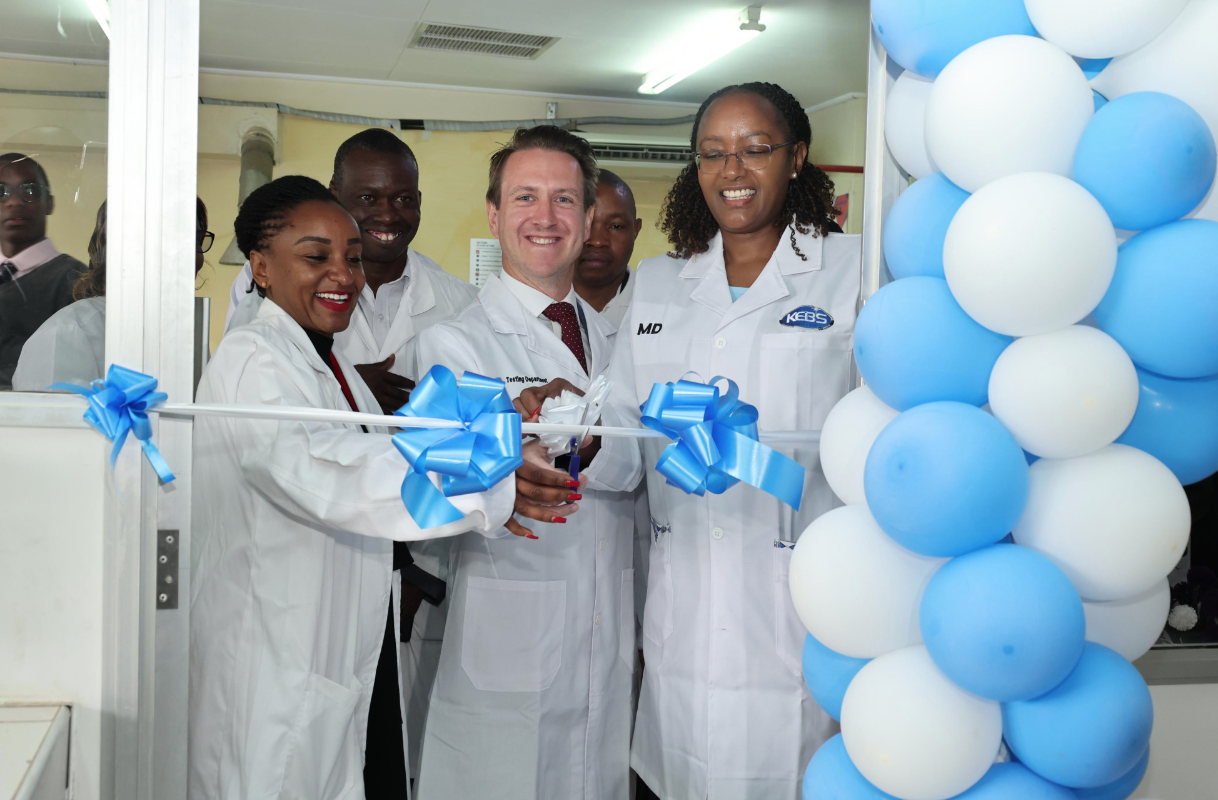
 KEBS MD Esther Ngari (right), together with Dan Wilcox from the British High Commission in Nairobi and Lilian Mwai Ndegwa from TradeMark Africa, during the commissioning of new state-of-the-art laboratory equipment for product testing and certification/HANDOUT
The Kenya Bureau of Standards (KEBS) has commissioned three state-of-the-art laboratory equipment valued at more than Sh67 million.
The equipment was procured with support from the British High Commission in Nairobi through Trademark Africa.
The development marks a significant step in enhancing Kenya’s technical capacity to ensure safe, high-quality food, agricultural and industrial products for local and international markets.
The newly installed systems include an Ultra-High Performance Liquid Chromatography (UPLC) system, a Near-Infrared (NIR) Spectrophotometer, and a Microwave Inductively Coupled Atmospheric Plasma Optical Emission Spectrometer (MICAP-OES).
These advanced analytical tools strengthen KEBS’s ability to test for a wider range of safety and quality parameters, including pesticide residues, mycotoxins, heavy metals, nutritional components, contaminants, and indicators of adulteration with greater precision and efficiency.
They will also improve workflow efficiency within KEBS laboratories, enabling even better turnaround times for compliance testing.
This supports faster certification processes, timely facilitation of trade, and enhanced responsiveness to industry needs.
Notably, the MICAP-OES system eliminates reliance on argon gas for plasma generation, reducing associated operational costs by an estimated Sh1 million per week.
The improved technical capacity is expected to provide significant benefits to Kenyan producers and exporters in sectors such as food processing, horticulture, livestock feed, and manufacturing.
By strengthening conformity assessment, KEBS will be able to better support industry players in meeting local and international market requirements, thereby reducing the likelihood of export rejections and enhancing Kenya’s competitiveness in global value chains.
Speaking during the commissioning ceremony, KEBS Managing Director Esther Ngari committed to strengthening Kenya’s quality infrastructure.
“The enhanced analytical capabilities will support safer
products for consumers, better certification timelines for industry, and improved
market access for exporters. KEBS appreciates the continued partnership with
the British High Commission and TradeMark Africa in advancing our national
quality assurance agenda,” she said.
Dan Wilcox, Economic Counsellor and Head of Prosperity and Climate at the British High Commission Nairobi, said the support is about building confidence in Kenyan goods and opening global markets for them.
“Horticulture is one of Kenya’s fastest-growing export industries, yet delays in SPS compliance have previously led to rejection risk. By upgrading KEBS testing infrastructure, Kenya now has demonstrated competence to assure quality, health and safety of consumers, giving producers a fairer and faster route into the UK, EU and other high-value markets,” he said.
Lillian Mwai Ndegwa, Kenya Country Director at TradeMark Africa, said reliable, fast laboratory testing is one of the strongest levers to reduce non-tariff trade barriers.
“When results are released in days instead of weeks, exporters waste less, farmers earn more, and Kenya becomes a trusted supplier of safe, quality products. This upgrade will reduce port-side rejection, unlock market opportunity and directly benefit the businesses, cooperatives and households that depend on trade,” she said.