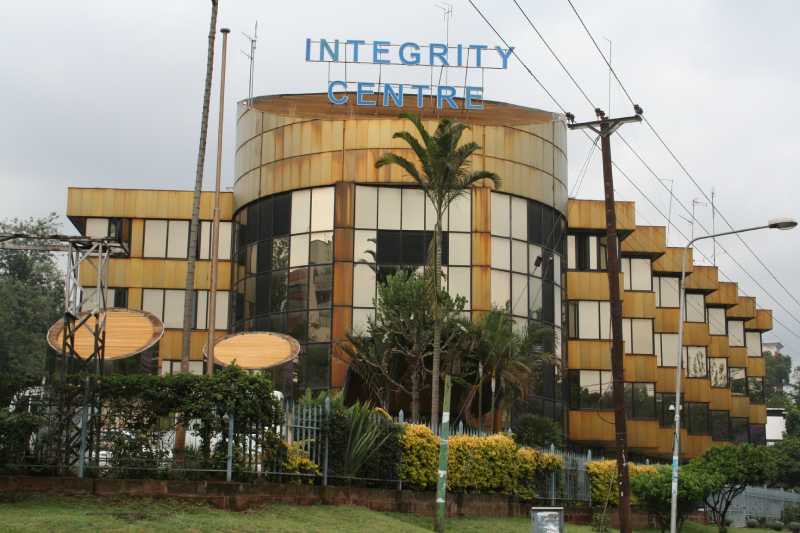
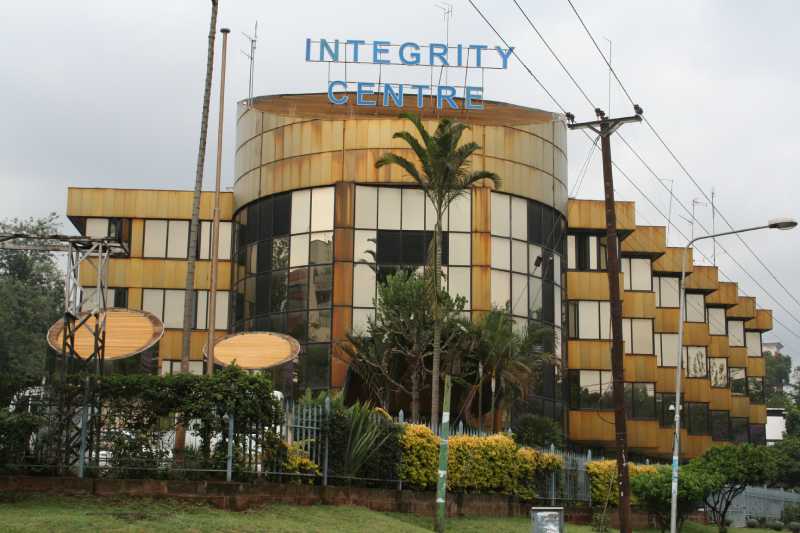
The Ethics and Anti-Corruption Commission averted losses worth Sh16.5 billion in the 2024/2025 financial year after intensifying investigations, integrity tests and proactive operations.
During the launch of the report on Monday, EACC stated that the amount is the highest recovered or protected in recent years.
The CEO Abdi Mohamud said the Commission processed 4,183 corruption reports and opened investigations into 1,846 of them.
According to the Commission, bribery accounted for most reports at 37 per cent, embezzlement of public funds followed at 19 per cent, unethical conduct stood at 13 per cent, while fraudulent acquisition and disposal of public property was at 10 per cent.
Other economic crimes made up 21 per cent, including procurement fraud, conflict of interest and money laundering.
The Commission said it investigated 838 active cases and forwarded 175 to the Office of the Director of Public Prosecutions.
“The Commission completed 229 investigation files on corruption, economic crimes and ethical violations,” the report said.
“The Commission filed applications and obtained 756 warrants for inspecting or searching bank and mobile phone money transfer accounts, premises, vessels and vehicles in respect of persons or associates suspected of engaging in corruption, economic crimes or related offences”.
It also conducted 14 proactive investigations and 166 integrity tests, which led to the prevention of the Sh16.5 billion loss.
There were 213 corruption cases before court, with 54 concluded. The courts delivered 33 convictions, 15 acquittals and six withdrawals.
EACC said the improved outcomes reflect stronger case quality and closer collaboration with prosecutors.
The Commission also carried out 166 random and targeted integrity tests within public institutions including; Kenya Revenue Authority (KRA), Eldoret International Airport (Port Health Services), National Police Service (NPS), Ministry of Lands Registries, Mbagathi County Hospital, Kenyatta National Hospital, National Transport and Safety Authority (NTSA), Directorate of Civil Registration Services (DCRS), County Government of Kajiado, and Nairobi City County Government, among others.
The results of the tests were 152 failed, four passed and 10 inconclusive.
“For the officers who failed, the Commission recommended administrative action to the respective institutions and cases with criminal thresholds were investigated and files sent to the DPP,” the report stated.
The audits exposed gaps in procurement, governance, service delivery and internal controls.
Follow-ups in ministries and counties showed gradual reform. Public education efforts also expanded, where more than 93,000 citizens were sensitised through community outreaches.
EACC also conducted major system audits at Kenya Power & Lighting Company (KPLC), National Social Security Fund (NSSF) and the Kenya Prisons Service, uncovering weaknesses in procurement, governance, service delivery and internal controls.
Another 128,010 learners in 742 institutions across 23 counties were reached. EACC trained 349 members of Corruption Prevention Committees and rolled out nationwide digital and print campaigns.
EACC Chairperson David Oginde said the results show “corruption does not pay, and it will not prevail.”
He said conviction rates, asset recovery and concurrence by the ODPP reflect “the depth and rigour” of the Commission’s investigations.
“These achievements are not mere statistics,” Oginde said.
“They represent schools reclaimed, hospitals protected, land restored and public funds redirected toward public good.”
“They demonstrate, clearly and decisively, that corruption does not pay and it will not prevail.”
But he warned that weak enforcement of Chapter Six, witness interference and threats targeting officers continue to undermine the fight.
He also cited institutional silos and rising public apathy. Oginde urged Kenyans to recommit to integrity as the country marks International Anti-Corruption Day.
“These challenges cannot be tackled by EACC alone. They require the concerted effort of government, private sector actors, religious and community leaders, our partners and ultimately, the collective resolve of all citizens,” he said.
Oginde noted that “corruption thrives when good people stay silent,” urging Kenyans to choose integrity, accountability and justice.
“Let us choose a Kenya where honesty is honored and public resources serve the public good,” the CEO said.
![[PHOTOS] The new Ngong –Naivasha Road viaduct](https://cdn.radioafrica.digital/image/2026/06/64d4f771-4432-4aee-ba3c-2f304c4436ec.jpg)