

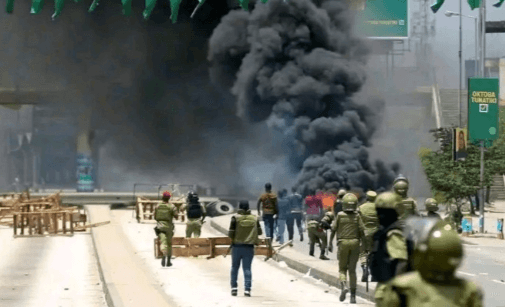
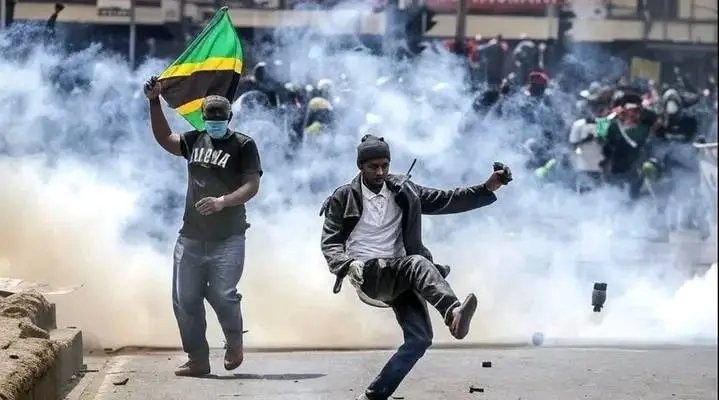
Anxiety is rising among Kenyans living in Tanzania as the Kenyan High Commission issued a security advisory warning of possible unrest during Independence Day activities on Tuesday.
Kenyans have felt targeted in Tanzania after President Samia Suluhu alleged ‘foreign hands’ in the post-election unrest that nearly drove her country to its knees.
The alert was issued amid growing speculation over planned demonstrations across Tanzania.
Similar advisories against all but necessary travel and warnings of violence were issued by foreign missions, including the US, UK and Israel.
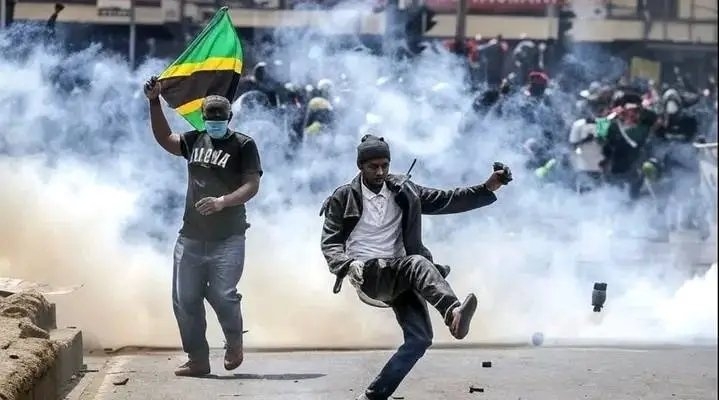
Tensions heightened on Friday after Tanzanian police declared any planned demos illegal.
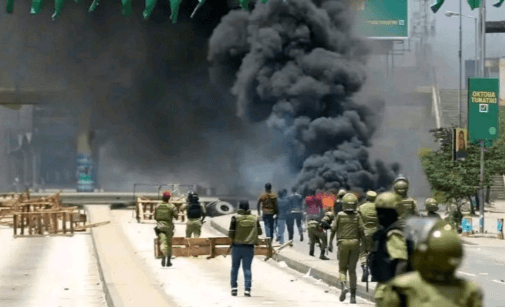
The announcement sets the stage for possible renewed clashes similar to the violence during and after the October 29, general election. Hundreds of people were reported killed.
The Kenyan High Commission on Friday said some Kenyans in Tanzania had expressed concern about reports of the likelihood of demonstrations.
In the notice, the High Commission advised the Kenyan diaspora there to “shelter in place” should unrest erupt, avoid areas of protest, monitor reliable news sources and maintain secure communication channels.
“The High Commission hopes the Commemoration of Independence Day will be observed in peace and tranquillity throughout Tanzania,” the statement read.
“However, in the event that this is not the case and there are demonstrations and/or incidents of unrest, the Mission urges caution.”
The advisory follows concerns raised by Kenyans after the events surrounding the general election, which the President won with 98 per cent of the vote, but opposition leaders were barred or arrested. Protesters demonstrated against her declared victory.
During the violence, at least two Kenyans were shot and killed, while others were arrested and detained in different parts of Tanzania, prompting an official response from Kenya’s Foreign Affairs ministry.
Suluhu blamed Kenyans for stoking the demonstrations, worsening the situation. Kenyans in Tanzania reportedly were targeted by security agents.
The US Embassy urged American citizens to be prepared for potential disruptions, including the possibility of unrest, nation-wide curfews, an internet blackout, cancellation of ferries to Zanzibar, cancellation of international flights and roadblocks set up to enforce movement restrictions.
“As of December 8, US government employees are restricted from traveling domestically in Tanzania,” the alert said.
The uncertainty is also expected to affect Kenyan traders operating across the border due to fear that the disruptions could jeopardise logistics and supply chains.
Other than the advisories that are likely to hurt Zanzibar which heavily relies on tourism, the Suluhu-led government has also been under mounting pressure from the international community over its handling of the October 29, demos.
The UK, the US, Belgium, Canada, Denmark, France, Germany, Ireland, Italy, the Netherlands, Norway, Poland, Spain, Sweden and Switzerland are among Western powers that have expressed concern over the disputed elections and the state’s suppression of dissent.
Tanzania also received statements from the European Union Delegation, The Commonwealth, the UN, Ghana, Finland, Slovakia and the Thabo Mbeki Foundation.
The US, for instance, said the actions by the Tanzanian government raise grave concerns about the direction of the two states’ bilateral ties and African country's reliability as a partner.
“As a result, the United States is comprehensively reviewing our relationship with the Government of Tanzania,” the US Embassy in Tanzania said.
“The Government of Tanzania’s ongoing repression of religious freedom and free speech, the presence of persistent obstacles to US investment and disturbing violence against civilians leading up to and following Tanzania’s October 29 elections, required this reconsideration of our ties.”
Further, the Commonwealth Ministerial Action Group (CMAG) on Friday expressed concern over reports of breaches of core Commonwealth values, including human rights, freedom of expression, democracy, the rule of law and good governance.
Following the CMAG meeting, Tanzania was placed on the agenda of its next meeting in March 2026, for a decision to be made.
The group said its decision will be subject to the fulfilment of, among other measures, the lifting of restrictions on freedom of assembly and expression, civil society and the media and holding of an inter-party consultative forum to agree on a collective framework on the way forward for the next election.
The group will also consider the implementation of a transparent legal and administrative process to hold perpetrators of the violence and its results accountable and to compensate victims.