

Parliament has launched a fresh
push to compel the Ministry of Health to establish at least one national
teaching and referral hospital in every region.
This
is in an effort to expand access to specialised medical services and reduce
preventable deaths linked to long travel distances.
In
a motion currently before the Senate, lawmakers want the ministry — led by
Cabinet Secretary Aden Duale—to earmark funding for the construction,
expansion and equipping of new referral facilities across the Coast, Eastern,
North Eastern, Nyanza and Western regions.
The
senators argue that the existing national referral system is overstretched and
disproportionately concentrated around Nairobi, leaving millions of Kenyans
without timely access to advanced care.
Nominated
Senator Beatrice Ogolla, who moved the motion, said lack of regional referral
hospitals has contributed to numerous preventable deaths.
“Many
patients have died on the way to hospitals because of the distance,” she said.
“We
want health services closer to our people, especially the specialised and
referral services required for terminally ill patients and those needing
emergency interventions.”
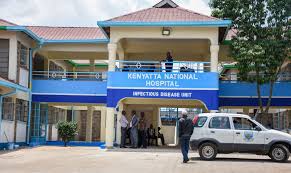
Kenya
currently has five national teaching and referral hospitals: Kenyatta National
Hospital (Nairobi) and Kenyatta University Teaching, Referral and Research
Hospital (Kiambu).
Others
are Moi Teaching and Referral Hospital (Eldoret), Mathari National Teaching and
Referral Hospital (Nairobi) and the National Spinal Injuries Referral Hospital
(Nairobi) and Jaramogi Oginga Odinga Teaching and Referral Hospital.
This
imbalance, senators said, forces patients—particularly those suffering from
cancer, mental illnesses, chronic conditions and severe injuries—to travel long
distances for services that their local hospitals are not equipped to handle.
Nandi
Senator Samson Cherargei underscored that health is a basic right and must be
accessible to all Kenyans regardless of where they live.
“If
you think about cancer or mental health issues, right now the most dependable
mental health facility in the country is Mathari,” he said.
“What
happens to people who are far from Nairobi and its environs?” he asked, warning
that patients in rural and marginalised regions face the highest risk.”
The
motion further calls on the Ministry of Health to not only build the facilities
but also “fully equip the national teaching and referral hospitals with modern
medical equipment, adequate medical supplies, and sufficient personnel” to
ensure they meet global standards of care.
Senators
emphasised that building structures alone would not solve the systemic
challenges facing the health sector.
Migori
Senator Eddy Oketch stressed the urgency of expanding specialized treatment,
noting that chronic diseases are on the rise and require advanced diagnostic
and management capabilities.
“We
are going to save many lives if we can have a myriad of these national referral
hospitals taking care of bigger issues, including the chronic diseases that are
straining our current health system,” he said.
Vihiga
Senator Godfrey Osotsi echoed these concerns, saying the current state of many
county hospitals is “horrible” and cannot sustain the growing demand for
specialised care.
He
cited governance lapses, inadequate staffing and mismanagement of resources as
recurring problems across devolved health units.
“There
are all manner of governance issues in our hospitals. If it is an issue of how
to manage staff, that problem is common across all county hospitals,” Osotsi said.
He
said national-level referral hospitals would complement rather than replace
devolved health facilities.
Murang’a
Senator Joe Nyutu said regional referral hospitals would also ensure equitable
distribution of national resources.
“Counties
should benefit from the funds left at the headquarters. One of the ways for
counties to benefit is for the national government, through these funds, to
establish referral hospitals in the regions, equip them and engage
professionals,” he said.
If
approved, the motion would require the Ministry of Health to develop a
comprehensive plan outlining timelines, financing models, staffing strategies
and partnerships to roll out the proposed regional teaching and referral
hospitals.
Senators
insist the project is long overdue and could significantly improve health
outcomes across the country.