George Gakono
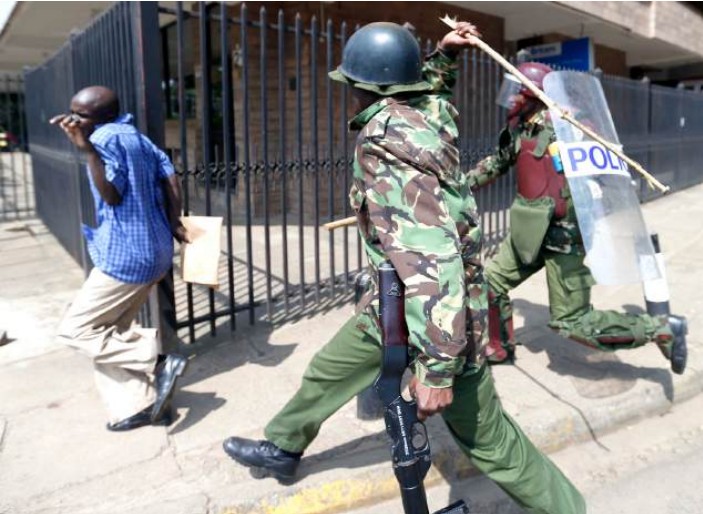
Gathomi was assaulted and tortured by two police officers, at the behest
of the Water Irrigation Board allegedly for an unpaid water bill (not a crime!).
He was later falsely charged with assault in a scheme to enable police to
escape liability for their failure to investigate and charge police officers
involved. He was awarded Sh500,000 this
year for violation of his rights under Articles 28 (dignity), 29 (security) and
47 (administrative justice).
A group of people
making a film were awarded Sh500,000 each for violation of their rights including
Articles 28, 29, 31 (privacy), 40 property), 49 and 50 (fair criminal justice).
They had been harassed by the police, arrested and charged with a non-existent
offence, detained for three days. One was also awarded Sh300,000 for pain and
suffering as the treatment fractured his jaw, and Sh1,000,000 because the treatment
also led to his losing a contract.
Hon Erick Okong’o
Mogeni and his wife Justice Jacqueline Mogeni sued for defamation including the
statement “Lawmaker pushes wife’s hiring as judge”. Between them they were
awarded Sh6,500,000 in damages.
“Nelson Havi set
for Sh5m payout over illegal arrest” – Daily
Nation. The High Court recently ordered certain officers to ensure that
Havi gets the Sh5 million he was awarded in 2023. That award was because he was
arrested by police while appearing, remotely, in court.
The court held that his
rights under Articles 27 (equality), 28, 29, 31, 47 and 49 were violated. For
some time he was not told why he was detained. It was clear that there was no
foundation for the arrest and it was connected to some issue in the Law Society
of Kenya.
REACTIONS?
I imagine people
might think things like: why do people get so much more as damages for supposed
injury to their reputations than for physical injury?
And: is it that
“big people” get much more than ordinary citizens for similar wrongs done to
them? So noticeable comparing the Havi and Gathomi cases.
Further: who pays
when damages are awarded against government or certain government offices?
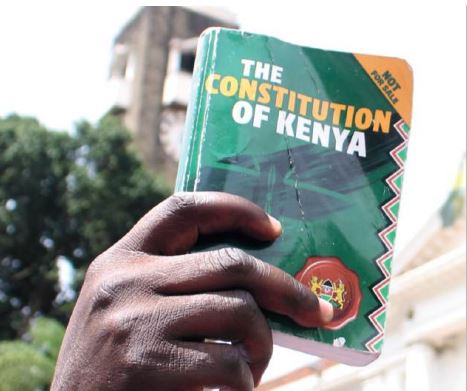
THE CONSTITUTION
The constitution has
far more detail about criminal trials than it does about civil cases like the
ones above. But there are provisions that have some relevance, even if not
expressly.
Article 10
emphasises – as national values – human dignity, equity, equality,
inclusiveness, and non-discrimination. And Article 27 is specifically about
equality including having “equal benefit of the law”.
Yet these practices
on award of civil damages convey messages suggesting that some people are less
important than others, and their feelings matter less.
And when we are
thinking about defamation, constitutional freedoms of expression and media are
obviously relevant. Kenyan newspapers have been burdened with some very heavy
damages awards or settlement agreements.
DAMAGES
The purpose of
damages in a civil case is not (or is very rarely) to punish the person
responsible; it is to compensate the person who suffered a wrong. If it is a
matter of medical consequences, or damage to property or loss of a job, the
matter is not so difficult – the issues are practical: proving the loss. But
the issues of pain and suffering as a result of injury, or the effect of damage
to a reputation, are much more difficult.
Reputation is
particularly difficult. It is not necessary to prove that a reputation actually
has been lowered because of a defamatory statement. If the court thinks reasonable
members of society would think less of a person because of what has been said
or written about them, that’s enough. The actual amount will often follow
earlier cases, in which “the status of a particular person affects the extent
of the injury suffered” is a common principle.
If the behaviour of
the responsible person was particularly serious, for example deliberate rather
than negligent, increasing the sense of pain of the victim, the damages may be
increased (aggravated). And if it is really bad extra damages may be awarded to
punish the wrong-doer (punitive).
SOME SUGGESTIONS
I would like to see
the courts move away from so much emphasis on money – except where the damage
has been clearly measurable in money terms. I am not saying there should be no
compensation for effects that have no financial measure. Clearly, for pain and
suffering resulting from negligence or deliberate behaviour including torture
should be compensated. We are parties to the torture convention that requires
compensation for victims.
If the type of loss
really cannot be measured in monetary terms then the courts should not be
awarding large sums of money. It makes little sense. How does money help a
person whose feelings have been hurt, however seriously?
The error is to
view the amount of compensation as the measure of vindication. I suggest that
the real vindication is having the court say clearly in a fully reasoned way
that the other side was in the wrong. The court will usually order the offender
to pay the claimant’s legal costs in bringing the case – probably a sizeable
sum, itself a deterrent to future similar behaviour.
Of course,
sometimes the loss to a wealthier person may really be greater. Being unable to
work for some time may lose them much more money than a poor person, or having their
car damaged in an accident is a greater loss than the poor man’s bicycle
destroyed.
But emotional loss
should not vary by class or status in society or wealth, nor should pain and
suffering from an injury, nor being detained by the police.
Compensation for
pure loss of reputation should be much smaller, and thus discrepancies between
claimants much less.
Damages should
hardly ever be used to punish. In Nelson Havi’s case the judge was (rightly)
angered by the behaviour of the police and the size of the damages he awarded,
I suspect, was designed to punish, or at least to reflect that anger. But no
individual could be punished - because no individual (as opposed to office) had
been named as a party. In Gathomi’s case individual officers had been named.
Punitive damages
(intended to punish or deter future wrong behaviour) are problematic – they
award the claimant more than he or she has suffered. My suggestion here is
based on an English case often cited in Kenyan courts. Such damages should be
awarded only against a person making money out of committing the wrong, or if
they were a public official abusing their office (and, in my view, only if the
public official is to pay personally).
Kenyan courts, I
suggest, much too readily award extra damages (“aggravated”) and punitive
damages - often in the same case.
Some judges have
expressed concern about heavy damages – paid by taxpayers. I suggest that no
extra damages as punishment should ever be awarded against government – unless
government was making money out of the mistreatment. You can’t punish
government. There is no such thing as government money – it is all the people’s
money. Nor do I believe that awarding damages against government will deter
future government misbehaviour. Our public officers just don’t seem to care
about misuse of public money.
Courts need particularly
to break free from the idea that people in prominent positions should get more
compensation. Why should Nelson Havi have got more damages than any other
person wrongly arrested and detained for the same time in similar conditions?
If this discouraged
people from suing, so be it. Financial gain (beyond genuine reparation for
measurable loss) should not be the motive for suing.
If the money factor
was much less, the inequalities and inequities – with the associated impairment
of dignity - would be much reduced, in accordance with the Constitution.
I doubt if this
will happen – who would raise it before the courts?