Former
Deputy President Rigathi Gachagua faces a fresh hurdle in his bid to rally Mt
Kenya behind DCP, as former President Uhuru Kenyatta stages a dramatic comeback
through the revival of the Jubilee.
For
nearly two years after leaving office, Uhuru had kept out of active politics,
choosing instead to focus on his private ventures and regional diplomacy.
But
recent months have seen the former head of state make a steady and deliberate
return to the political scene, with his old party as the vehicle.
On
Friday, Uhuru led the first of several planned Jubilee grassroots meetings,
promising to roll out a nationwide reorganisation drive ahead of the 2027
general election.
The
party has also embarked on a new membership recruitment blitz that insiders say
has attracted hundreds of new members in just a few days.
Presidential
aspirant Fred Matiang’i, speaking on Sunday, confirmed that Jubilee would
target its former members and court candidates seeking elective positions in
2027.
The
reawakening of Jubilee—which has deep roots in Mt Kenya—threatens to erode
Gachagua’s growing influence in the region.
The former Deputy President has been pushing to make DCP the region’s single political
vehicle, but Uhuru’s resurgence could upend that strategy and scatter his
support base.
Uhuru’s
rejuvenation of Jubilee is already attracting a wave of aspirants eager to run
on its ticket.
Analysts
say the move is a potential game changer that could complicate Gachagua’s bid
to consolidate near-total control of elected leaders in the mountain through
his party.
The
developments also risk weakening Gachagua’s bargaining power within the
emerging opposition coalition, should Jubilee, DCP and other anti-Ruto forces
agree to unite ahead of 2027.
Just
over a week ago, the Star reported exclusively that Gachagua had shelved his
presidential ambitions for 2027, opting instead to demand a 50 per cent share
of government in negotiations with Wiper leader Kalonzo Musyoka.
Uhuru’s
renewed presence in regional politics could significantly dilute the former Deputy
President’s leverage in those negotiations.
Political
observers note that the “Uhuru factor” could influence which leaders the Mt
Kenya region backs for top national positions if the opposition forms the next
government.
Having
unsuccessfully tried to persuade the region not to vote for President William
Ruto in 2022, Uhuru now re-enters the arena with renewed credibility—as many
in the mountain privately admit they may have “made a mistake” at the ballot
box.
Sensing
the threat, Gachagua this week urged Mt Kenya residents to unite under one
political banner ahead of 2027.
“The
mistake we did in 2022 was to go to a wedding in someone else’s vehicle. We got
to the river and were thrown out. Let’s not repeat that mistake,” Gachagua said
during the burial of Terry Wanjiru, widow of JM Kariuki (deceased), in
Gilgil, Nakuru county.
“I
have formed one party that should be our strength and shield. That should be
the only vehicle. The others are wheelbarrows,” he added, in an apparent swipe
at UDA.
The
former DP warned that dividing the Mt Kenya vote across multiple parties
would repeat the 1992 mistake when President Daniel Moi’s regime exploited
opposition disunity.
“I
am begging you to give me more soldiers—governors, senators, MPs and MCAs—so that we can deal with President Ruto,” he said.
Gachagua
has publicly stated his goal of securing at least 152 legislators—130 MPs and
22 senators—mostly from Mt Kenya, in the next election.
He
has also warned Matiang’i against contesting under Jubilee, suggesting instead
that he form his own political vehicle.
Gatanga
MP Edward Muriu, a close Gachagua ally, accused Uhuru of trying to divide the
Mt Kenya vote and derail the push for a united opposition.
“Jubilee
is an appendage of UDA,” Muriu said.
“For example, Jubilee’s Joshua Kitaro dropped
his Narok Town ward bid to endorse UDA’s Junior [Robert Kudate]. Uhuru is
coming to the mountain to divide it under instructions from Ruto.”
He
added, “In 2013, Uhuru brought Ruto and said ‘yangu kumi, Ruto kumi.’ In 2022,
he brought Baba [Raila Odinga]. Now he is bringing Matiang’i. The message this
sends is that he has no faith in the people of Mt Kenya.”
When
asked how Uhuru could be accused of working for Ruto despite their
well-documented fallout, Muriu said the former president’s actions “haven’t
shown goodwill” towards Gachagua.
“If
Uhuru really wanted to support Gachagua, he should have had a handshake with
him. But I can tell you he hasn’t even called him,” Muriu said.
Analysts
say Gachagua faces an uphill task countering a seasoned political player like
Uhuru, who served as president for a decade and still commands vast financial
resources and deep political networks.
Former
Nyeri Town MP Ngunjiri Wambugu said DCP’s growth has already faltered.
“While
Gachagua claimed that UDA members and MPs would join his party, that has not
happened,” Wambugu said.
“Jubilee has a track record and national reach that
DCP lacks.”
He
argued that Uhuru’s agenda was national, not regional.
“Uhuru
is pushing for national politics, not tribal balkanisation. The idea of one
regional party creates dictatorship in a region traditionally led by councils' of elders. Mt Kenya is democratic,” he said.
“That
one-party call also exposes selfishness. Why isn’t Gachagua saying, ‘Let’s all
join Jubilee, DP or PLP?’”
Wambugu
maintained that Jubilee remains part of the United Opposition and that
intra-coalition competition is normal “as long as each party consolidates without
undermining the other”.
Whoever
commands Mt Kenya’s loyalty will wield immense influence in shaping national
politics and opposition negotiations.
Gachagua
insists that future power-sharing will depend on the number of votes each
principal delivers.
Jubilee
deputy party leader (Outreach) Joseph Manje downplayed the rivalry, saying the
ongoing revamp transcends both region and election cycles.
“After
spending almost three years in court, Uhuru now wants to revive the party completely
and hand it over to Kenyans so it can outlive him,” Manje said.
“Jubilee
is not a Mt Kenya party. We have more MPs from outside Central Kenya than
within. According to the Registrar of Political Parties, we remain the biggest
party with 7.1 million registered members.”
Political
analyst Prof Peter Kagwanja said Gachagua’s challenge lies in managing the
region’s growing political diversity.
“Uhuru’s
re-entry will affect Gachagua, but remember, there are other Mt Kenya parties
in the United Opposition, like Martha Karua’s Narc-Kenya and Justin Muturi’s
Democratic Party,” Kagwanja said.
“He
will need to move forward as a democrat and allow even Matiang’i to campaign
freely. Every party has the right to front a candidate.”
In
a recent by-election in Mbeere North, DCP was forced to withdraw its candidate
in favour of Muturi’s DP to avoid splitting the vote and handing victory to
UDA.
Political
commentators say the by-election would have provided a useful test of DCP’s
grassroots strength—a test Gachagua chose to avoid.
Tensions
between Jubilee and DCP have been rising, prompting Uhuru last month to call
for a truce and urge Jubilee politicians to stop attacking Gachagua. Despite
that, Ngunjiri Wambugu has continued to criticise the former Deputy President,
accusing him of perpetuating “toxic politics.”
For
Gachagua, the stakes could not be higher. Without a solid Mt Kenya base, his
national political relevance would diminish sharply.
Uhuru,
on the other hand, appears determined to redefine his legacy—championing
generational change, political moderation and institutional stability.
No
longer constrained by the presidency, he is using his influence to shape the
region’s next generation of leaders and possibly complicate President Ruto’s
2027 prospects.


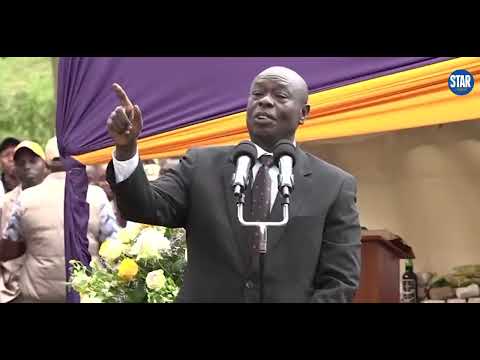
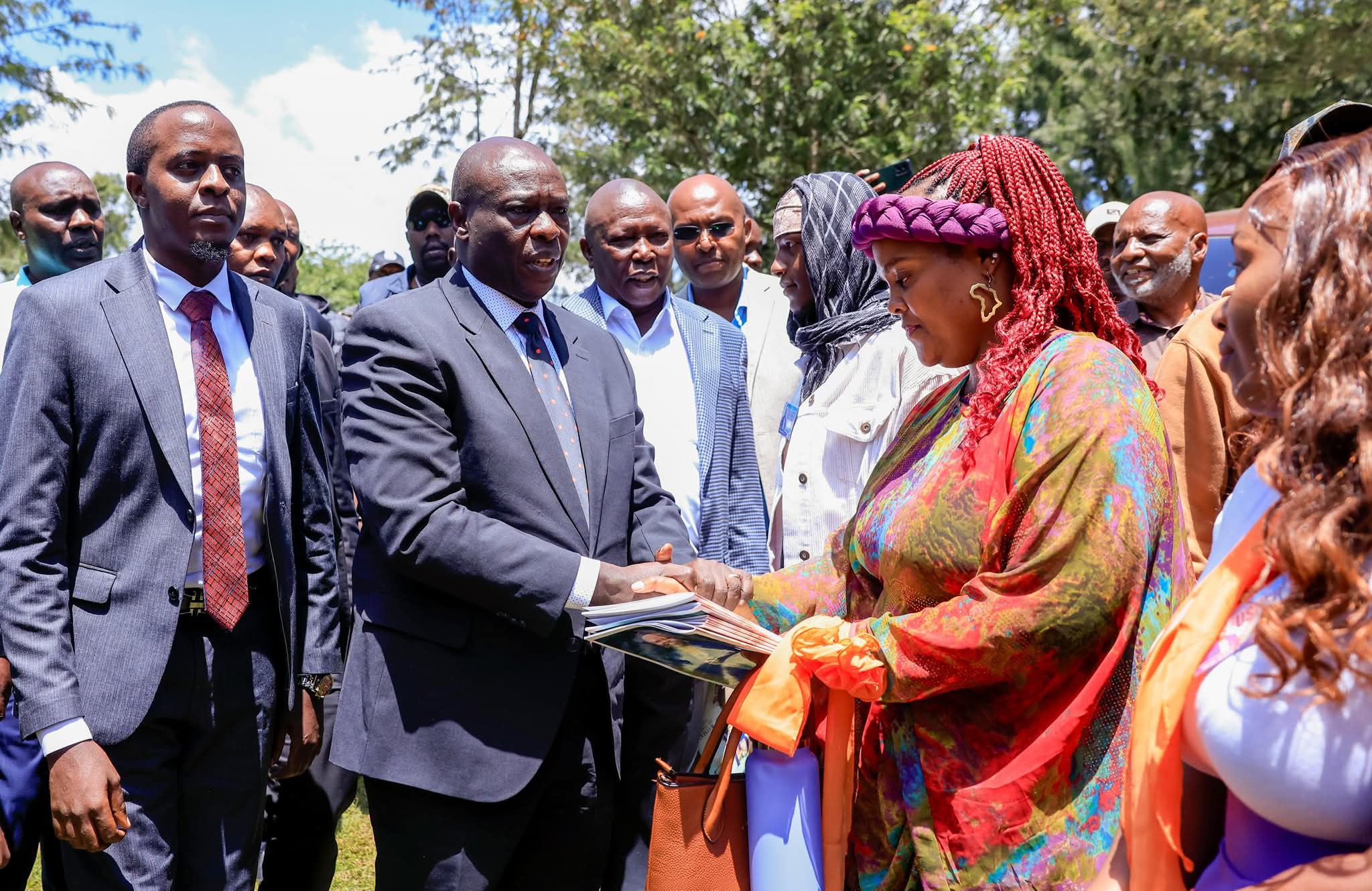 DCP leader Rigathi Gachagua joins mourners during the burial of Terry Wanjiru, widow of JM Kariuki (deceased), in Gilgil, Nakuru County./HANDOUT


![[PHOTOS] The new Ngong –Naivasha Road viaduct](https://cdn.radioafrica.digital/image/2026/06/64d4f771-4432-4aee-ba3c-2f304c4436ec.jpg)