Kenya remains the key trade and logistics
corridor for Uganda.
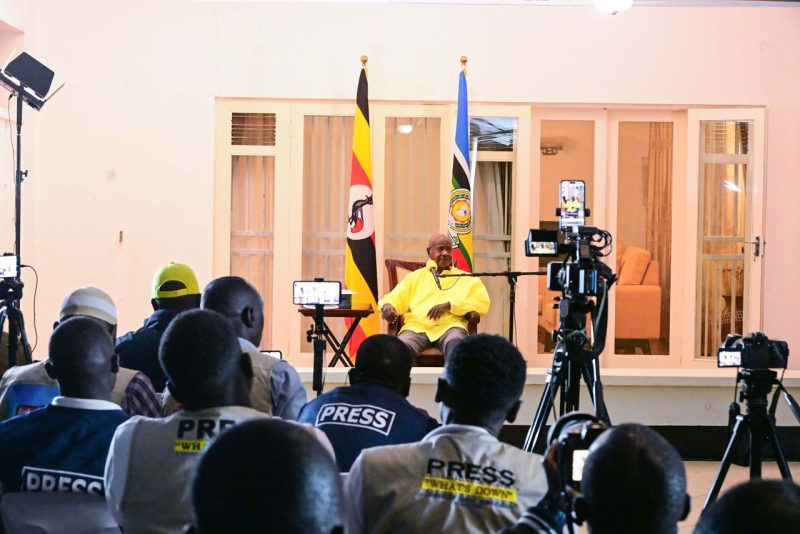
“Even if you want to build a navy, how can you build it when you don’t have
access to the sea? That ocean belongs to me because it is my ocean. I am
entitled to it. In future, we are going to have wars,” Museveni said.
He added that the Indian Ocean is vital for
Uganda’s strategic defence and economic development and only economic and political integration in the East African Community could thwart such conflicts.
Using a metaphor of an apartment block, Museveni
argued that all countries, regardless of geographic position, should have equal
access to shared resources.
"How can you say that you are on a block of
flats, that the compound belongs only to the flats on the ground floor? That compound
belongs to the whole block. All the flats are entitled to the compound. So, I
say these people are really endangering themselves.
“How can you have a situation like this?
Uganda is landlocked inside here. But where is my ocean? My ocean is the Indian
Ocean. No! No! It belongs to... this and this. This is madness,” President
Museveni said.
Ethiopia, another landlocked country, has been embroiled in a conflict with Somalia over a similar maritime dispute.
Tensions deepened in early 2024 after Addis Ababa signed a controversial port access and security deal with Somaliland — an entity Somalia considers part of its sovereign territory.
Mogadishu condemned the agreement as a violation of its sovereignty, while Ethiopia defended it as a strategic necessity to secure maritime access.
Ethiopia has often argued that international law recognises the principle that all states, regardless of geography, should have the ability to participate in global maritime trade.
Museveni, Uganda's long-serving leader, termed the
political organisation in Africa as irrational, noting that many landlocked countries
have no access to the sea for economic and defence purposes.
Museveni also expressed frustrations with
the never-ending negotiations with Kenya over Uganda’s access to the Indian Ocean through the pipeline and the railway.
“You are stuck. How do I export my
products? That is why we have had endless discussions with Kenya. This one
stops, another comes. The railway, the pipeline, the what .... But that ocean
belongs to me. Because it is my ocean. I am entitled to that ocean, "
Museveni added.
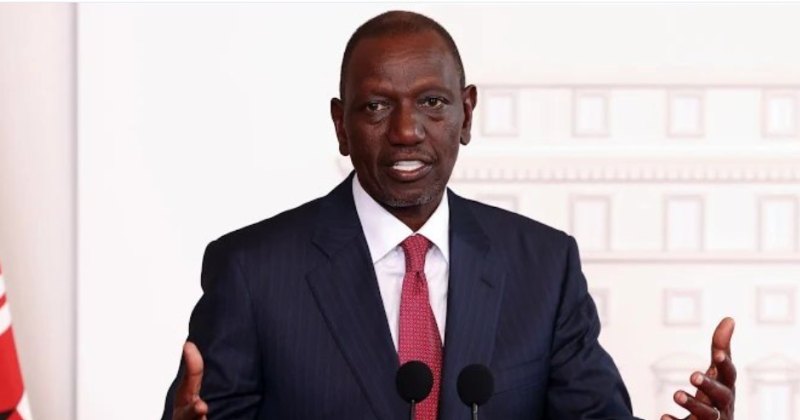
Presidents William Ruto of Kenya and Museveni have met multiple times in 2024 and 2025 to resolve the fuel import
dispute and the stalled Eldoret-Kampala oil pipeline extension project.
In March last year, Kenya agreed to license
the state-owned Uganda National Oil Company to import refined petroleum
products directly through Mombasa port, using the Kenya Pipeline Company
infrastructure.
The agreement ended a long-standing
diplomatic tiff, where Uganda had sued Kenya in the East African Court of
Justice for denying UNOC a license to operate as an oil marketer in Kenya.
The leaders also agreed to jointly extend
the existing oil products pipeline from Eldoret in Kenya to Kampala, a project
that has stalled since 2014.
It seeks to ensure efficient and cost-effective
distribution of oil products in the region.
Museveni, who is seeking his seventh
term in the January 2026 polls, said shared access to resources such as
the ocean could avert future conflicts.
His tone however suggested
impatience with the slow pace of regional cooperation.
Museveni noted that EAC integration would ensure
members benefit from shared prosperity and stability.
"That is why I say you people, you better
unite economically for the sake of prosperity and if you want stability and also
strength in the world, so you can go to the moon. The ones who go to the moon
are big ones, not small people.
“The Americans, the Chinese, the Russians,
and the Indians now. Our friends, the British, are still here with us. They can’t
go. It is too much. One country can't manage. The French are here with us. All
these fellows, except those four, because size matters. That is why we say, you
people, why don't you look at East Africa so that we deal with the issue of
strategic security?" he posed.
He said political and economic integration
within the EAC is one of the seven key priorities in his presidential
manifesto.
During his visit to Nairobi in July,
President Museveni emphasised the importance of the EAC to Uganda’s survival.
“I don’t often travel but for regional
meetings, particularly for EAC, I cannot miss any meeting. This is because this
is our primary area of interest for our survival”.
During the meeting, Ruto and Museveni
reaffirmed their commitment to strengthen regional institutions and advance EAC
objectives, including the customs union, common market, monetary union and,
ultimately, political federation.
This is not the first time Uganda’s
leadership has made statements perceived in Kenya as provocative.
In 2022, Museveni’s son, Gen Muhoozi
Kainerugaba, sparked outrage when he tweeted that Ugandan forces could capture
Nairobi in two weeks. The tweet caused a huge backlash, forcing his father to
issue a public apology to Kenyans.
The remarks by Museveni have also revived the long-standing Migingo Island dispute, where Ugandan security forces have frequently clashed
with Kenyan fishermen over control of the tiny fishing rock in Lake Victoria.
In July 2025, Kenya and Uganda reached a deal to resolve the dispute through a joint fishing license framework and sharing the island's resources.
The deal, which was described as a diplomatic breakthrough, sought to end years of border tensions and harassment of fishermen through joint licensing and resource sharing.
However, although
both governments maintain that the dispute is “resolved,” Uganda’s continued
police presence on the island remains a sore point in bilateral relations.
Prof Peter Kagwanja opines that Museveni's remarks could be sounding warning that should there be a leadership in Kenya that would threaten his access to the sea, then Uganda will be up in arms.
'I don't think being landlocked should be an excuse for war as Uganda has also been landlocked. And, in any case, many other countries such as Switzerland are landlocked but successful. We also have international conventions that protect landlocked countries," Kagwanja said.
Commenting on President Museveni's conduct in the region, former Nyeri Town MP Ngunjiri Wambugu argued that there was a level of contempt that Uganda has for Kenya.
"There is a statement he [Museveni] made before about our army not being as good as
theirs. When we get to a point where we are competing on strengths, Uganda believes
they have the capacity to bully us, and they have done it before, at Migingo Island and other places and we do nothing about it," he said.
INSTANT ANALYSIS
President Yoweri Museveni’s recent remarks warning of possible future wars in the East African Community over access to the Indian Ocean reflect deep-seated frustrations with Kenya’s control of Uganda’s trade routes. While couched in calls for regional integration, his tone revealed impatience and veiled threats towards Kenya. The comments underscore tensions over stalled projects such as the Eldoret–Kampala oil pipeline and lingering disputes like Migingo Island. Analysts see Museveni’s rhetoric as both campaign posturing and strategic signalling, aimed at pressuring Kenya and rallying domestic support ahead of Uganda’s 2026 elections. The remarks risk straining Nairobi–Kampala relations further.