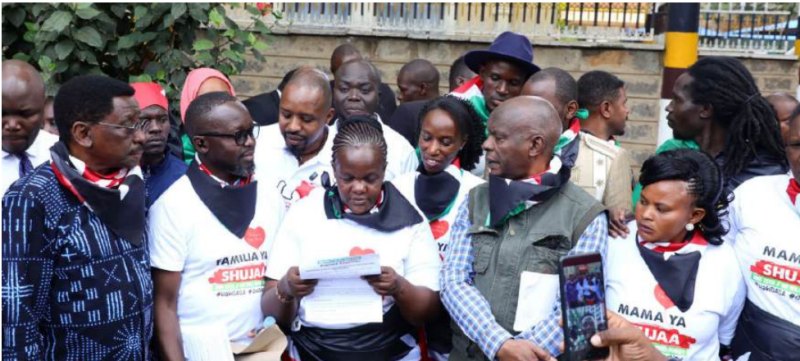
Concerns about the future
of ODM have been the subject of debate in public, academic and private
discourse ever since the demise of its founding leader, Raila Odinga, on
October 15.
Key leaders within the party and its coalition partners have been
apprehensive about how the leadership of the country’s largest party navigates
the turbulence that naturally sets in upon the departure of a strong leader
such as Raila. Leadership struggles will consequently become tense and cause
collateral casualties.
ODM emerged from the revolt
movement that had begun to form within the Narc government after abandonment of
the pre-election MoU between LDP and NAK in 2002. Raila and the Kanu rebel
brigade, which had opposed President Daniel Moi’s unilateral anointment of
Uhuru Kenyatta as Kanu’s presidential candidate, felt betrayed by Mwai
Kibaki. The Cabinet was constituted in total disregard of the agreement between
the two parties.
Raila and his team received
the short end of the stick in the deal.
The ensuing constitutional conference
at the Bomas of Kenya provided the first opportunity for the protagonists to
flex their muscle. There was a stalemate and a divided Cabinet subjected the
resultant draft constitution to a referendum.
The symbol of an orange for those
opposed to the draft laws became the harbinger of the subsequent political
movement.
He became the key pillar of the campaigns and the movement relied
heavily on his charisma. When the movement transformed into a political party,
as fate would have it, he became its natural choice of supreme leader.
He stood
out in the Pentagon, far above his fellow party luminaries. The others deferred
to him and he led them as the typical philosopher king of the classical Greek
democratic civilisation.
The ODM party was,
therefore, formed and established largely on the personal skills and
experiences of Raila in politics spanning decades of struggle.
This type of
leadership is known as autocracy. Autocratic leadership is a management style
whereby a single leader holds complete power and makes decisions with little to
no input from team members.
This approach is characterised by strict control, a
clear hierarchy and a focus on the leader's directives that are expected to be
followed without question.
While this kind of
leadership can lead to quick decisions and high productivity in structured
environments, it may also result in low morale, limited innovation and
dependency on the leader. Key characteristics include centralised power
and strict control whereby the leader exercises tight oversight over processes,
policies and outcomes.
The organisation has a clear hierarchy that clearly
defines roles and responsibilities in a top-down structure. However, it
has limited input from the general membership who are not involved in the
decision-making process and are expected to follow instructions. Autocracy
has been proved effective in crisis situations where quick and decisive action
is needed.
It is best deployed in high-stakes operation environments requiring
strict adherence to rules and commands, which are crucial for the safety and
preservation of the organisation ¾ but more so for the
supreme leader.
It is nonetheless
counterproductive as it produces inexperienced teams who lack the courage to
make independent decisions.
It is quite clear that ODM
was managed under the autocratic style of Raila as the party leader. Upon his
demise, the party rank and file find themselves in unfamiliar territory.
The
majority of the members and some top leaders were born when Raila was already a
phenomenal leader in politics. They have known no other revolutionary leader
even as they came of age and joined active politics.
Raila’s political journey
began at the feet of his father, as the country was agitating for independence.
He thus grew up politically in an environment of resistance and rebellion.
These conditions crystalised his skills and leadership qualities in the
totalitarian regime of the socialist East Germany. He went there for further
engineering studies during the cold war.
His father had strong links with the East,
which practiced socialist and communist ideologies. Communism and scientific
socialism espoused centralism and totalitarian political practices.
They
created a single leader at the apex with absolute power and supreme authority.
With the astute deployment of propaganda, the party central command wove a
mystique narrative around the leader. This was meant to ensure unquestionable
loyalty from the membership and leadership hierarchy.
They established a
well-nourished gangland type of militia to unleash brute force for the ruthless
enforcement of the leader’s edicts.
Thus, while Raila created ODM as a
democratic political movement, it had the hallmark of a socialist party. Jakom
ranked among the legendary party leaders such as Vladimir Lenin and Josef
Stalin of the USSR; Winston Churchill and later Margaret Thatcher of the UK;
Napoleon Bonaparte and Charles de Gaulle of France; Walter Ulbricht and Erich
Honecker of the German Democratic Republic, known as East Germany; and Mao
Zedong and Deng Xiaoping of China. Closer home it was Mwalimu Julius Nyerere of
Tanzania.
The only difference is that while these men and one woman rose to
lead their governments, Raila controlled successive Kenya governments from
outside the presidency. This was a rare feat and one of a kind historically.
It is against this
background that we should understand the confusion that is steadily engulfing
the ODM leadership. The departed leader was larger than life and clearly bigger
than the party as a formal organisation. The various levels of leadership and
decision-making organs existed to carry out his instructions, not to initiate
more independent policy processes.
The lower ranks of
leadership have demonstrated a lack of unified and coherent decisions and
actions since Raila was buried. In a hurried move and without reference to any
party organ, Dr Oburu Oginga was appointed acting party leader.
This has since
been ratified by the party National Executive Council. Then there have emerged
divergent positions regarding ODM’s relationship to the party with others,
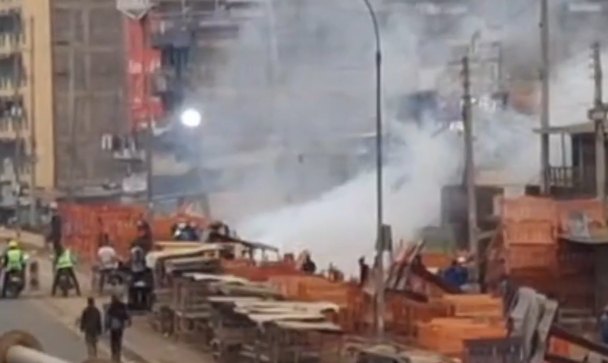
especially, UDA. At the height of the Gen Z violent protests, President William
Ruto reached out to Raila for support. The ODM leader agreed to work with the
government under the broad-based government framework.
The Orange party broke
ranks with its coalition partners in the Azimio One Kenya to have some of its
leading officials join the Cabinet. Two distinct groups emerged to opposed the
coalition with UDA under Ruto.
On one hand were Raila’s comrades, including
Governors Anyang’ Nyong’o (Kisumu) and James Orengo (Siaya). On the other hand
were youthful parliamentarians such as Otiende Amollo, Babu Owino and party secretary-general
Edwin Sifuna, who is Nairobi senator.
In the absence of Raila,
these groups have been sounding discordant voices regarding the truce and pact
between ODM and UDA. There is no unanimity on the last instructions the former
Prime Minister issued regarding the future engagements of the party.
Due to its
historical autocracy, the party cannot fall back on any institutional decision
regarding the actions of the party. Every leader has a version of the same,
meaning Raila’s last instructions, and none is similar.
This clearly shows the
party organs existed to serve Raila and not vice versa. It further explains why
at the top level, the search for Raila’s replacement has preoccupied leaders to
the extent of publicly discrediting each other.
It is telling that while Oburu
was not a senior member of any top leadership organ, he has nonetheless been
confirmed as party leader, albeit in an acting capacity. This elevation is
notwithstanding the existence of two deputy party leaders, Simba Arati and
Abdulswamad Nassir.
Unfortunately for ODM, the
search for a new Raila in the current leadership strata will come to naught. The
former premier had built his personal stature over time and under unique
political circumstances.
His charisma and family heritage are unique to him and
are irreplaceable. The party must out of logical necessity face its waterloo.
It had been able to survive and grow for decades because of Raila’s
personalised leadership acumen and his successive failures to ascend to the
presidency.
Without Raila and with nothing visionary to fight for, the party
has no centre to hold it together any further. Things might fall apart.