In 2025, Africa stands at a crossroads. On one
hand, the continent is experiencing a digital renaissance, an explosion of
connectivity, innovation and youth-led activism powered by artificial
intelligence, machine learning and the Internet of Things (IoT).
On the other
hand, a quiet but insidious war is being waged against political expression,
dissent and the free flow of information.
This war is not fought with guns
alone, but with firewalls, surveillance software and the monopolisation of
airwaves. It is a war against pluralism, against the right to know and against
the very soul of democratic accountability.
Old guard and the new frontier
Across much of Africa, traditional media, radio,
television and print remain tightly controlled by the state. National
broadcasters dominate the airwaves, especially in rural areas where radio is
still the most accessible medium.
In countries like Rwanda, Eritrea, Sudan,
Cameroon, Egypt and Zimbabwe, the state’s grip on information is justified in
the name of national unity, security, or development.
But beneath these noble
veneers lies a darker truth: the deliberate suppression of dissent, the
silencing of opposition and the manipulation of public perception.
In Eritrea, where independent media is virtually non-existent,
the government maintains a monopoly on truth. In Rwanda, the narrative of
post-genocide unity has been weaponised to stifle criticism.
In Sudan and
Cameroon, ongoing conflicts provide a pretext for information blackouts.
Egypt’s regime, under the guise of anti-terrorism, has jailed journalists and
censored online platforms. Zimbabwe’s state broadcaster remains a mouthpiece
for the ruling party, while opposition voices are relegated to the margins.
These regimes operate within a framework of
electoral autocracy, where elections exist but are neither free nor fair. The
control of information is central to this model. By monopolising the media,
governments shape reality itself, turning propaganda into policy and silencing
those who dare to imagine alternatives.
Digital revolution meets firewall
The rise of digital platforms promised to disrupt
this monopoly. Social media, blogs and citizen journalism offered new avenues
for expression, but as connectivity grew, so did the state’s paranoia.
Governments began to tighten control over digital spaces, especially ahead of
elections.
In the Democratic Republic of the Congo, Uganda and Ethiopia,
internet shutdowns have become routine during periods of political tension. In
Zimbabwe, the government infamously shut down the internet during protests in
January 2019, cutting off citizens from each other and the world.
These shutdowns are often justified as measures to
prevent violence or misinformation. But in truth, they are acts of repression,
frivolous and futile attempts to halt the inevitable march of the digital
revolution.
With innovations like Starlink bringing high-speed internet to even
the most remote corners of the continent, the state’s ability to control the
digital frontier is waning.
Yet, instead of embracing this transformation, many
regimes are doubling down on censorship, surveillance and intimidation.
Rise of the citizen journalist
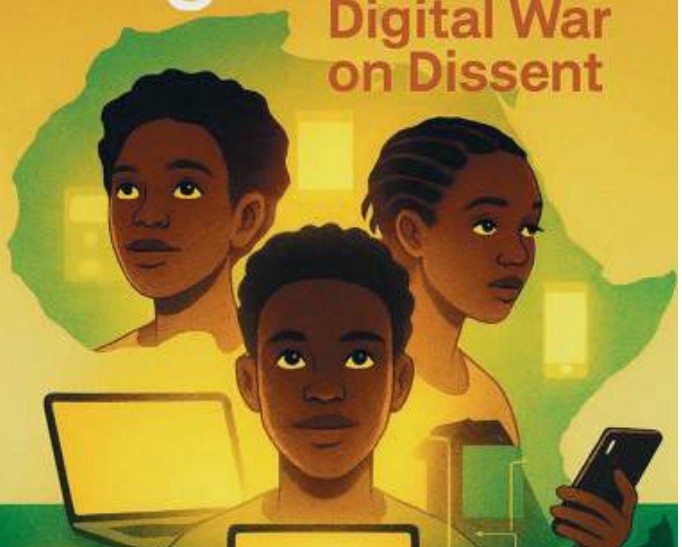
In this hostile environment, a new figure has emerged:
the citizen journalist. Armed with just a smartphone and an internet connection,
this fearless, brazen and unbound individual is reshaping the African civic
space. They are not beholden to institutions or editorial boards.
They report
in real time, from the streets, the villages, the refugee camps. They document
police brutality, electoral fraud and social injustice. And they do so with a
clarity and urgency that traditional media cannot match.
These digital warriors are often young, tech-savvy
and politically conscious. They are the children of the revolution, born into
repression but raised on resistance. Their tools are hashtags, livestreams and
viral videos. Their battlegrounds are Twitter threads and WhatsApp groups. And
their victories are measured not in votes, but in visibility.
Digital movements that Shook the
continent
Africa has already witnessed the power of digital
activism. The Arab Spring in Egypt and Tunisia (2011) was catalysed by social
media, with Facebook and Twitter used to organise protests and share footage of
state violence.
In Zimbabwe, the #ThisFlag movement (2016) began with a simple
video by Pastor Evan Mawarire and grew into a nationwide call for
accountability.
In South Africa, #FeesMustFall (2015–16) mobilised students
across campuses to demand affordable education and decolonised curricula.
Nigeria’s #EndSARS (2020) exposed police brutality and galvanised global
solidarity. The #CongoIsBleeding campaign (2020) highlighted the exploitation
of Congolese miners and called for ethical tech supply chains. Many examples
abound.
Each of these movements faced backlash, arrests,
internet shutdowns and smear campaigns. But they also left legacies. They changed
laws, shifted narratives and inspired new generations of activists. They proved
that digital tools could be used not just for entertainment, but for
emancipation.
Diaspora, solidarity and
transnational impact
The impact of these movements extends beyond
borders. Diasporan communities have played a crucial role in amplifying local struggles.
Zimbabweans abroad used social media to support #ThisFlag, organise protests
and pressure international bodies. Nigerians in the diaspora raised funds and
awareness for #EndSARS. South African students abroad echoed the demands of
#FeesMustFall.
This transnational solidarity is a powerful counterforce to
state repression. It connects local struggles to global conversations. It
brings visibility to the invisible. And it reminds authoritarian regimes that
the world is watching.
AI and the future of civic space
As Africa embraces artificial intelligence, machine
learning and IoT, the stakes are rising. These technologies can be used to
enhance governance, improve service delivery and empower citizens. But they can
also be weaponised.
Facial recognition software, predictive policing and
algorithmic surveillance are already being deployed in some countries to
monitor dissent and control behaviour.
The challenge is not the technology itself, but the
intent behind its use. In the hands of democratic governments, AI can be a tool
for inclusion.
In the hands of autocrats, it becomes a tool for exclusion. The
future of civic space in Africa will depend on how these technologies are regulated,
who controls them and whose interests they serve.
Radio: Last bastion of control
In rural Africa, where internet access remains
limited, radio is still king. It is cheap, accessible and trusted. But it is
also vulnerable to manipulation. In countries like Uganda, Zimbabwe and Zambia,
political campaigns rely heavily on radio to reach voters. State broadcasters
dominate the airwaves, pushing regime narratives and drowning out opposition
voices.
This monopoly on information is especially
dangerous in remote areas, where citizens have few alternative sources. It
creates echo chambers of propaganda, distorts public perception and undermines
informed decision-making. Breaking this monopoly is essential for building a
pluralistic and participatory democracy.
Defending digital civic space
Despite these challenges, the digital civic space
is being defended by youth, by activists, by ordinary citizens. They are
building alternative platforms, creating independent media and using encryption
to protect their communications. They are challenging laws, filing lawsuits and
demanding accountability.
They are refusing to be silenced. This resistance is
not just political; it is cultural. It is a rejection of fear, a celebration of
freedom and a declaration of dignity. It is the heartbeat of a new Africa, an
Africa that refuses to be defined by its oppressors.
The battle ahead
Digital censorship in Africa is not just a
technical issue; it is a moral one. It is about who gets to speak, who gets to
be heard and who gets to shape the future.
It is about power, truth and
justice. As we move deeper into the digital age, the question is not whether
Africa will change, but how.
Will we allow authoritarian regimes to hijack our
technologies and silence our voices? Or will we harness these tools to build a
continent rooted in solidarity, transparency and democratic accountability?
The answer lies in our hands, in our phones, our
keyboards, our hashtags. The revolution will not be televised. It will be
tweeted, livestreamed and shared. And it will be unstoppable.
The author is urban planner and educational
innovator whose work bridges policy critique, storytelling and grassroots
activism