Politics
is the only game where the knives are usually out at the same time as the
smiles, with protagonists raising hands in solidarity, promising undying love
and crafting ideological marriages that they head straight to night meetings
afterwards to betray.
When the ODM central management committee met on Monday
this week in Nairobi, the subsequent press conference seemed nervous and
uneasy. You could almost stretch the hand and touch the hidden knives. Some of
the smiles were as plastic as toy guns.
But
the whole ceremony, to its credit, bought the party and the nation a temporary
political truce, possibly long enough to allow the emotions from the funeral of
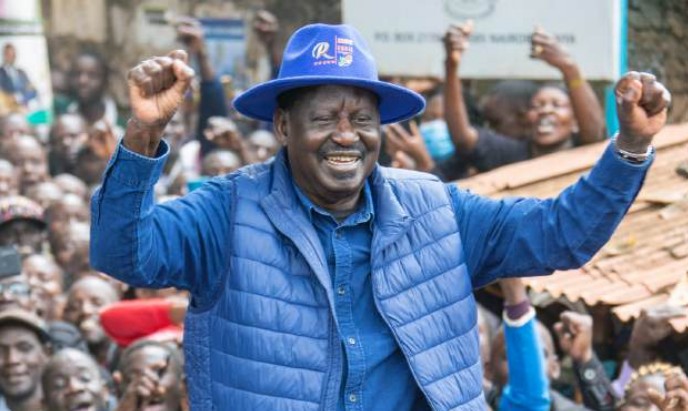
former Prime Minister Raila Odinga to simmer down.
Before the meeting, some
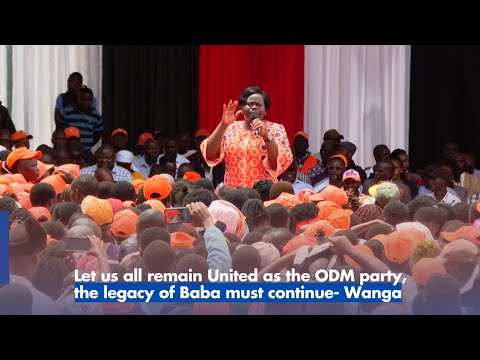
party leaders, led by Homa Bay Governor and ODM chairperson Gladys Wanga had
seemed to lose their heads in the post-burial chaos, stomping around like bulls
in a china shop, with decrees and warnings, obviously imagining that the Raila
succession would be handled like instant coffee.
In
nearly all recent ODM central committee (CC) meetings, the advance narrative
has always been that “this will be the one that deals with SG
(secretary-general) Edwin Sifuna”.
Make no mistake; ahead of the Monday
session, certain leaders in the party had let it be known that they would
propose a resolution at the committee to remove their belligerent SG, now that
the safe umbrella of Raila, which had made him untouchable, was gone.
Again,
make no mistake, this only became untenable because the overriding chatter
after Raila’s funeral within the party was “if Sifuna leaves, we’ll leave too”.
I
am not certain how much self-introspection exists within the membership of the
ODM CC, but I can state without fear that if each chose to take a good look at
post-Raila politics, they would have rightly concluded that many people in the
room had more impending problems than an SG who refuses to bow to the new
political master in town.
Because in the grand scheme of things, the SG may
claim real grassroots following, where others in the room had only drawn their
political lifeline from the departed PM.
It
is on this score that indeed, I submit that President William Ruto should
deploy ruthless mode and throw out the so-called ODM experts from his
government and fashion out a more aligned co-operation with Luo Nyanza
henceforth.
At the time of penning this piece, rumours on the streets has it
that a Cabinet reshuffle is looming, with new faces set to join government as
others depart.
Among those said to be set for a seat on the table is Raila’s
daughter Winnie Odinga currently a member of EALA, based in Arusha, Tanzania.
She made the “ready to return home” declaration at her father’s funeral.
There
is a simple philosophy to the broad-based government, even if it remains
unsaid. It is that the shadow of Raila, and the stability that came with it,
was always in government to help give it the image of wider acceptability,
largely borne of the two top presidential contenders from 2022 working
together.
The five members of the Cabinet co-opted from ODM in 2024 represented
this shadow.
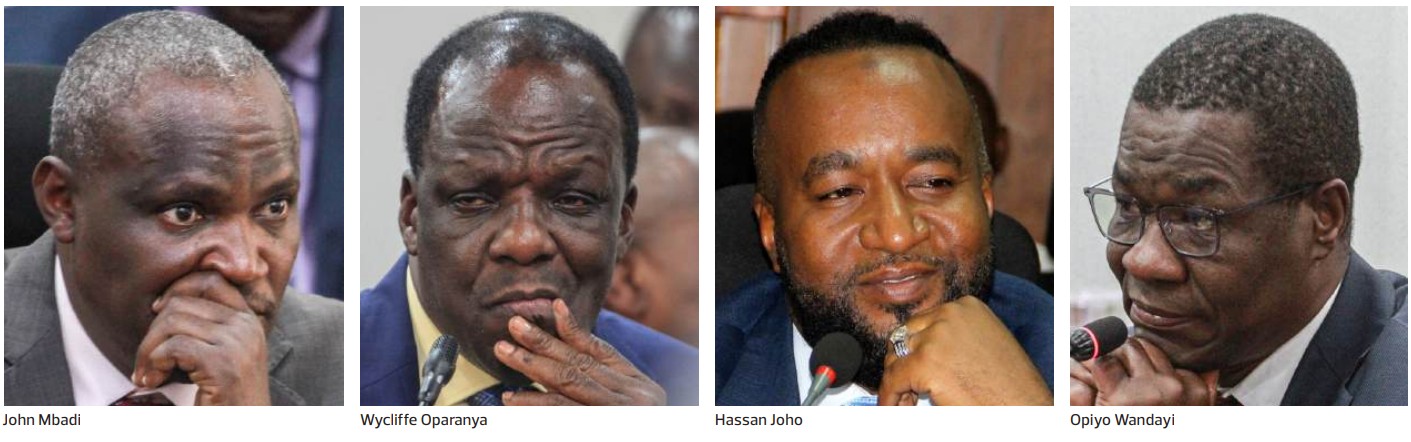
They are CSs Hassan Joho (Mining and Blue Economy), John Mbadi
(National Treasury), Beatrice Askul (Regional Development), Wycliffe Oparanya
(Cooperatives) and Opiyo Wandayi (Energy). Collectively, they represented
Raila, but in the latter’s absence, each will be weighed individually.
If
the President were to seek my opinion, I would gladly aver that of the entire
cast, only Mbadi, and perhaps Joho, posses the political noses and grassroots connection
to be valuable to him after Raila. Mbadi is a lethal political operator with an
explosive presence on the microphone. He is heavily gifted in the use of Dholuo
idioms and can engage crowds for hours on end.
Because of this, he is a
fearless political warrior who can set the agenda and tone for narrative
building. Apart from him, Joho also happens to be quite popular among the
youth, even if his Instagram political style may not appeal to older audiences.
Due
to the foregoing, and given Ruto’s desire to work with Luo Nyanza ahead of the
2027 election, I am persuaded that he no longer needs the “experts” in Cabinet
and leaders within ODM who drew their influence solely from being propped up by
Raila.
In fact, the more compelling action would be for the President to create
his own surrogates outside ODM, and dump most of those he had supposedly taken
on loan from Raila. This way, he avoids the need to practically run two
political formations from State House.
Before
Raila’s demise, ODM had planned a November jamboree in Mombasa to celebrate the
party’s 20th birthday. All indications were that the President would
accompany Raila to the fete, conveniently arriving their bearing the loose brand
name “ODM founder”.
Convenience is a staple of politics, so it is hard to
begrudge Ruto one. But in the absence of the former PM, it seems to be that it
would be a bad idea for the President to attend a large ODM meeting where some
delegates may not be necessarily enthusiastic about the arrangement he had with
Raila, where the latter can no longer call the shots.
There
is a general election coming in just about eighteen months. Between now and
that time, there will be no room for sentimental political positions based on
old friendships, unless someone stands to benefit.
Like with the death of the
founding father Jomo Kenyatta in 1978, the mourning period for Raila will be
succeeded by a season of political pragmatism, in which old ties will be broken
and supposedly tight bonds will be set loose.
Woe unto them who have depended
for long on the political principle of “raised hands”, drawing undue benefits
from closeness to especially the enigmatic Odinga.
If
the Cabinet reshuffle does come, indeed if major changes happen in government,
it will be a mirror to the short-term thinking of President Ruto on how he
intends to position his pieces for the bruising contest ahead.
But more keen
watchers will be interested on the destiny of ODM from now. Many people have
predicted that the party will break into smaller splinter groups, but I suspect
that if the truly popular leaders in the movement take charge of it, there is a
remote chance it may surprise everyone and run one more electoral cycle.
In
the meantime, the possible implosion of ODM seems to have been averted for now.
But the line remains drawn between those who want to use it as a trading vessel
to extract favours from Ruto, and those who seek to retain its identity as an
influential political formation on Kenya’s political landscape.
I am sure the
President will not entertain the former for too long, now that Raila isn’t here
to underwrite their desires. But the latter has to go through a difficult
period of trying to assert their authority and own the party.
If they succeed,
the party may get a lifeline and survive the short-term turbulent period.
This
latter faction seems to have emerged with the upper hand from the last three
weeks, but staying on top of the league table requires more than winning just a
few matches. The long term game starts now.