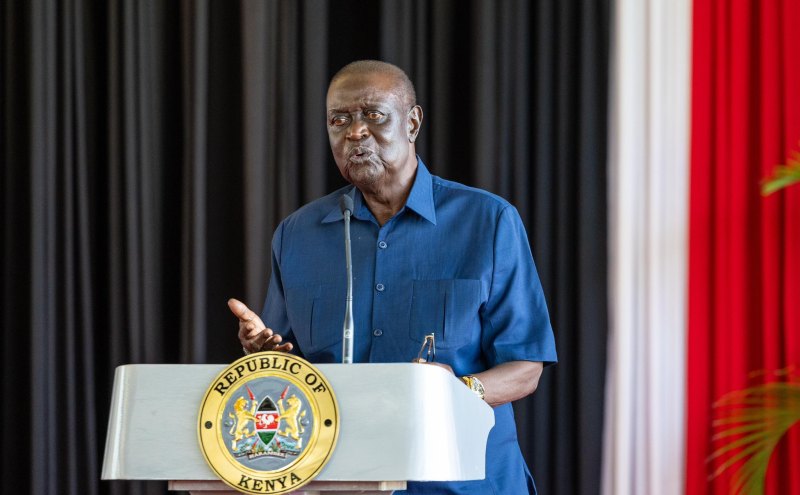
Energy Cabinet Secretary Opiyo Wandayi has locked horns with
senators over a proposal to allow county governments to impose wayleave charges
on the Kenya Power and Lighting Company and other state agencies.
Appearing before the Senate Energy Committee on Monday,
Wandayi warned the proposed law could trigger a sharp rise in electricity
prices if enacted.
“The effect of the proposed amendment would be to create
unplanned levies at the county level, thereby increasing the cost of
electricity and undermining affordability,” Wandayi told the committee.
However, senators accused the national government of
frustrating devolution and denying counties revenue sources they are
constitutionally entitled to.
Committee chairperson Oburu Oginga argued that KPLC already
earns millions by leasing its wayleave infrastructure to telecommunications
firms, and therefore, counties deserve a share of that income.
“KPLC is making money which rightfully belongs to the counties.
The company is earning extra revenue that is not due to it — that money should
go to the counties,” Oburu said.
Wandayi appeared before the committee to present his views
on the Energy (Amendment) Bill, 2025.
The Bill seeks to exempt county governments from the
requirement to obtain written consent from the Energy Cabinet Secretary before
levying charges on wayleaves.
Currently, the Energy Act bars any public body from imposing
fees on public energy infrastructure without written approval from the Cabinet
Secretary.
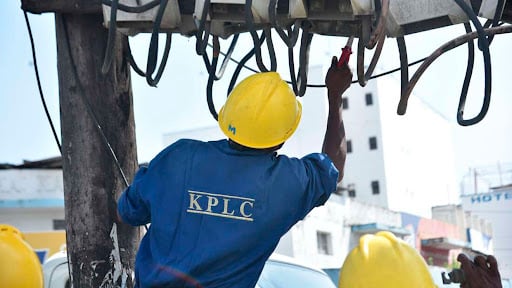
KPLC has relied on this provision to avoid paying wayleave
fees to county governments.
Oburu’s Bill seeks to overturn that arrangement.
“By exempting county governments from section 223 of the
Act, they will be free to charge levies on wayleaves laid by energy sector
entities without seeking the Cabinet Secretary’s consent,” the Bill reads.
The senator said the proposal is aimed at expanding
counties’ revenue-raising powers, in line with the constitution.
But Wandayi countered that giving counties unilateral powers
to impose wayleave levies would complicate power distribution and increase
project costs.
He cited the Fourth Schedule of the Constitution, which
assigns the national government responsibility for energy policy, electricity
and gas reticulation and regulation.
The Fifth Schedule of the Energy Act, he added, clearly
delineates national and county roles in the sector.
“Electricity infrastructure — particularly transmission and
distribution — is developed as part of an integrated national system based on
least-cost power planning.
Allowing counties to impose levies independently would risk
duplication, inefficiency, and inequity,” Wandayi said.
He warned that since wayleaves traverse multiple counties,
the amendment could expose Kenya Power to varying and duplicative fees across
different jurisdictions.
“If each county charges its own levy, the cumulative effect
will delay projects, escalate costs, and especially disadvantage marginalized
areas where affordability is already critical,” he cautioned.
Senators, however, rejected the CS’s position, calling it
unconstitutional and an affront to devolution.
Nairobi Senator Edwin Sifuna accused the ministry of
perpetuating a system where counties are treated as subordinates of the
national government.
“This is not just about money. It’s about a constitutional
principle. You cannot have one level of government — the county — needing
permission from another level — the national — to exercise powers that the law
already grants,” Sifuna said.
“The Rating Act, under Section 19, gives counties the
authority to impose levies.”
Sifuna said there was no evidence to show the cost of
electricity had dropped since the counties stopped imposing the levy in 2019,
when the Act was amended.
Nominated Senator Beatrice Ogolla also faulted Wandayi for
describing the counties’ move as “unplanned” or “chaotic.”
“Using words like ‘unplanned’ or ‘anarchy’ is uncalled for.
Counties are legitimate governments with proper planning and development
frameworks,” Ogolla said.
The committee is expected to hold further public
consultations before preparing its final report for debate in the Senate.
Article 209 (3) and (4) of the Constitution gives counties
the powers to impose charges and levies for the services they provide, as a
means to increase their own source revenue.
County governments and Kenya Power are currently locked in a
power struggle over the wayleave fees.
Counties are demanding bills from Kenya Power, while the
utility firm demands billions from the counties for unpaid electricity bills.
In February, Nairobi County officials stormed Stima Plaza,
disconnected the company’s sewerage system, and dumped waste at its premises,
stating that the waste would only be cleared once a payment agreement is
reached.
This was after Kenya Power disconnected electricity to the
city hall and other county premises over nonpayment of electricity bills.
“Let them not play the victim. We’ve been without power for
days because they disconnect us, yet we always pay and resolve issues. But when
they owe billions, they refuse to pay or even acknowledge the debt. Let them
pay, and we will reconnect their sewer and clean up,” City Hall said.
“Let it be very clear—KPLC owes us Sh4.8 billion. They are
making profits and announcing them publicly, yet they can’t pay their dues,”
the county added.
However, the utility dismissed the City Hall’s demands for
Sh4.8 billion in wayleave fees and instead accused the county of failing to
clear its own outstanding electricity bill of Sh3 billion.
According to KPLC, Section 223 of the 2019 Energy Act, which
prohibits public bodies from charging levies on energy infrastructure without
the Cabinet Secretary's written consent, exempts it from paying leave fees.
By this provision, KPLC argued that the county has no legal
standing to demand wayleave payments.
INSTANT ANALYSIS
In the justification for the Bill, Oburu cites Part Two of
the Fourth Schedule to the Constitution, which provides that county roads are a
function of the counties and wayleaves are laid underground, affecting the
quality of roads within the counties. The trenches that are left after
wayleaves are laid are often left unattended to by the laying entity, leaving
the counties with the burden of covering and generally maintaining those roads
and spaces. By allowing counties to charge levies for wayleaves, counties can
use the monies collected from the wayleaves to repair and generally maintain
county roads, in addition to raising their revenues.

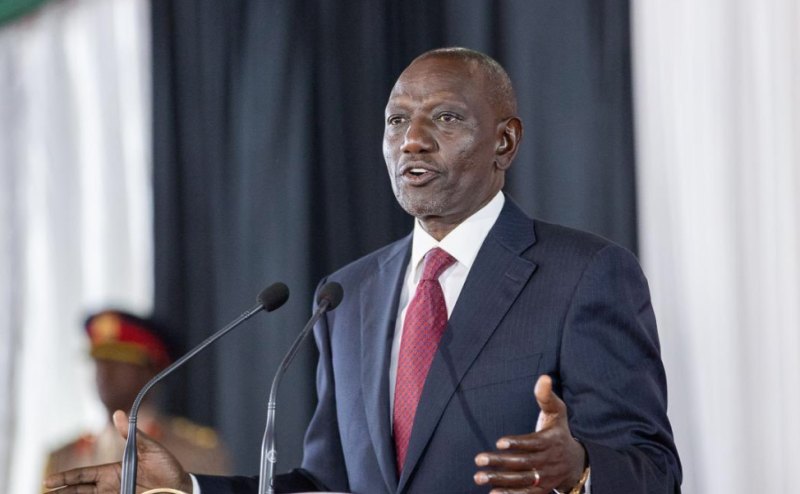
 Energy Cabinet Secretary Opiyo Wandayi/FILE