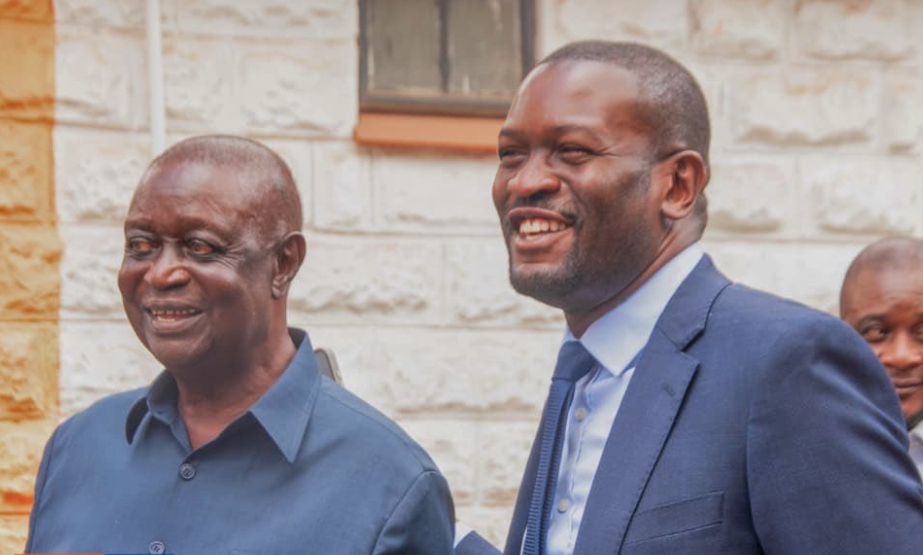
ODM bigwigs were on Monday forced
to make a tactical retreat and abandon their hard line positions to save the
former Prime Minister Raila Odinga’s party from disintegration.
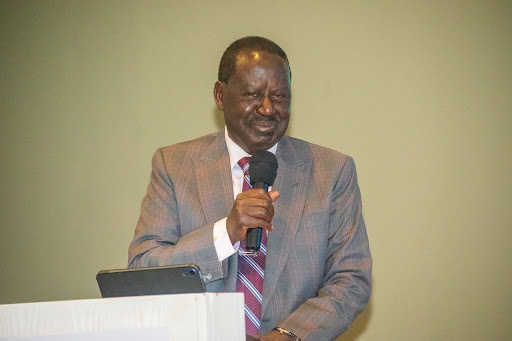
Following Raila’s death, the
20-year-old party almost imploded as factions within its leadership pulled in
opposite directions.
At the centre of the of the ODM
crack was whether the party should back President William Ruto’s 2027
re-election or limit their cooperation to the length of this broad-based
government.
Raila died months after inking
cooperation deal with Ruto’s UDA which was to last up to 2027.
However, majority of the top
leadership have been publicly pushing to have the party support Ruto’s
re-election – a move that was opposed by a group led by secretary general Edwin
Sifuna.
Multiple sources who attended the
Monday Central Committee meeting told the Star how attempts by anti-Ruto ODM
camp to have the decision on whether ODM should stay in broad-based taken to
party delegates was thwarted.
“He (Sifuna) suggested we take the
decision to the delegates to decide, but we told him Mzee (Raila) had done that
when he visited many regions and party organs also sanctioned it,” a senior ODM
official who attended the meeting told the Star.
“So we said that chapter
(consulting delegates) has already been closed and we are not opening it.”
After lengthy deliberations, a
breakthrough was made with rival factions agreeing to a middle ground.
Oburu reportedly played key role in
mediating the two sides.
The compromise saw the pro-Ruto
faction also agree to halt unilateral engagements that would commit ODM to the
government without consensus.
“We also cautioned our leaders who
are trying to sway us to get into early alliances, we told them the secretary general
is our spokesperson and we are going to tell him what he should say,” a
lawmaker who attended the Monday meeting told the Star.
“Any other person should not try to
commit or speak on behalf of the party, that is what we said and we all
agreed on.”
In return, hardliners opposed to
any dealings with Ruto consented to back the broad-based government arrangement
up to 2027.
“Actually we didn’t discuss much
about 2027 but agreed to remind ourselves the words of Mzee that we are in this
broad-based until 2027,” another member of the top decision-making organ told
the Star.
“When we get to 2027 we are going
to consult different organs of the party which are going to give us their
mandate on how to approach the elections.”
In agreeing to coexist within the
broad-based government, ODM’s top brass hopes to ensure the 10-point agenda
signed by Raila and President William Ruto is realised.
The main points of the Ruto-Raila
deal include full implementation of Nadco report, inclusivity in budgetary
allocations, protecting and strengthening devolution, economic investment in
youth and leadership, integrity and end of opulence.
The two leaders also agreed to
fight corruption, stop wastage of public resources, protect sovereignty of the
people, stop abductions, respect constitutionalism and the rule of law.
The Monday agreement is expected to
ease growing tension that was threatening to tear the party apart.
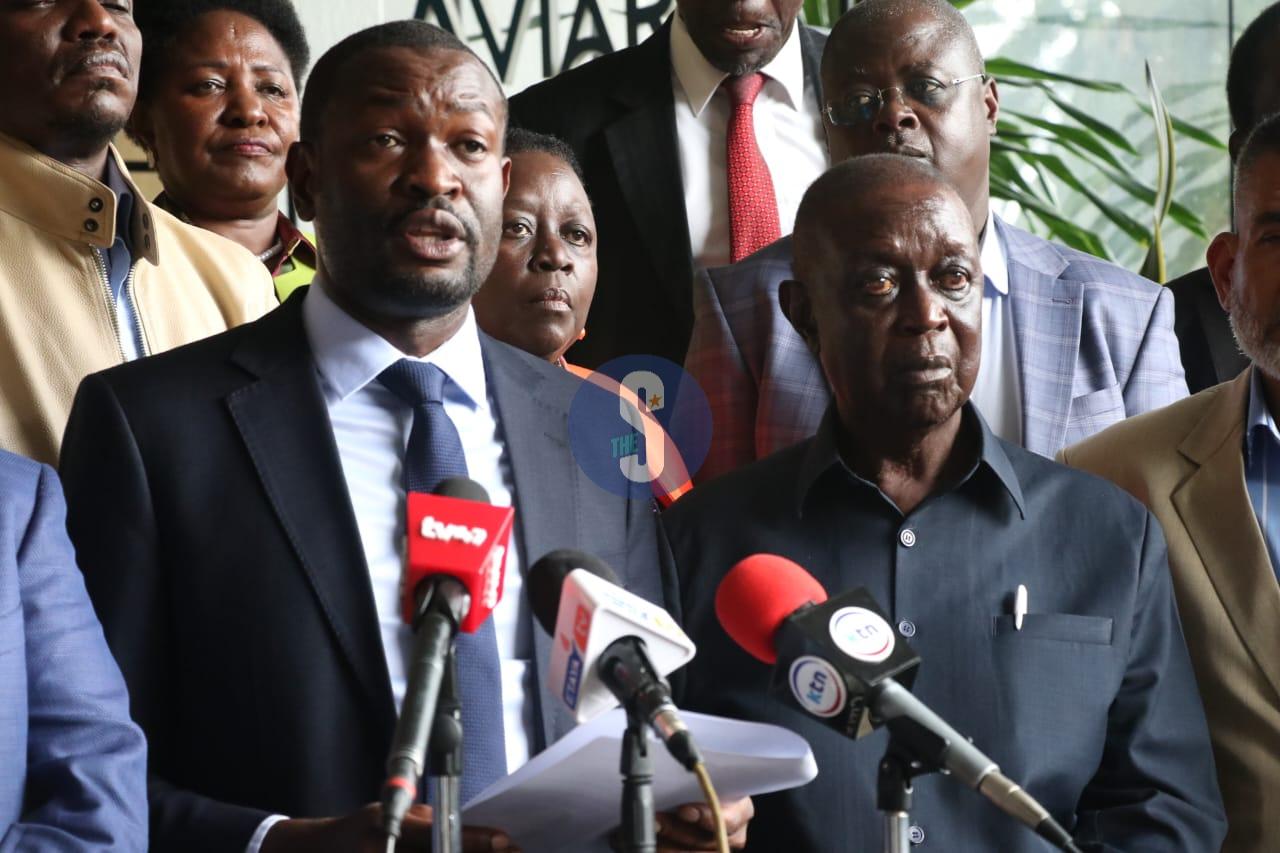
Addressing a press conference after
the meeting, Sifuna dismissed claims of disunity and insisted that the party
would uphold the Raila’s vision of a unified and peaceful nation.
“We reiterate the commitment of the
party to the broad-based government until 2027, a relationship guided by the 10-point
agenda entered into for the sake of peace and stability of the country,” he
said.
The Nairobi senator said ODM’s
participation in government is not an act of submission, but rather a
continuation of Raila’s statesmanship and desire to see Kenya move forward in
unity.
“ODM is not just a political party;
it is a covenant. A covenant that we, the living, must now renew,” Sifuna said.
“Let us resist the temptation to
scatter in despair or to fight over political inheritance as leaders often do
when giants fall.”
But even as the party tries to
forge a common front, some of its lawmakers are still adamant that the party must
align with President William Ruto to survive post-Raila.
Alego Usonga MP Samuel Atandi said
ODM is not ready to field a presidential candidate with the capacity to
challenge President William Ruto.
“There is nobody in ODM who can run
for president as at now because Raila Odinga did not prepare anyone to run for
president. If there is a leader who thinks he can run for president, come out
and tell us whether you have the capacity to beat Ruto,” he said.
The MP spoke during a church service
in Kanyaluo ward, HomaBay county.
He dismissed claims by some ODM
politicians that the party is ready to field a candidate in 2027, saying those
pushing that narrative are only out to create divisions.
“Some of these leaders who are
claiming Raila Odinga did not say we endorse Ruto are small leaders. ODM is not
ready to field a presidential candidate in 2027. William Ruto is a former
member of ODM. We have gone back to our former members to help us rejuvenate
ODM,” Atandi said.
The National Assembly’s Budget and
Appropriation Committee chairman said those opposed to Ruto’s re-election bid
should quit the outfit.
“If you think you can run for
president, you will not use ODM, use your own party. I know some leaders who
say that if ODM is going to sign a coalition agreement with Ruto, they are
going to exit. Please exit, we have so many leaders who can fit in your shoes,”
he said.
Gem MP Elisha Odhiambo said the
party and extension the Luo community is firmly behind President William Ruto
up to 2027 and beyond.
“When the people’s president passed
on, he left us in Canaan with Ruto. So Luos are not going anywhere, we are
united behind Ruto,” Odhiambo said.
INSTANT ANALYSIS
The compromise reflects the heavy
emotional and political burden carried by ODM’s second-generation leadership.
Many of them owe their rise to Raila’s mentorship and feel duty-bound to
protect the party’s future, even at the expense of their ambitions.