On Thursday, the world
congregated at Kangeso village in Migori county to bid farewell to a man who is
rightly regarded to have lived ahead of his time.
Dalmas Otieno Anyango was
always first among his peers but exhibited rare humility. He belongs to the
second generation early academic trailblazers after the Maseno and Alliance schools’
cohorts. He has left indelible mark in every private and public leadership
responsibility he was ever associated with.
His leadership style has been a
yardstick for successful political and business enterprises. Many claim to have
learnt the ropes of public service at his feet. Many landmark development
projects in the country and especially in Migori are associated with him. They
are due to his personal initiative and leadership coordination. These projects
have had profound impacts on the communities and spurred economic ripple
effects.
Dalmas has been a source of
inspiration to many of his peers and dozens of upcoming leaders. At the same
time his demeanour of forthrightness inadvertently drew envy and resistance
from his competitors. He never suffered fools gladly. His generosity and
philanthropy has over time established a strong network of loyal students and
practitioners of his ideology and pragmatism. His footprints are normally
pointed to as beacons of transformative leadership.
Intelligent to a fault, he was the pioneer
class of St Joseph’s School, Rapogi. He was blessed with a unique physique that
blended well with his talents, knowledge and special skills. These special
traits enabled him navigate his leadership roles and career with relative ease.
He was top of his class in the O-Levels and later proceeded to the elite
catholic Strathmore School for his A-Levels. At the Makerere University, Dalmas
served as finance minister as the student guild. He was studying economics. Together
with Prof Anyang’ Nyong’o who was serving as the president, they were two
Kenyans at the helm of a continental student union of 10 executives.
After his undergraduate studies, his interests
in insurance saw him being a fellow at the Institute of Insurance, London. Dalmas
will be remembered for his business innovation, independent thinking and
bravery. He is considered one of the country’s independent thinkers and
investors. For instance, he is credited as one of the pioneer investors in the
banking sector after he founded Thabiti Finance and Thabiti Insurance Company
in the 1980s. He first formed the Thabiti Insurance Company in 1978 and later
founded Thabiti Finance in 1983 with headquarters in Nairobi, and branches in
Kisumu and Eldoret. Pundits agree that he was a shrewd investor and had a deep
knowledge of the money market.
Thabiti Finance became active in 1983. Dalmas
had previously worked for ALICO insurance company and rose to become its
executive director in Kenya at the tender age of 29. He also served as chairman
of Kenya Commercial Bank. Because of his vast experience and deep knowledge,
the company had in its ranks some of the global best brains that employers
craved for. In 1988, he joined national
politics in 1988 under controversial circumstances and left the management of
the bank under the management of a white expatriate. The bank collapsed in the
early 1990s, when the government came up with a policy that government money
could only be deposited and saved in government-run banks.
Dalmas’s political career can be said to be a
product of both single party and multiparty systems in Kenya. His entry and
progression in murky waters of the country’s political landscape is intertwined
with the ebbs and flows of Kenya and Migori’s shifting political tides. The ruling
and only party then, Kanu had introduced the infamous “mlolongo” que voting
system for nomination of candidates for election as councillor or MP. It made
provision that if a candidate garnered 70 per cent of the votes at the
nomination stage then he/she was declared elected unopposed. There have been
claims that he reportedly rigged this stage and romped in as Rongo MP on a Kanu
beating his cousin, Linus Aluoch Polo alias Polo Piach. Despite this turbulent
beginning, he quickly perched himself at the top ranks, earning a cabinet
position under President Daniel arap Moi. His technocratic competence and calm
demeanor earned him the moniker,” Wacho gi gitimo” loosely translated as keeping
the promise.
He had replaced the maverick and populist
Oluoch Kanindo who was persuaded to take up the post of chairman of Sony Sugar
board. Rongo constituency had just been hived off the larger Homa Bay
constituency and home to then powerful PS for internal Security Hezekiah Oyugi.
Aluoch Polo would later succeed him in the ensuing multiparty election of 1992.
Dalmas however, was nominated by Kanu and retained in the Cabinet as Minister
for Transport and Communication. In this capacity he remained the most
prominent political leader in Luo Nyanza other than the doyen of opposition,
Jaramogi Oginga Odinga. In south Nyanza, he was now unrivalled since the
colossus Oyugi had passed on under mysterious circumstances while undergoing
treatment in London.
Dalmas will be remembered as a visionary leader
with a focus on initiating impactful projects that transformed the lives of his
constituents. In each and every of his terms, there is a landmark project of
monumental proportions. He sought to improve the livelihoods of the people he
represented by introducing activities that had economic value. He eschewed
dependency and made every effort to address the cyclic poverty that bedevliled
Nyanza people. In his development philosophy, he identified and prioritised
education as the cornerstone of human civilisation. That is the reason why most
of his development initiatives revolved around education.
He understood that education emancipated human
beings and broke down the chains of blind faith and manipulation. He had
earlier in his professional career established Thabiti to assist a majority of low-income
earners get access to financial services. These services were a preserve of the
top echelons of the economic pyramid as the financial institutions were
structurally prohibitive. Many government and public service employees could
not easily access banking services, especially credit facilities. This also
applied to small and micro enterprise traders.
Upon election as the first Rongo MP, he
embarked on a mission to empower the local communities. He thus established the
Rongo women group alongside the Rongo dairy cooperative society. These were
firsts in then then district of South Nyanza which comprised the current Homa
Bay and Migori counties. The members of the women group were assisted to
acquire top quality grade dairy cows at affordable prices through the
cooperative society. The dairy cooperative society would then buy the milk from
the farmers on behalf of KCC. The women farmers were thus assured of payment
for the deliveries made thereby improving their incomes tenfold. At the same,
the Moi Institute of Technology (MIT) at Kitere received major boost in
equipment and status. The institute was his brainchild with the assistance of
Oyugi who was then PS. During his second stint in Parliament albeit as
nominated but minister, he lobbied for the establishment a branch of KCB at
Rongo. This was to ease access to the financial services to the people who were
benefiting from the economic boom of the businesses spurred by the farming
activities. During the 2007 general election, he switched camps and joined
Raila’s ODM. This was easier because Kanu had worked hand in hand with LDP
against the government’s proposed constitution.
The government under the leadership of President
Mwai Kibaki lost the 2005 referendum. In a strikingly baffling move, Uhuru
Kenyatta bowed to ethnic considerations and withdrew his presidential
candidature in favour of Kibaki’s reelection in 2007. Many of Kanu members
including Dalmas and now President William Ruto chose to break ranks and
remained to form the ODM party. It should be noted that Dalmas burnt the midnight
oil to develop the party’s many policy position papers. These culminated in the
celebrated manifesto that Raila unveiled at the KICC during the launch of his
presidential campaigns. The unfortunate events of the disputed presidential
election results led to the formation of the Grand Coalition government in
which he served as minister.
During this last phase his representative
leadership, he ensured that MIT was elevated to a university college. The
institution later became a fully-fledged university and chartered as Rongo
University. At the same time he championed and dedicated funds for the establishment
of Siala Technical Training Institute in Rongo town. These two institutions
have had profound economic impact in the development of the town and its
environs. The Kenya Women Finance Trust and Cooperative Bank were two
additional financial institutions that came calling as well. Because of
education and economic advancement, Rongo constituency is considered to have
the lowest unemployment rate in the region. The ordinary people enjoy life of
bliss and dignity. Dalmas was and remains a transformative. His legacy belongs
to posterity.

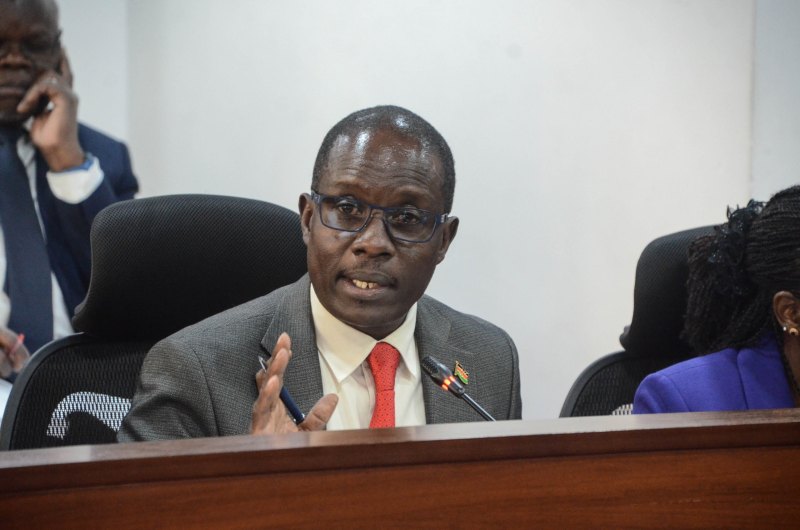
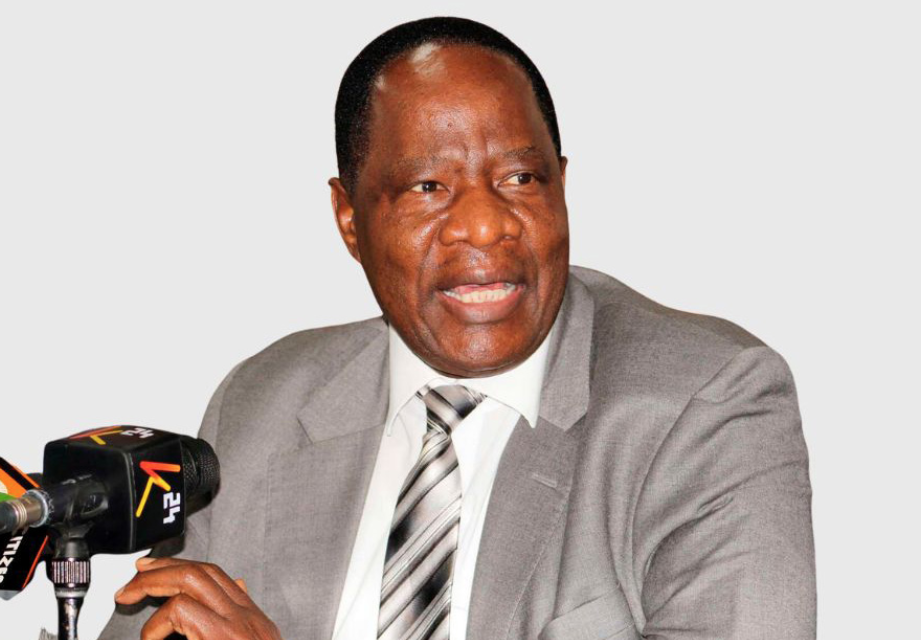 Former Cabinet Minister Dalmas Otieno. He died on September 7, 2025 / FILE