


Joyce Njenga’s fish cookies and noodles experiment is more than a quirky trade fair showcase—it signals how value addition could transform Kenya’s underexploited blue economy. By converting fish into flour with high protein content and weaving it into everyday snacks, the innovation directly addresses gaps in child nutrition while creating new markets for farmers. It also demonstrates how waste can be repurposed into pet food and feed, maximising value across the chain. If commercialised, such products could boost fish consumption, generate jobs and rebrand fish as more than a meal—turning it into a versatile economic driver.
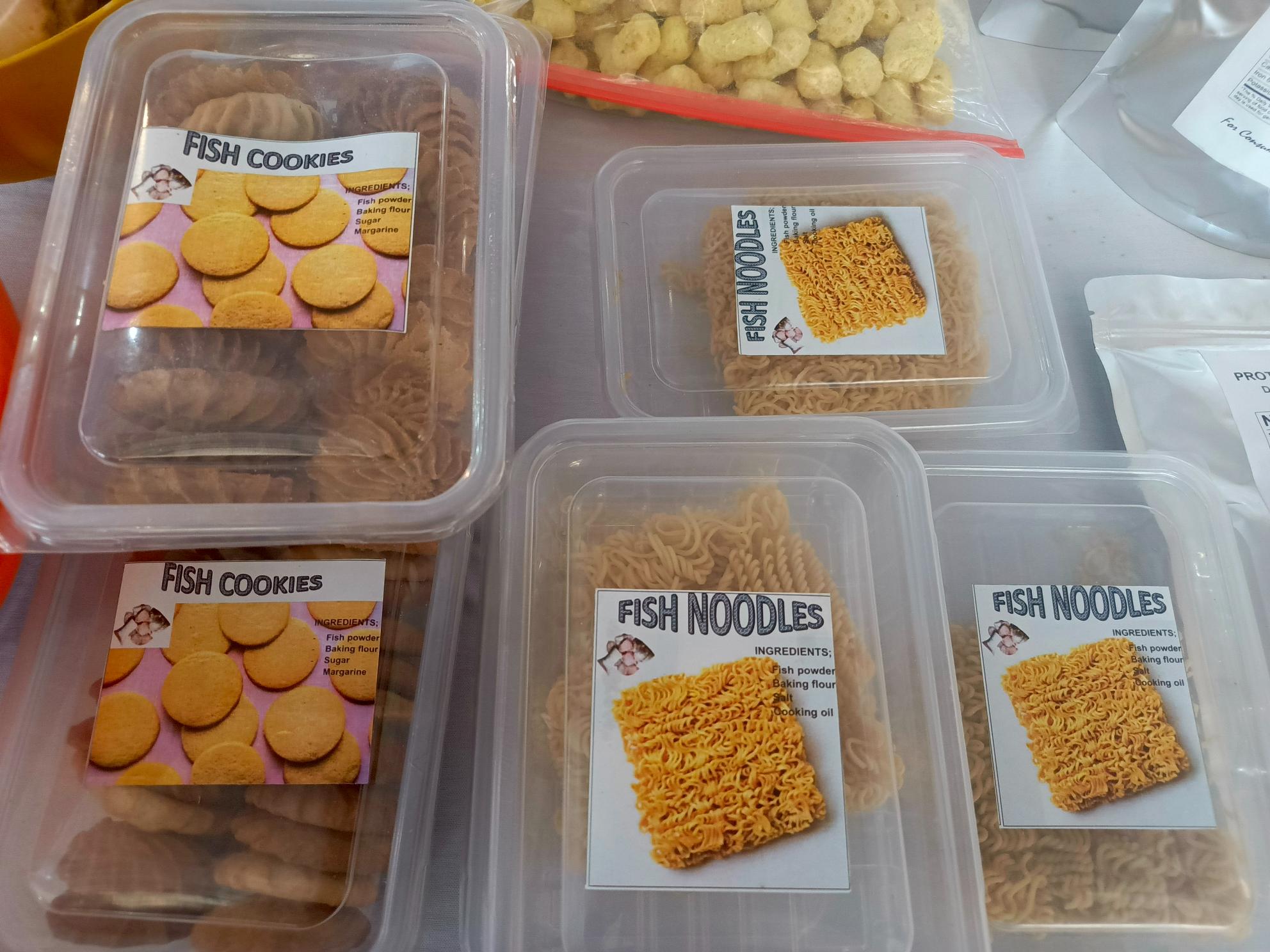 A sample of value added fish cookies and noodles /AGATHA NGOTHO
But one stand is drawing curious crowds with unusual products of cookies, noodles and snacks made from fish.
Behind the innovation is Joyce Njenga of the Kenya Fisheries Service, who is on a mission to show Kenyans that fish is more than just a meal on the plate; it can be transformed into nutritious, market-ready products that appeal to children and adults.
When you think of fish, cookies and noodles are probably the last things that come to mind. But at this year’s Nairobi International Trade Fair, visitors are learning that fish is not just for frying or grilling. It can be milled into flour, baked into crunchy snacks and even turned into pet food, all thanks to value addition.
Njenga is proving that the potential of Kenya’s blue economy stretches far beyond the dinner table.
“Value addition in fish is still very low in Kenya,” she explains.
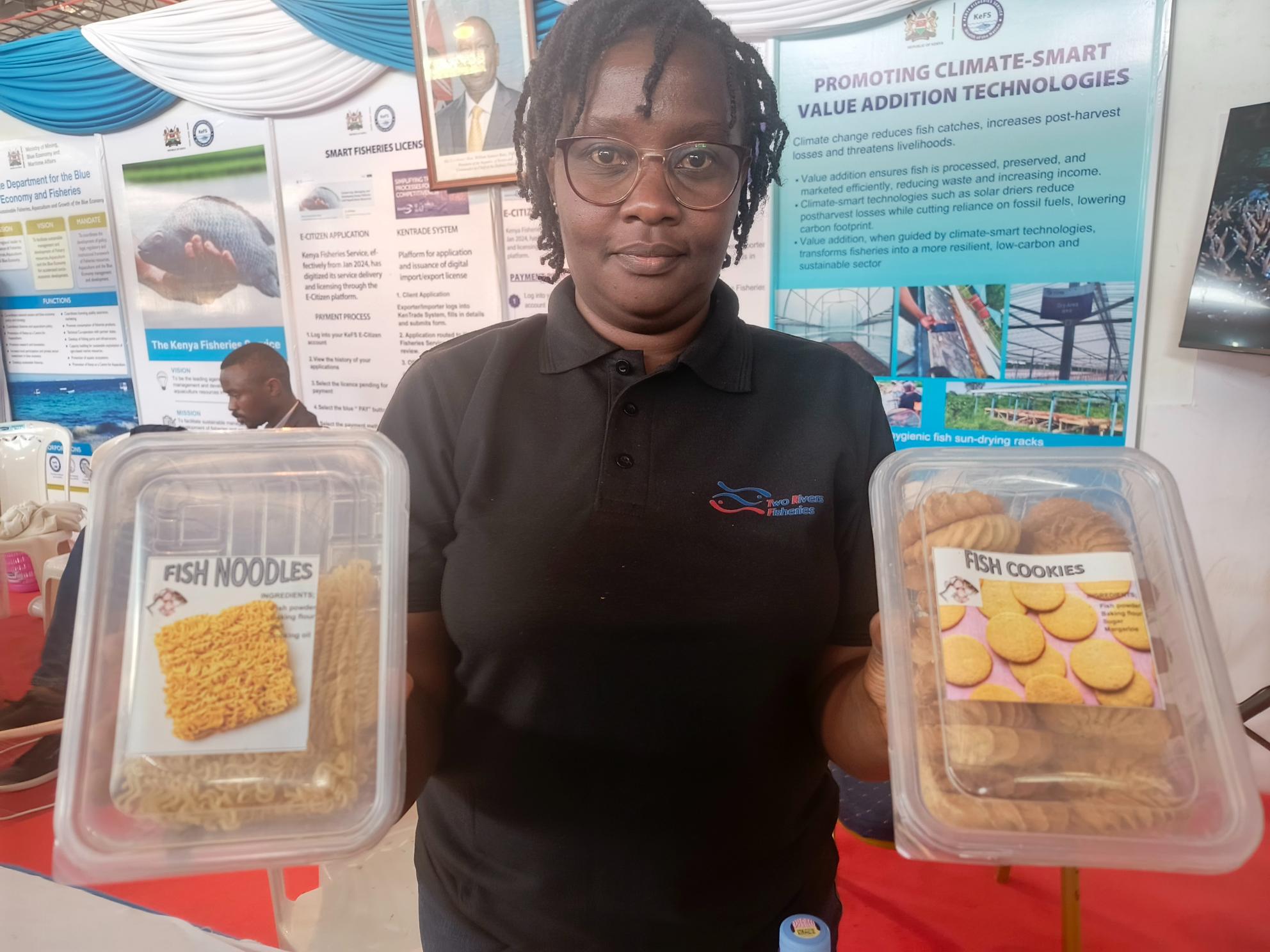
Joyce Njenga from Kenya Fisheries Service exhibits fish value addition on making cookies and noodles from fish flour at the Nairobi International Trade Fair /AGATHA NGOTHO
“We need to embrace it so that, apart from eating whole fish, we can diversify into products that reach a wider market, especially children.”
Her stall is an eye-opener. Alongside the cookies and noodles, Njenga is also displaying dog food and fish feed made from what would otherwise be waste—fish skin, scales and bones. This approach ensures minimal wastage while creating multiple revenue streams for fish farmers and processors.
The secret ingredient in her recipes is fish powder, a nutrient-rich flour derived from the flesh of fish. Unlike traditional methods that use heat, her process avoids denaturing proteins.
“The machine drains the water and powders the fish, giving flour with about 87 per cent protein,” she says.
“That’s quite high. We then fortify cookies or noodles with just five per cent fish powder.”
She is quick to dismiss the fear that a cookie fortified with fish would smell or taste fishy.
“At only five per cent fortification, you get the nutritional benefits without the strong taste of fish,” Njenga assures curious visitors, who are eager to sample the snacks.
The health benefits are undeniable. Many popular snacks in Kenya, such as instant noodles or sweet biscuits, are often made from refined flour with little nutritional value.
By incorporating fish protein, she says the products offer an affordable and tasty way to tackle nutrition gaps, especially among children.
“Most noodles in the market are just sweet flour with no fortification,” she notes.
“But with fish powder, you are boosting protein intake in a form that children will enjoy.”
The value addition innovation aligns with Kenya’s broader agenda of diversifying its food sources and strengthening the blue economy. According to the Kenya Fisheries Service, the country has a huge untapped potential in aquaculture, yet consumption of fish remains relatively low compared to other proteins. Value addition could help change this by making fish more versatile and appealing to a wider audience.
The products are still in the pilot stage, but Njenga and her colleagues are working with partners to commercialise fish powder and make it more widely available.
“This is not just about food, it’s about trade and investment,” she says.
“We want to see Kenyan households access these products easily, and also open up opportunities for farmers, processors and entrepreneurs along the fish value chain.”
She is all smiles as curious visitors leave her stand, often with samples in hand. Njenga notes that fish cookies may sound unusual, but they could very well be the future of snacking in Kenya.
Instant analysis