


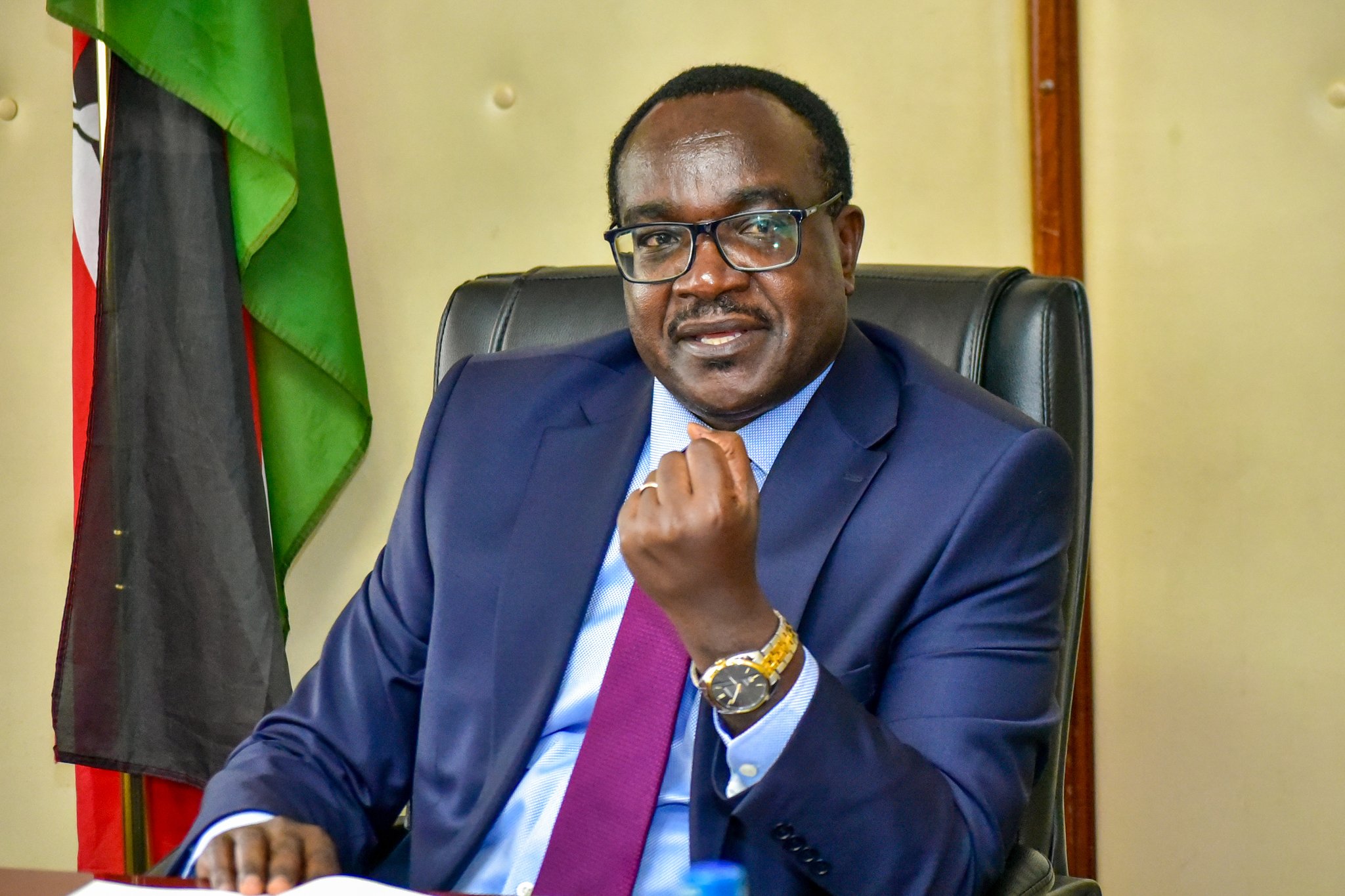
 KUPPET Chairperson Akelo Misori during a capacity building forum held in Murang'a County on September 27, 2025
The Kenya Union of Post-Primary Education Teachers has urged expulsion of rogue Education ministry officials who have been syphoning capitation funds
Kuppet chairman Omboko Milemba said a large portion of capitation funds channelled towards ghost schools is retained in the Ministry of Education.
The theft, he said, has been occurring for a long time and the money has been stolen from examination, infrastructure and learners' capitation funds.
He spoke during a capacity-building forum for Nairobi and Central union officials in Murang’a county.
While underscoring the need to ensure the funds are channelled to deserving children, Milemba called on the government to clean up the ministry to stop the theft.
A report by the Auditor General revealed that Sh170 billion might have been lost through fraudulent allocation to 33 ghost schools in the last four years.
The report sent shock waves through the sector and many learning institutions have struggled to stay afloat due to delayed disbursement of the funds, forcing them to nearly halt operations.
“Let the ministry remove the log from its own eye before it starts coming after teachers,” Milemba said. The owners of ghost schools are ministry officials and the ministry must clean itself up first.”
Malemba said the sector has been facing myriad challenges requiring urgent attention.
He said lack of funds is crippling school operations as their managements strive to feed learners and pay non-teaching workers due to persistent delays in disbursements by the government.
Kuppet secretary general Akelo Misori said teachers were tired of empty rhetoric from government officials on disbursements.
“It’s unfortunate that schools are punished for errors made by ministry officials. These delays affect the day-to-day running of our schools,” he said.
Misori said the government is yet to disburse 30 per cent of learners’ capitation that should be disbursed for the second term.
Each secondary school learner receives Sh22,!44 annually. It is released in batches, with 50 per cent released in the first term, 30 per cent in the second term and 20 per cent in the third term.
In July this year, chairman of the Kenya Secondary School Heads Association (Kessha) Willy Kuria had complained the state owed schools a total of Sh18 billion in this year alone.
In the first term, the government was expected to release Sh11,122 but disbursed only Sh8,818 per learner, leaving arrears totalling Sh2,304.
Schools received Sh3,471 per learner for the second term instead of Sh6,673, leaving a deficit of Sh3,202 for the 3,280,182 learners in public secondary schools.
“The total arrears for the first term were Sh7.6 billion and Sh11 billion for the second term,” Kuria said. He emphasised that the consistent delays in disbursements were undermining the quality of education.
The ministry has started a schools verification exercise requiring them to
present learners' Unique Personal Identifier (UPI), together with their
registration numbers and certified bank account details ¾ only after receiving
all information will schools receive their capitation.
Misori said, however, the delays risk hampering the end-of-term examinations as many schools don’t have the necessary funds to prepare for practical examinations.
He also raised the issue of teachers’ medical cover that has elicited numerous complaints, saying the union rejected the when it was first introduced in 2015.
“We went to court to stop but after seeing the teachers suffering due to the stand-off, we let go,” Misouri said.
Teachers have said they are forced to pay out-of-pocket as many hospitals don’t recognise the cover, leaving them with huge medical bills, despite their contributions being deducted monthly.
“One of the roles of Teachers’ Service Commission (TSC) is to procure and if it procures something that’s not beneficial to teachers, that’s a huge source of demotivation,” Misori added.
The officials further urged the government to consider shifting Junior Secondary Schools from primary to secondary schools, which they said have under-utilised facilities, including laboratories and classrooms.
They said boarding schools are willing to opening up their schools to day scholars. This admission would resolve one of the issues raised by stakeholders, giving parents time with their children while allowing learners to access education.



![[PHOTOS] Calm prevails in Kisumu, Homa Bay](https://cdn.radioafrica.digital/image/2026/06/dff8923b-c99a-4f40-a4be-cc996653e4e0.jpg)