Every morning, she shows up in class, chalk in hand,
delivering lessons to her students with unwavering commitment. But when the
bell rings, she goes home on an empty purse, unpaid bills but still having to
put on a brave face.
“The struggle is especially cruel as we are already earning
meager stipends of Sh15,000–Sh20,000. This work has become unpaid labour, yet
expectations remain the same. We have to show up to teach, to mentor, to guide
while at home it is a struggle,” Achieng says.
She is among hundreds of teachers who are going without pay
as a result of delays in capitation for schools and fee payment by parents who
are navigating tough economic times.
For Natalie, she has been served with a one-month notice by
a private health facility she works for as a nurse in Nairobi’s Umoja estate,
which intends to lay-off staff to remain afloat.
George who worked for a security firm for over five years
has already been sent home following a lay-off exercise by the company.
He was working for one of the leading marketing services
firms in Kenya until May last year, when he was served with a redundancy
notice, he is now jobless for over one year.
“I am almost giving up because everywhere I go looking for
employment, they say they are not hiring with some places saying they are
actually downsizing. I cannot go back to the village because it is even worse
back there and I have a family that depends on me,” he told the Star.
The father of three is juggling between paying school fees
and meeting household bills, his bleak financial position notwithstanding.
These are just but a few of hundreds of thousands of Kenyans
who continue to face job losses, salary delays and cuts as companies are forced
to either scale down operations or shut down with layoffs as the last option
after exhausting other options like cost-cutting, hiring freezes or voluntary
programmes.
For those who are still in employment, many face stagnated
salaries with some having to take pay cuts according to industry trends.
Various reports both by state entities and the private
sector show a significant number of companies in Kenya are closing due to a
tough economic climate characterised by high inflation, rising taxes and
declining consumer purchasing power.
Indicators include increased voluntary liquidations and
bankruptcies, with some sources noting dozens of companies dissolving and
others disappearing from employer lists altogether.
Job cuts currently affect sectors including agriculture,
banking, manufacturing, technology, healthcare and media industries due to factors
like declining sales, high costs, technological disruption and government
policies.
Some of the most recent firms that have indicated intensions
to lay off include Sri Lankan firm Browns Plantations, just one year after
taking over tea estates in Kericho, Bomet and Kiambu counties from James Finlay
Kenya and Ekaterra Plc.
The move is expected to affect at least 2,000 employees.
Kenyan healthtech startup– Ilara is also restructuring its
operations and laying off an undisclosed number of its employees over a funding
crunch.
The affected staff have already been notified, and a 30-day
consultation process has begun, as required by the Kenyan law.
“This is a difficult moment for our team, especially in
light of recent strides we have made in the business,” said Emilian Popa,
founder and CEO of Ilara Health.
G4S Kenya laid off approximately 400 employees starting
November, with the process concluding by February this year due, to reduced business
which led to a decline in revenues and high operating costs.
Other companies that announced redundancies last year
include Tropikal Brand Africa, Standard Group which sent home about 300
employees as part of a restructuring, Copia which cut off 25 per cent of its
staff, Wire Product Limited which sent home 178 employees, Tile and Carpet
Centre, WPP Scan group, among others, with some of these processes spilling
into this year.
The situation remains gloomy, with more expected to be
kicked out including in the Export Processing Zones if the African Growth and
Opportunity Act (AGOA) which expires today, is not fully renewed.
At least 66,800 direct jobs, three-quarters of them women,
are in the EPZ sector supporting nearly 800,000 livelihoods which dependent on
AGOA, according to Kenya Private Sector Alliance CEO Karole Kariuki.
Close to 116 companies have shut down in the past four
years, with another 115 warning of imminent closures within the short-term as
of December last year.
More than 40 per cent of employers under the Federation of
Kenya Employers (FKE) had last year indicated they were planning to reduce the
number of employees to meet the increasing costs of operating in Kenya.
This puts the average number at 2,000 members, including
associations whose membership is spread across the different sectors of the
economy.
Dozens of companies have since actualised the redundancies
which have rendered thousands of Kenyans jobless, with numbers estimated to be
above 60,000 in the formal private sector.
This adds to the more than 100,000 jobs that were lost between
October 2022 and November last year, according to FKE, with the country
grappling with high unemployment as firms decry high operating costs.
A CEOs survey by the Central Bank of Kenya (first quarter of
2025) indicates nearly a quarter of manufacturing and service sector firms have
reduced full-time staff in the first half of 2025, due to falling sales and
high operating costs.
Additionally, analyses of the manufacturing sector show at
least a dozen firms significantly downsized operations between 2014 and 2022,
with some 34 large manufacturing plants shutting down entirely in the same
period.
The survey targeted CEOs of over 1000 private sector firms
through questionnaires administered via a direct online survey.
The respondents, were from manufacturing, tourism, hotels
and restaurants, financial services, wholesale and retail trade, ICT and
telecommunications, professional services, agriculture, transport and storage,
and healthcare and pharmaceuticals.
Other sectors were real estate, media, education, majority
noting increased production costs from inflationary pressures and erosion in
the purchasing power.
According to the survey, the country still faces a weakened
labour market, high food price and inflation, which hinder private investment
and sustained growth in post-Covid era.
It advocates for “careful fiscal management”, emphasising
the risks of excessive borrowing and the need to avoid costly economic
nationalism in favour of international trade, while also proposing alternative
macroeconomic strategies to achieve stability and debt resolution.
The African Development Bank (AfDB) has noted that high
business costs, including expensive electricity and costly business
registration continue to pose challenges for investors in Kenya.
“Business capital growth is constrained by high informality,
costly business registration (15 per cent of Gross National Income per capita),
expensive electricity ($ 0.15/kWh), and poor infrastructure,” AfDB notes in its
Kenya Country Focus Report, 2025.
The muted job growth in Kenya is further reflected in the
recent c PMI report, which showed that while private sector activity improved
in August 2025, job creation remained mild despite a 15-month high for the
fastest growth in hiring seen since the last quarter of 2023.
The slower hiring was influenced by a lack of demand,
ongoing high input costs, and the lingering effects of previous protest
disruptions, which dampened business confidence and forced firms to limit their
employment growth.
Last year, the Kenyan economy added the fewest jobs since
the 2020 Covid-19 pandemic as growth slowed, dealing a blow to President
William Ruto’s administration's bid to ease the mounting youth unemployment.
About 789,300 new jobs were created last year down from 848,100
the previous year, the Economic Survey 2025 indicates.
Apart from job cut and reduced wages, employers are
struggling to remit statutory deductions including taxes, Sacco and insurance
premiums.
For instance, the Saccos Supervision Report by the Sacco Societies
Regulatory Authority shows the Savings and Credit Cooperative Cooperatives
(Saccos) did not escape the brunt of the tough economy faced by both households
and businesses, as employers failed to remit Sh4.2 billion of members’ funds in
2024.
According to the report, non-remitted funds in 2024 affected
85 regulated saccos (62 deposit taking saccos and 23 non-withdrawable deposit
taking saccos), involving 55,602 members of regulated Saccos (consisting of
49,821 members of DT-saccos and 5,781 members of NWDT-Saccos).
According to the report, Sh3.10 billion (74.5 per cent of
the total non-remitted funds) was meant to repay loan and credit facilities
issued to the affected members, meaning that these loan and credit facilities
remain largely defaulted, and the liquidity and ability to meet financial
obligations remain severely undermined.
“Such non-remittances of loan repayment due have also led to
conflicts between the saccos affected and their members, such as contested listings
in the Credit Reference Bureaus, qualification for additional loans by the
members, among others,’’ the report reads in part.
The situation is so dire that the Kenya Revenue Authority
(KRA) has lodged objections barring over 1,000 companies from intended
dissolution and striking off from the Registrar of Companies for the before
settlement of tax liabilities.
Cumulatively, these companies owe close to Sh1.5 billion in
unpaid taxes to KRA.
The companies seeking voluntary dissolution vary across all
sectors and range from single proprietor businesses, family-owned firms and
local subsidiaries of international firms.

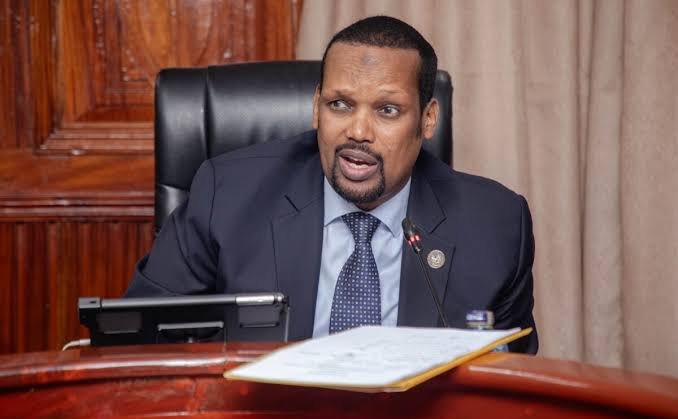
 Kenya Private Sector Alliance CEO Carole Kariuki/HANDOUT













![[PHOTOS] Ruto attends service at Nkarusha SDA](https://cdn.radioafrica.digital/image/2026/06/dd6275de-ac6e-4370-96c8-fed73c7f1a3a.jpg)