Military protocol
requires that the Ministry of Defence (MoD) or the Kenya Defence
Forces (KDF) headquarters first confirm the death through official
field channels.
The commanding
officer on the ground sends a formal report to Defence Headquarters
in Nairobi.
According to
insiders, once verified, the information is passed to the Chief of
Defence Forces (CDF) and the Defence Cabinet Secretary.
Only after that
confirmation does the Defence headquarters relay the news to the
family.
“A senior person
within the military, if not the CDF, will have to communicate to the
listed next of kin...this could either be the father, mother, brother
or sister or even the wife of the deceased,” said the source.
“The local chief
will also be informed who will then travel physically to the home of
the deceased to formally pass the information and offer immediate
emotional support,” he adds.
This standard
procedure is also followed in the National Police Service (NPS).
If a police officer
dies while in a mission outside the country, NPS follows a similar.
Normally, the
officer’s unit or mission commander sends a formal report to Police
Headquarters in Nairobi.
The information is
verified and passed to the Inspector General of Police (IG) through
the Deputy Inspector General (DIG) in charge of the relevant service,
either the Kenya Police Service (KPS) or the Administration Police
Service (APS).
In some cases, the
casualty notification team, normally made up of a senior officer, a
chaplain or counsellor, and sometimes a medical officer, travel in
person to the soldier’s next of kin.
This visit is
supposed to happen before any public statement is made.
The family is then
guided on practical steps such as burial arrangements, benefits, and
honours due to the fallen service member.
If the soldier or
police officer has been missing in action (MIA), the process can take
longer.
The military first
issues a “missing” notification to the family, updating them as
searches or intelligence efforts continue.
A death notification
is only given once there is conclusive confirmation, either by
recovering remains, having verified intelligence, or after an
official presumption of death.
That is why the case
of Constable Benedict Kibiru, the police officer who went missing in
Haiti, has raised concern.
Relatives had
reportedly been waiting for word on his status.
But on Tuesday,
during his address to the United Nations General Assembly in New
York, President William Ruto announced that Kibiru was dead.
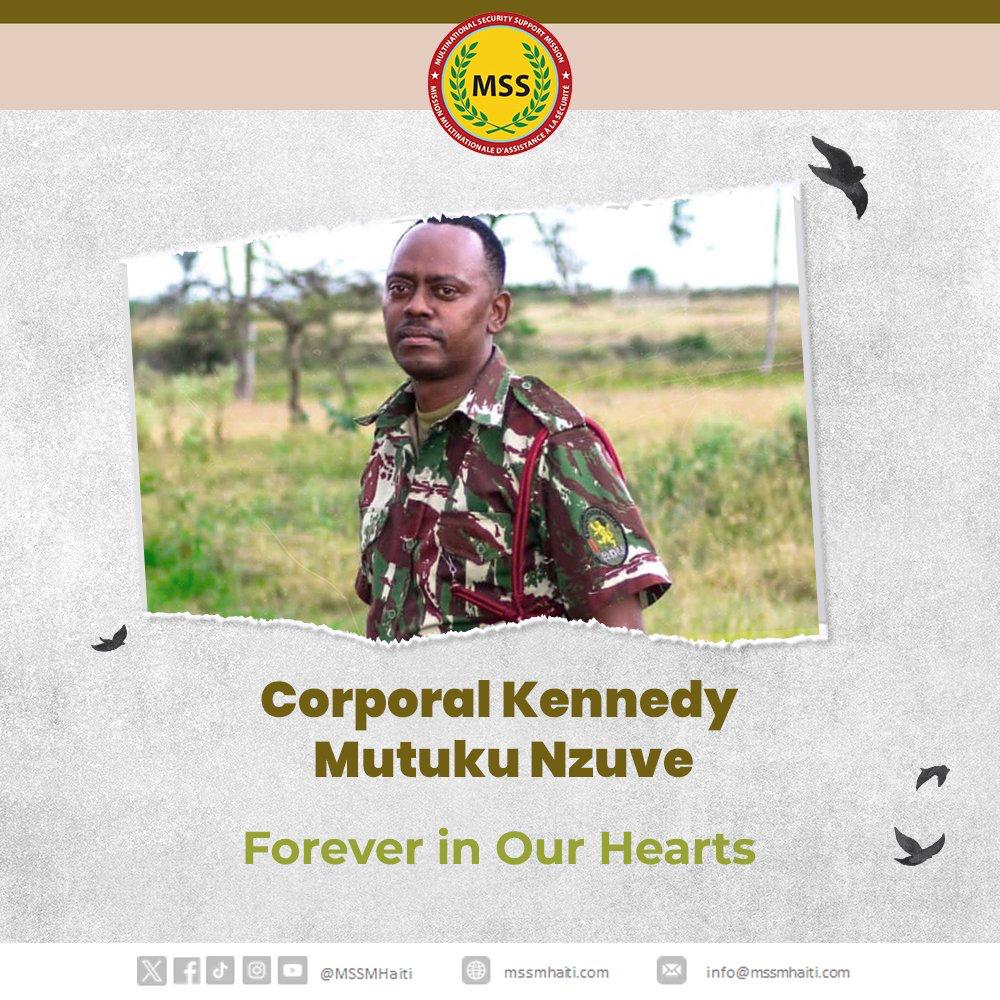
“I must use this
occasion to honour the Kenyan officers, Samuel Kitwai, Benedict
Kabiru, and Kennedy Nzuve, who lost their lives in the line of duty,"
Ruto said.
The MoD’s official
manual on personnel administration, though not public in detail,
generally follows Commonwealth and NATO standards.
It follows that no
names are released until the next of kin have been personally
informed.
The practice is
designed to avoid families discovering a loved one’s death from the
media.
According to our
sources, this is highly irregular.
“The normal
procedure is to send a team to inform the next of kin before any
public communication,” said a senior officer familiar with police
casualty management.
“Families should
never discover such news from a broadcast.”
Sometimes, however,
this process breaks down.
In fast-moving
diplomatic or security situations, top leadership may feel pressure
to mention fallen officers, especially if the loss has wider symbolic
significance.
The public remarks
by the President can precede the final notification if communication
between the foreign deployment, DoD, NPS Headquarters, and State
House is delayed.
In Kibiru’s case,
sources suggest confirmation of his death reached Nairobi shortly
before the President’s UN address, but the notification team had
not yet visited the family.
The officer who was
part of the Kenyan contingent serving under the Multinational
Security Support (MMS) mission is suspected to have been killed by
armed gangs in March 2025.
This is after an
ambush by the gangs while on patrol.
The family has since
moved to court, claiming information has been withheld by officers
from the Attorney General’s office.
His mother, Jacinta
Wanjiku Kabiru, petitioned the High Court, requesting the government
to clarify whether Kuria is alive or deceased and to disclose all
efforts made to locate him.
During the hearing
on Wednesday, the AG told court that it is not aware that Kabiru died
in Haiti, contrary to the remarks made by the President at a United
Nations meeting.
Appearing before
Justice Chacha Mwita, lawyer Betty Mwasao acting for AG and other
government agencies, told the court that the government’s position
remains that the officer is “missing in action”.
This, as she
requested additional time to confirm the accuracy of the President’s
statement.
The lawyers
representing the family, however, told the court that the president’s
public acknowledgment that Kabiru was among the officers who died in
Haiti is cited as evidence
"If the
President’s statement is accurate, then it effectively disposes of
the request for information since confirmation has already been made
at the highest level," court heard.


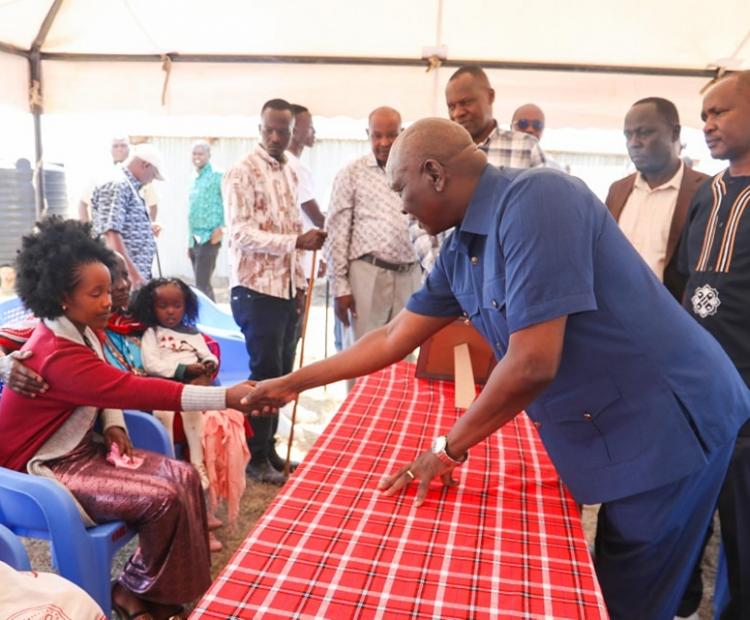 Inspector General Dougla Kanja when he visited the family of the late Samuel Tompoi who was killed in Haiti on March 2, 2025/NPS