Procurement of goods and services by government
agencies have reportedly stalled as officials struggle to migrate to the new presidential
directive on e-Government Procurement (EGP).
Some state agencies are yet to procure any
goods or services even as the first quarter of the financial year closes by the end of this month.
However, while speaking to the Star on Thursday, Treasury Cabinet Secretary John Mbadi insisted that there is no rolling back from President Ruto’s World Bank-supported initiative to streamline the procurement system.
Mbadi, who was appearing before Parliament, told the National Assembly Committee on Implementation that the eGP directive had followed all relevant statutory provisions governing public procurement and also got a cabinet approval.
“The system was piloted in 12 procuring entities, which comprise three ministries, three parastatals, three oversight bodies and three counties. The implementation of eGP will reduce the cost of goods, works, and services and increase transparency in procurement processes and practices,” Mbadi said.
The CS listed the National Treasury, State Department of ICT, State Department of Public Service, Office of the Auditor General, KenGen, KeNHA, Moi Teaching and Referral Hospital, EACC, Public Procurement Oversight Authority, and Makueni, Elgeyo Marakwet, and Busia counties as the 12 entities where the pilot project was undertaken.
So far, Mbadi says 1,379 procurement entities, 10,000 suppliers, 140 trainer of trainers (ToTs) supporting the rollout of the system, and more than 14,000 public finance managers and users have been onboarded.
“As directed by the Government Policy on digitalisation as an enabler of, among others, the Bottom-Up Transformation Agenda (BETA), the National Treasury will continue to implement this key reform agenda,” he added.
Some senior officers in state agencies, however, maintain that the situation has been exacerbated by
challenges faced by procurement officers who allege that they have not been equipped
and well trained to handle the new system.
Some of the agencies have reportedly resorted to
extending or renewing contracts of existing suppliers and contractors to cover
the emergency needs.
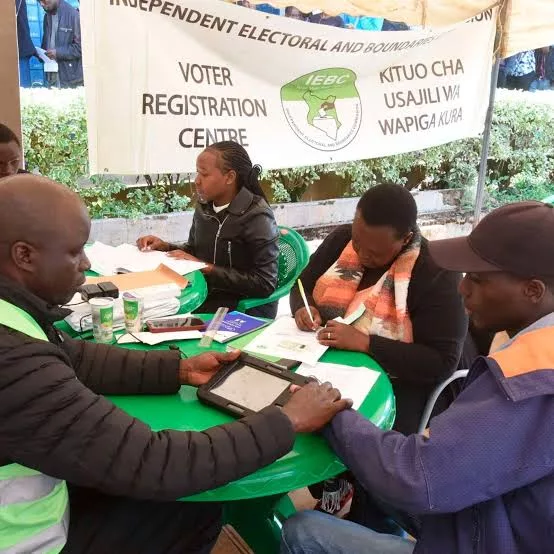
The Independent Electoral and Boundaries
Commission (IEBC) is among those hit even as it prepares for November 27 by-elections.
The commission on Wednesday revealed that it’s
yet to procure any single material for the by-election after its request to return
to the old system was declined.
Although the electoral agency said it had
trained part of its staff, the commission said the technical hitch may end up
delaying some of its work.
“Even as we are speaking now, we've not
procured any election materials for the purposes of the by-elections because we
have been directed to comply with e-GP, but we can confirm that we have already trained staff, at our headquarters, and we can now begin the procurement,
but albeit with some delays,” Chief Electoral Officer Marjain Hussein Marjan says.
A number of state departments and
agencies are reportedly yet to fully migrate to the system, according to interviews conducted
with some heads of procurement.
“Nothing is moving in any government office.
Not a single government entity has done any procurement for this first quarter
of the financial year, and this is likely to continue into the next quarter,” a
senior officer in one of the ministries said.
The officer claimed that across ministries,
parastatals, and semi-autonomous government agencies, procurement has been paralysed,
not because of unwillingness to migrate but because of hurried implementation without
sufficient training.
“There will be ripple effects as we approach
the second quarter. The economy is going to take a hit when the government is
not procuring or spending,” another senior officer said, adding that his agency
had resolved to extend a group medical cover for one year as they could not manage
to conclude a fresh tender.
Last week, counties got a reprieve after
the high court suspended Mbadi’s directive ordering the Treasury and PPOA to
accept manual procurements.
“A conservatory order is hereby
issued staying the decision of the Cabinet Secretary, National Treasury &
Economic Planning, and the Public Procurement Regulatory Authority’s Circular
No. E04/2025, which required the mandatory use of the Electronic Government
Procurement System [e-GPS] by all Public Procurement Entities,” Justice Bahati
Mwamuye’s orders dated 8th September read in part.
The Council of Governors (CoG) had warned that
forcing counties to transition prematurely could disrupt service delivery,
noting that only three out of 47 counties participated in the pilot phase, and
all reported major failures.


 National Treasury Cabinet Secretary John Mbadi./FILE