Revealed: How police recruitment will be conducted under new rules
To curb fraud, panels are permitted to retain copies of the verified documents.
by FELIX KIPKEMOI
Audio By Vocalize
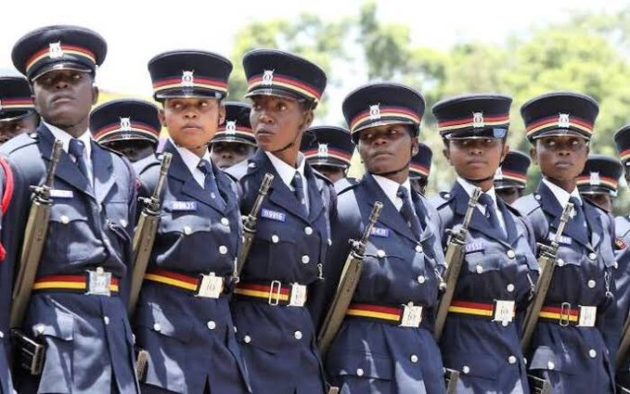
Kenya Police Service officers during a passing-out parade at Kiganjo training college/FILE
The National Police
Service Commission (NPSC) has unveiled new regulations detailing how
the recruitment of police constables and cadets will be conducted in
the upcoming exercise.
In what marks a
major shift in the process, the commission is for the first time
taking the online route, a move aimed at improving transparency,
fairness, and professionalism in the process.
The rules are
contained the recently adopted National Police Service Commission
(Recruitment and Appointment) Regulations, 2025.
At the heart of the
reforms is a structured, three-phase recruitment process that begins
with the submission of applications and culminates in the admission
of candidates to police training colleges after medical assessments.
In the first phase,
interested candidates will submit applications through the official
NPSC recruitment system using the prescribed Form 4.
The regulations
emphasise that candidates who fail to provide complete and accurate
information at this stage will be automatically excluded from
consideration.
Once applications
close, the Commission will process submissions and shortlist those
who meet the minimum eligibility requirements.
Importantly, the
shortlist will not be a narrow one.
The Commission is
required to ensure that the number of shortlisted candidates is at
least three times the number of available vacancies at each
recruitment centre.
This approach is
meant to provide a wide pool of qualified applicants while guarding
against favoritism.
The names of
shortlisted candidates will then be published on the NPSC website
and, where necessary, through other communication channels.
In addition, every
shortlisted candidate will receive direct notification, either by
email or telephone, specifying the recruitment centre they are
required to report to, the exact date of appearance, and the
documents they must bring for verification.
Candidates will also
be informed of the consequences of late arrival or failure to attend.
In line with
constitutional principles, affirmative action will play a role in
ensuring inclusivity, especially for marginalised groups.
The second phase of
the recruitment will take place at designated recruitment centres
across the country.
Here, only
shortlisted candidates will be admitted to this stage, and they must
appear in person.
Each candidate will
undergo rigorous document verification before panels appointed by the
Commission.
Original
identification and academic certificates must be presented and
checked against the information provided in the online applications.
To curb fraud,
panels are permitted to retain copies of the verified documents and
may conduct independent background checks to confirm authenticity.
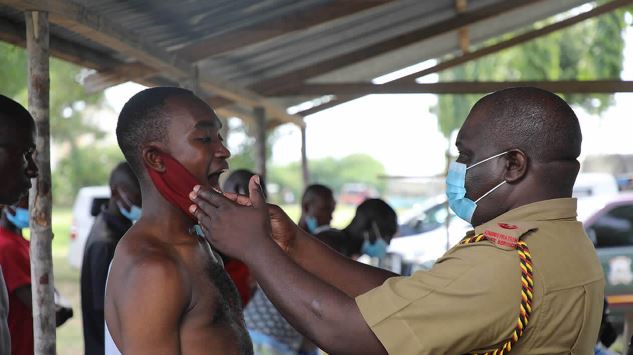
Alongside document
scrutiny, candidates will also face physical assessments designed to
test their fitness and suitability for the police service.
The regulations
spell out that this process must be conducted with the highest levels
of professionalism and integrity.
Each candidate will
be assessed on observable physical attributes and put through fitness
tests, including a running exercise over a specified distance.
The criteria for
physical assessment must be applied uniformly, objectively, and
communicated clearly to all candidates at the start of the process.
To further reinforce
accountability, members of recruitment panels will be held
individually and collectively responsible for any irregularities.
Where there are
security concerns, delays, or other justifiable causes, the
chairperson of a panel may, in consultation with a steering
committee, postpone or reschedule the exercise.
Candidates who
successfully meet all requirements at this stage will be issued with
letters of admission.
These letters will
include the candidate’s full name, national ID number, the
designated training college, the reporting date, and any other
information the Commission considers necessary.
The third and final
phase of recruitment is the medical assessment.
Upon reporting to
the designated training college, candidates will be subjected to
medical examinations by qualified practitioners in compliance with
medical and data privacy laws.
The goal is to
confirm that recruits meet the physical and mental fitness standards
required to undertake police training and eventual service.
The regulations
stress that all medical assessments will be conducted in strict
compliance with data protection and privacy laws, ensuring that
personal health information is handled confidentially.
Candidates who fail
to meet medical requirements, who are found to have falsified
information, or who conceal criminal records will be disqualified.
However, the
regulations also guarantee due process, stipulating that no candidate
shall be removed without being given an opportunity to be heard.
Consolidation of
results and final selection
Recruitment panels
will compile detailed reports of the exercise within seven days of
completion.
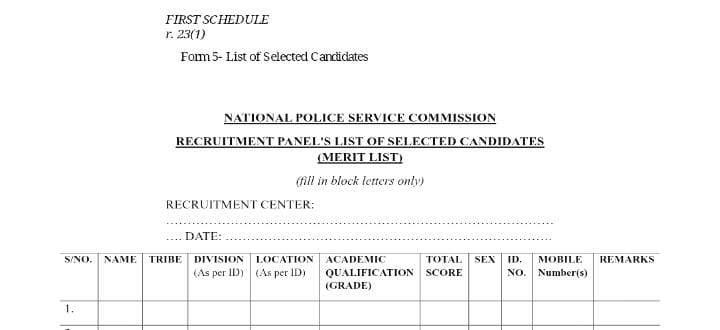
These reports must include the names of candidates who
presented themselves, complaints received and how they were handled,
and copies of documents submitted.
Accredited observers
will also be required to file reports, which will form part of the
official record.
The Commission will
then consolidate submissions from across the country, prepare the
final selection list, and transmit it to the Inspector General (IG)
of Police for implementation.
In cases where
candidates fail to report to their assigned training colleges within
three days of the specified date without valid justification, they
will be deemed to have forfeited their admission.
Their positions may
then be filled by replacements drawn from the merit list, ensuring
that the vacancies are not wasted.
Grounds for
disqualification
The regulations
provide clear grounds on which a candidate may be disqualified even
after receiving admission.
These include
failing to meet prescribed physical or medical fitness standards,
presenting fraudulent documents, concealing a criminal record, or
failing to meet the integrity standards required in the police
service.
Specialist and
exceptional talent recruitment
Beyond the regular
intake of constables and cadets, the regulations introduce new entry
schemes for specialists, exceptionally talented persons, and civilian
staff.
Specialists with
expertise in fields such as forensics, information technology, and
medicine may be recruited at higher ranks than constables.
Exceptionally
talented persons may also be considered for entry into the Service,
with recruitment procedures modified accordingly.
The specialist
category shall apply exclusively to persons recruited and appointed
into the service on the basis of their specialised skills of
expertise.
“Officers once
appointed under the specialist category shall not hold command
positions within the service,” the regulations read in part.
The Commission will
determine the number of persons recruited under these categories to
ensure that career progression of officers entering at the constable
level is not undermined.
This is premium content
Subscribe to Continue Reading
Help us continue bringing you unbiased news, in-depth investigations, and diverse perspectives. Your subscription keeps our mission alive and empowers us to provide high-quality, trustworthy journalism. Join us today to make a difference!




![[PHOTOS] Raila Odinga Stadium construction enters home stretch](https://cdn.radioafrica.digital/image/2026/06/45f6990c-4882-4cd2-b83c-8fc730dcdce5.jpg)