The attempted theft of Sh10 billion
by unscrupulous hospitals, coupled
with allegations of system failures
and resistance from sections of the
political class, has cast a shadow over
the programme.
The controversies have triggered
debate on whether SHA is a genuine
health sector reform or just political
rhetoric by the current administration.
Kenya National Union of Nurses
secretary general Seth Panyako has
raised concerns about the sustainability of SHA, accusing the government of rolling it out haphazardly
without involving key stakeholders.
According to the unionist, while
the government is keen on registering 50 million Kenyans, only a fraction are actual contributors.
“This programme will collapse.
There is no way four million workers
can sustain 50 million people,” he
warned.
Panyako argued that Kenyans
with pay slips shoulder the heaviest burden after the government revised contributions to 2.75 per cent
of their income.
Meanwhile, most Kenyans in the
informal sector only pay premiums
when they or their relatives are sick,
rendering the scheme financially
unstable.
“SHA should be social protection
where those who are healthy support those who are sick. But people
have discovered that when you’re
not sick, you don’t have to pay,” he
said.
Kenya Union of Clinical Officers
secretary general George Gibore,
however, defended SHA, noting it
has eased access to healthcare for millions.
“SHA has registered over
25 million people. Anyone registered can now receive services
in sub-county hospitals without
paying. That never happened with
NHIF,” Gibore said, citing the inclusion of chronic illness coverage and
anti-fraud systems as major gains.
Gibore, however, emphasised the
need to fight graft dogging the new
programme, shorten the time for
payment of claims and seal loopholes in the system to curb fraud.
Launched on October 1 last year,
SHA—also branded as Taifa Care—was billed as a flagship step toward
achieving the long-elusive Universal
Health Coverage.
It replaced the scandal-ridden
National Health Insurance Fund
(NHIF), which for decades had
been dogged by mismanagement
and graft.
“Unlike NHIF, which covered only
those who could afford it or had formal jobs, SHA is for all Kenyans,”
President William Ruto recently
said.
SHA oversees three key funds:
the Social Health Insurance Fund,
the Emergency, Chronic and Critical Illness Fund, and the Primary
Healthcare Fund.
25 MILLION
According to the government, at
least 25 million people have registered under SHA, guaranteeing
access to free outpatient services
at dispensaries, health centres, and
Level 1–4 hospitals.
“We have Taifa Care, and I want
to urge women to register. Your job
is just to register with SHA. When
you go for treatment at a dispensary,
health centre or sub-county hospital
for outpatient services, you will be
treated and given medicine without
paying a coin,” Ruto said.
Kenya Kwanza leaders, led by
Health CS Aden Duale and Members of Parliament, see it as a
game-changer in health provision
and a watertight system.
“NHIF was a den of corruption.
That is why we shut it down. We
must verify every shilling before
payment,” he added.
National Assembly Majority Leader Kimani Ichung’wa dismissed
SHA critics as naysayers and urged
Kenyans yet to register with the programme to do so for uninterrupted
access to health services.
“We urge Kenyans to ignore the
misinformation being peddled by
some leaders and register in large
numbers to benefit from this initiative,” Ichung’wa stated.
Ichung’wa called on politicians
to advocate for SHA, urging them
to educate the public on its benefits.
PAST CORRUPTION
He accused critics of being sympathisers of past corruption at
KEMSA, where public funds were
allegedly embezzled through procurement scandals.
But as the government makes a
case for the programme in its first
year, SHA is mounting challenges
that have cast doubt about its efficiency, credibility and ability to
safeguard public funds.
Recently, SHA, through the ministry, exposed an attempted theft of
billions of shillings through fictitious claims.
There are also claims that SHA
disbursed money to non-existent
hospitals.
Already, a section of MPs has
threatened to impeach Duale for
presiding over a collapsing health
sector, arguing that Kenyans continue to suffer amid the government’s
efforts to streamline the country’s
health system.
They spoke amid mounting claims
of fraud within SHA, including payments to ghost facilities and fictitious claims.
“We have the signatures ready.
When Parliament resumes, a motion
will be tabled. Duale must take political responsibility for the theft of
taxpayers’ money at SHA,” declared
Nairobi Senator Edwin Sifuna.
Other lawmakers echoed the
calls, warning that the health crisis
was directly endangering lives.
“As you play your political
games, 156 children are being born every hour—and many risk
dying due to the crumbling health
system,” Githunguri MP Gathoni
Wamuchomba said.
Duale has defended his actions,
insisting the decision to suspend
payments was necessary to combat
widespread fraud. He said the attempted fraud was flagged by the
system.
He has, in turn, accused some
MPs of being complicit in schemes
to siphon funds from the authority.
“We have a watertight and solid system. You cannot steal even a
Panadol from a health facility under
the SHA. We are ready and willing
to answer any question because
accountability is at the core of this
system,” he said.
IMPLICATED IN FRAUD
The President has vowed that any
hospital implicated in the fraud will
be compelled to pay back the money
they might have received and their
managers prosecuted.
“We are telling those who think
the theft they were doing at the National Hospital Insurance Fund can
be replicated at SHIF that they are
daydreaming.
“Any hospital, whether public,
private, or faith-based, if they have
stolen NHIF money, they will pay
that money. If they have brought
corruption to SHIF, they will pay
back that money, and we will prosecute them,” he said.
As politics and claims of fraud
rock SHA, patients report being
turned away or asked to pay out of
pocket due to system downtime,
while collusion between some
health facilities and patients has
further strained credibility.
Allegations of corruption through
fictitious hospitals, inflated claims, and denial of payments for certain
ailments have tainted the scheme.
“There is massive corruption at
SHA. Billions are being allocated to
ghost hospitals, yet mission hospitals receive nothing. Who is fooling
whom?” former Deputy President
Rigathi Gachagua said, describing
the system as a grand scam.
Gachagua alleged that senior government officials are at the centre of
the scheme, channelling funds to
nonexistent hospitals while mission facilities remain unpaid.
The authority also grapples with
underfunding, creating financial
strain on providers. A problematic digital portal has compounded
delays in registration and claims
processing.
Parliament has questioned the
programme’s sustainability.
In March, the Senate Finance
and Budget Committee flagged that
while 18 million Kenyans had registered, only four million were actively
contributing.
“This will affect the funding trend
for the fund and may occasion shortfalls in contributions,” the committee warned.
Heavy reliance on salaried workers has sparked discontent, with
many decrying steep deductions
from their pay slips. Enforcing contributions from the informal sector
remains elusive.
An initial proposal to deny
non-contributors access to government services was blocked in court,
leaving room for many Kenyans to
pay only when sick and withdraw
afterwards.
“This fund won’t become viable as
the contributions are like a drop in
the ocean. In the end, it will kill this
fund,” Endebess MP Robert Pukose
cautioned.
We need to look for ways to ensure that Kenyans make consistent contributions. Is that sustainable?
It’s a disaster waiting to happen,”
he added.
However, according to the SHA
management, not everyone registered is required to pay the premiums.
“It is not true that the entire 25
million people are required to pay.
Out of those, we have dependants
and indigents (those unable to pay)
who are paid for by the government,” he said.
The Social Health Authority is
established under section 25 of
the Act and is utilised to pool all
contributions made under the Act.
SHA is designed to provide healthcare services from empanelled and
contracted healthcare providers
and healthcare facilities on referral
from primary health facilities.
SHA
ensures that every resident in Kenya
can access a comprehensive range of
quality health services.


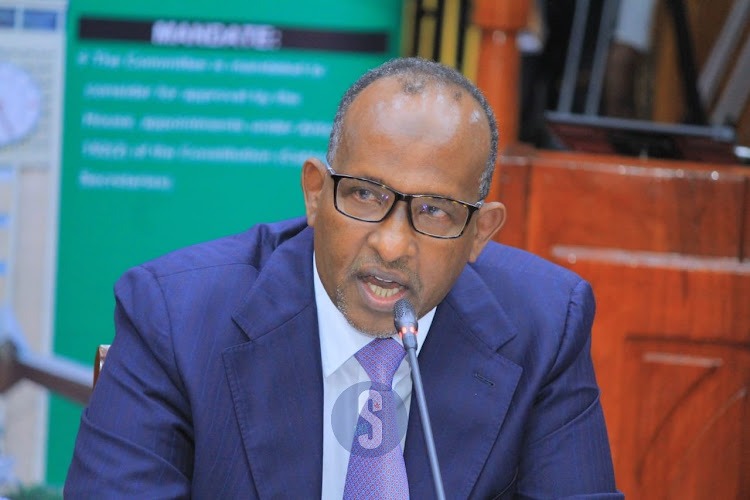
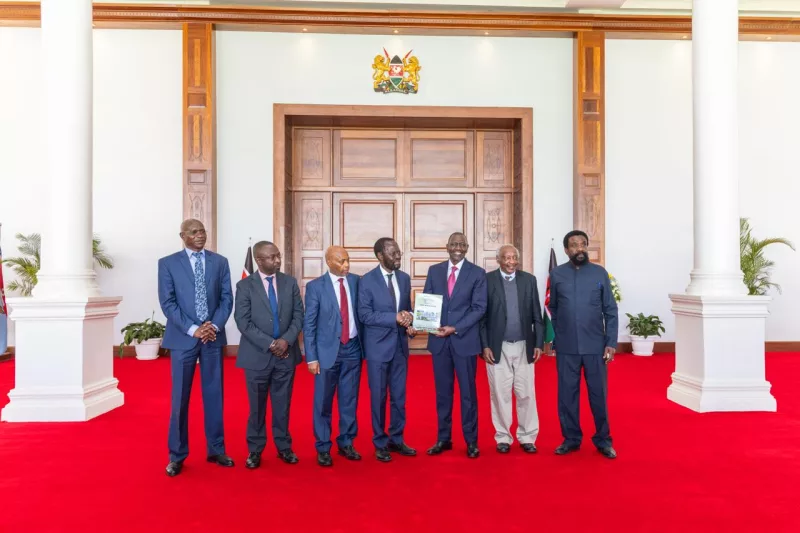
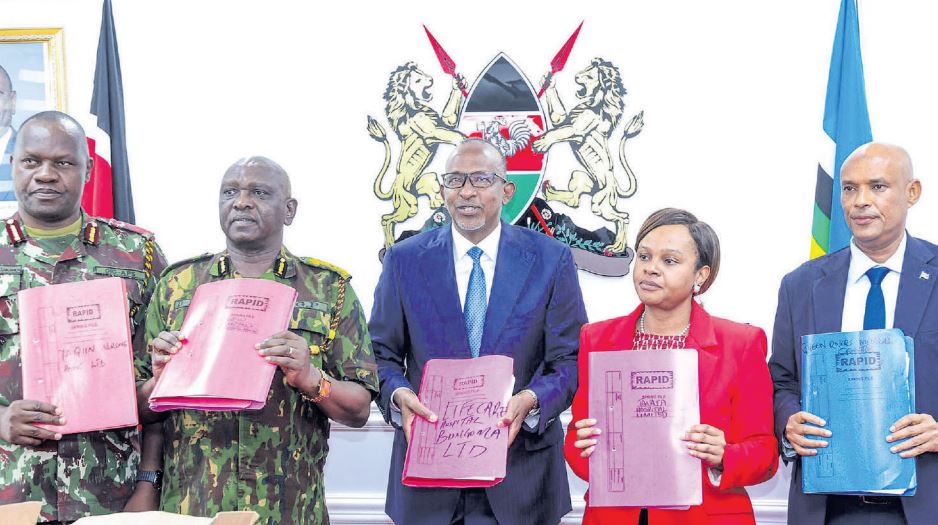 Deputy Inspector General of Police Gilbert Masengeli, IG Douglas Kanja, Health CS Adan Duale, SHA CEO Mercy Mwangangi and DCI boss Mohamed Amin with over 1,188 case files and supporting evidence to be further probed by the Directorate of Criminal Investigations, marking a major milestone in the government’s efforts to protect public funds in the healthcare system /HANDOUT