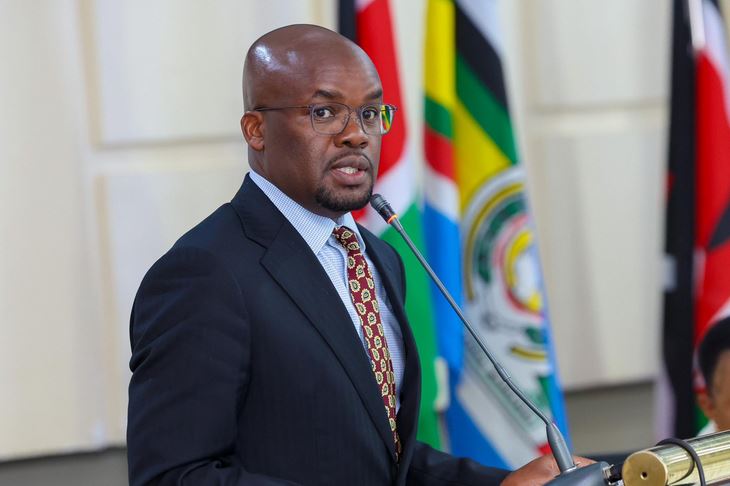
Principal Secretary for
the State Department for Internal Security and National Administration Raymond
Omollo has stated that the government is reviewing key police laws.
This is as part
of the broader police reforms aimed at ensuring that the police service that is
friendly, trustworthy and reliable.
The proposed legislative changes are
intended to enhance transparency, accountability, professionalism and public
trust in the National Police Service.
“Cases of police misconduct should
be addressed decisively and on an individual basis, not through blanket
condemnation,” Omollo said.
He noted that this is the basis for
the proposed Independent Policing Oversight Authority (Amendment) Bill, 2025,
which seeks to strengthen IPOA’s investigative and oversight powers to
better handle misconduct within the police ranks.
Omollo emphasised that the public’s
demands for safety and security are both “pressing and valid,” and
require well-defined structures and operational protocols within the police
service.
“The
National Police Service (Amendment) Bill 2025 directly responds to these concerns,
ensuring reforms that align policing with our people’s and community
expectations,” Omollo said.
Among the
proposed changes is the digitalisation of police recruitment, part of
the National Police Service Commission (Amendment) Bill, 2025, which seeks
to enhance transparency and ensure merit-based hiring.
The bill also strengthens the
commission's role in recruitment, promotions and transfers of officers.
Addressing the longstanding issue of
officer welfare, Omollo said many families of fallen officers face
delayed compensation and unresolved claims.
“To change this, the National Police
Service Veterans and Fallen Heroes Bill will formally recognize, register and
support police veterans and the families of the fallen,” he added.
Addressing the recent exhumation of
mass graves in Kilifi County, he said this highlighted the need for
improved forensic capabilities.
To this end, the National
Forensic Science Bill proposes the establishment of a dedicated forensic
framework, including rigorous DNA testing standards, chain-of-custody
protocols, and accredited laboratories to support investigations and
court processes.
Finally, in response to the violent
protests witnessed in 2024 and 2025, the Public Order Management
Bill, 2025, proposes clearer regulations on public demonstrations,
including notice periods and designated protest zones, in an effort to reduce chaos,
injuries, and destruction of property while safeguarding constitutional
rights.
Together, the six proposed bills form a comprehensive legislative package intended to reform policing in the country and restore public confidence in law enforcement institutions.