


Stargazers across Africa, Asia, Australia and Europe will have a chance to
witness a spectacular celestial event this Sunday, September 7, 2025, a total
lunar eclipse, commonly known as a Blood Moon.
Observers in Asia, including India and China,
will have the best views of the eclipse, which will also be visible across the eastern
edge of Africa and parts of western Australia.
This rare event will be visible to more than seven billion people
worldwide, with approximately 6.2 billion able to
witness the entire totality from beginning to end.
Regions in the Americas will largely miss out, as the eclipse will occur during daytime hours.
However, Hawaii, parts of Alaska,
and some areas in Brazil may catch at least a partial
eclipse.
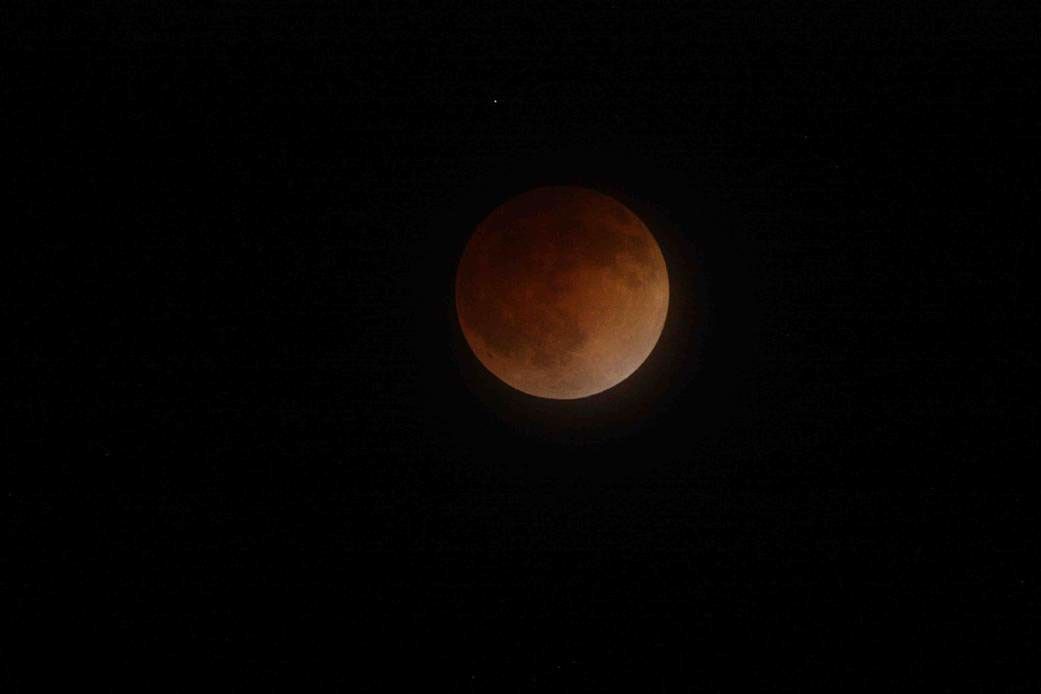
The upcoming eclipse is notable for being the longest total lunar
eclipse since 2022, featuring a totality lasting 1 hour and 22
minutes, during which the Moon will take on a deep, blood-red
hue.
The last total lunar eclipse occurred on March 14, 2025,
and prior to that in 2022.
The full event will span approximately five and a half hours, beginning at 6:28 pm EAT and ending at 11:55 pm EAT. The most dramatic phase, the totality, will start at 8:30pm EAT and conclude at 9:52pm EAT.
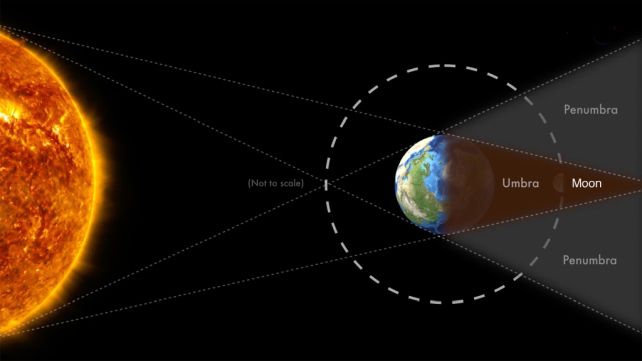
The dramatic red colouration of the Moon during a total lunar eclipse results
from the unique alignment of the Earth, Moon and Sun.
NASA explains that a total lunar eclipse occurs when the
Moon passes into the Earth’s umbra, the darkest part of its
shadow.
As sunlight passes through Earth’s atmosphere, shorter wavelengths
like blue and violet are scattered, while longer wavelengths,
red and orange, are bent toward the Moon, creating the “Blood Moon” effect.
“Because these longer wavelengths make it through Earth’s atmosphere, and
the shorter wavelengths have scattered away, the Moon appears orangish or
reddish during a lunar eclipse,” NASA explains.
“The more dust or clouds in Earth’s atmosphere during the eclipse, the
redder the Moon appears.”
The next total lunar eclipse will occur on March 3, 2026,
and will be visible in East Asia, Australia,
the Pacific and the Americas, according to
NASA.