A new study shows that as much as 36 per cent of maize, 23
per cent of potatoes, 34 per cent of fish, and up to 56 per cent of fruits are
lost along the value chain. Mangoes are the most affected fruit, followed by
avocados and bananas.
The report, Food Loss and Waste in Maize, Potato, Fresh
Fruits, and Fish Value chains in Kenya 2025 released by the World Resources
Institute Africa (WRI Africa), the Food and Land Use (FOLU) Coalition Kenya,
and Jomo Kenyatta University of Agriculture and Technology paints a sobering
picture of a country where millions go hungry even as massive amounts of food
are spoiled, contaminated, or discarded.
Dr Susan Chomba, Director of Vital Landscapes at WRI and
co-author of the report, said food loss and waste (FLW) is often invisible to
ordinary Kenyans, but its consequences ripple across society.
“For farmers, it means lost income and wasted effort. For
businesses, it translates into inefficiencies and reduced profits. For the
government, it undermines national food security plans, and for consumers, it
keeps food prices high while reducing the availability of safe, nutritious
foods,” she noted.
“For smallholder farmers, food losses directly affect
yields, incomes and sometimes daily survival. For consumers, reducing food
losses can mean cheaper maize flour, fresher fruits and fish in local markets,
and more stable food prices. It is an issue that touches every Kenyan.”
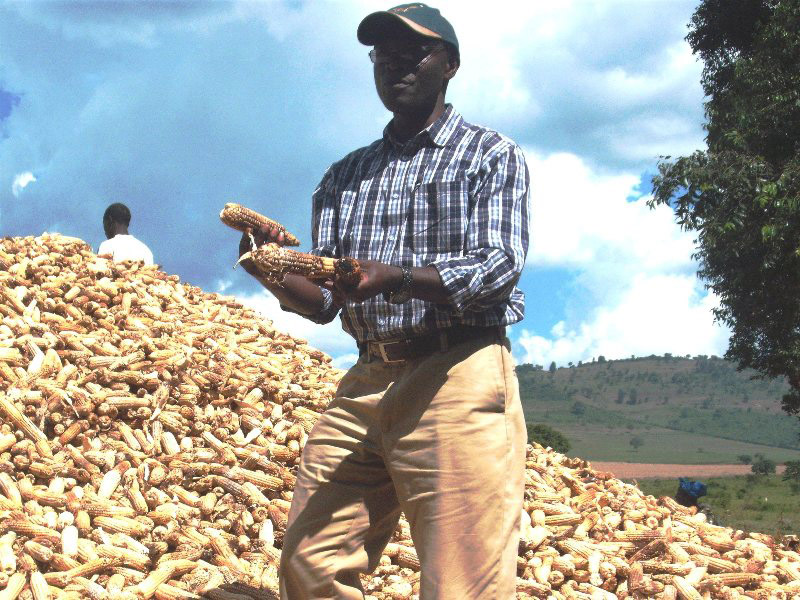
The report showed that maize, Kenya’s main staple and the
backbone of its food security basket, is the hardest hit. It stated that the
crop is planted on 2.1 million hectares, about 40 per cent of the country’s
arable land, yet the study shows losses of between 20 and 36 per cent, most of
them happening after harvest.
Storage accounts for nearly 70 per cent of all maize losses,
driven by poor handling practices, pest infestations and mold contamination.
Aflatoxin, a toxic fungus that flourishes in poorly dried grain, is a persistent
public health threat but remains underreported in loss assessments.
The report showed; “Moisture content is a major factor.
Farmers often harvest maize early, before the recommended 30–35 per cent dry
matter content, because of fear of theft, lack of storage, or pressure to sell
quickly. This exposes the grain to mold, insects and reduced milling yields.”
Drying practices are a challenge as most farmers rely on sun
drying, often on bare ground, where contamination from dust, soil and rodents
is common. “The traditional stooking method of leaning maize stalks together to
dry leaves cobs vulnerable to weather damage,” the report showed.
Shelling, was also reported to add to the losses, noting
that excessive striking of cobs leads to broken grains, while contamination
with stones and chaff reduces quality.
FAO estimates place drying losses alone at about three per cent,
and that milling losses can reach 3.5 per cent, often due to poorly calibrated
or maintained small-scale posho mills.
“Despite interventions like hermetic bags, metal silos and
warehouse receipt systems, adoption remains low among smallholder farmers, who
often cannot afford them,” the report states.
Potatoes are the second staple under pressure. After maize,
potatoes are Kenya’s second most important food crop, contributing a third of
the country’s dietary energy needs and employing over 3.5 million people.
The Kenya National Bureau of Statistics reports that 2.3
million tonnes were produced in 2023.
“Yet the tuber suffers losses of 19–23 per cent by weight,
plus a nine per cent loss in quality. Damage often begins at the farm during
harvesting, where crude tools bruise tubers. Transport in open trucks without
cushioning causes further damage. At the market and retail level, poor storage
facilities, especially in urban markets, lead to sprouting, rot and shrinkage,”
reads the report.
Several interventions, from ventilated storage and
evaporative coolers to sprout suppressants and improved harvesting tools, have
shown promise, but remain scattered and unevenly adopted. The Kenya National
Potato Strategy encourages collective action and contract farming, but systemic
challenges persist.
The report further showed that fresh fruits suffer some of
the highest losses, with mangoes recording up to 56 per cent loss, avocados
15–35 per cent, and bananas 7–11 per cent.
“Poor harvesting methods, lack of cold storage, and delays
in transportation mean much of this produce never reaches the consumer in good
condition,” it showed.
“Fish, too, is highly vulnerable. With losses estimated at
34 per cent, the lack of cold chain facilities in landing sites and markets
leaves fish prone to rapid spoilage, particularly in warm coastal and lake
regions.”
The report warned that Kenya lacks a coordinated framework
to systematically measure and reduce food losses.
“While the government has launched the Post-Harvest
Management Strategy (2024–2028), progress has been hampered by fragmented
policies and weak data systems. Even where data exists, there are blind spots.
For instance, there is little distinction between losses on-farm and off-farm,
despite the implications for interventions. Equally, little is known about
losses at transportation, retail, and consumer levels,” read the report.
The Eastern Africa Grain Council estimates maize losses at
30–40 per cent, but admits its regional trade intelligence system rarely
captures FLW data. Without reliable measurement, tracking progress remains
elusive.
The report called for holistic strategies, evidence-based
policymaking and investments that combine technology with institutional
innovations like farmer cooperatives and collective storage.
The authors noted that Kenya’s food loss and waste crisis is
not just about numbers, it is about wasted effort by millions of farmers,
higher prices for struggling households and growing pressure on already scarce
natural resources.
“Reducing losses is one of the fastest ways to improve food security,
raise farmer incomes and ease environmental stress. For Kenya, tackling this
invisible crisis may prove just as important as producing more food,” the
authors added.