The international
support, he said, is key towards strengthening national efforts, protect the
population and create the conditions for a return to the rule of law and
credible, inclusive elections.
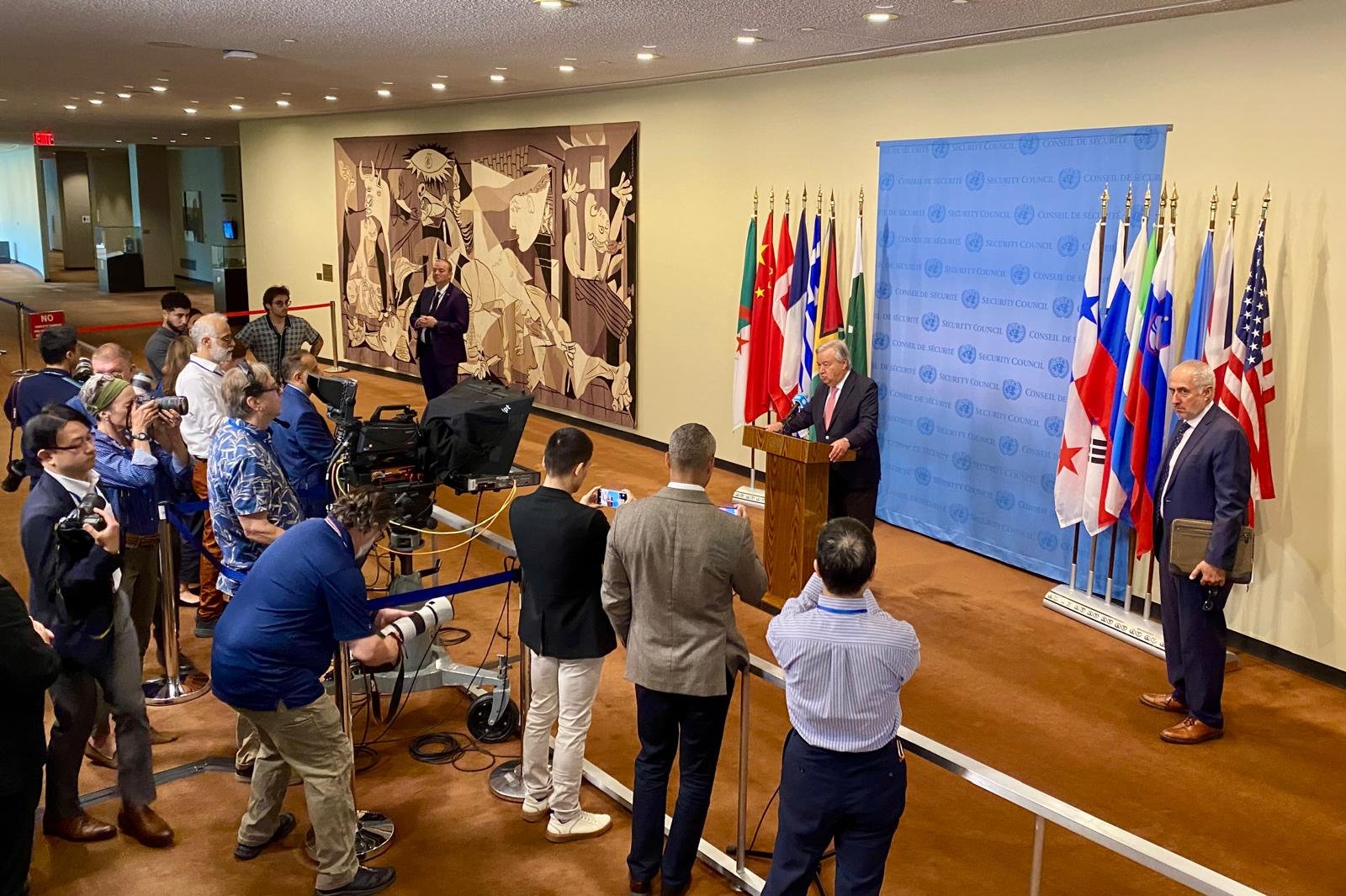
“I welcome efforts by members of this council to advance my February 24 proposal to strengthen the Multinational Security Support mission
through UN logistical and operational support,” he added.
This adds push to President William Ruto’s call for the
establishment of a support office for the Kenya-led mission.
In his phone call with Secretary of State Marco Rubio on
August 19, Ruto said they concurred on the imperative and support for
a resolution at the UNSC that establishes a UN support office for the Haiti mission
to aid efforts to stabilise and secure Haiti.
Kenya had initially pushed for the mission to be transitioned
into a full UN peacekeeping mission, which failed to go through.
Guterres instead in February recommended creating a UN
support mission to back the MSS, which would be funded through the UN
peacekeeping budget.
“Such a transition could be considered once significant
progress has been made in substantially reducing gang territorial control. A
realistic option is based on a dual-track strategy, with the United Nations
assuming new roles to enable the MSS, the national police and Haitian
authorities, to substantially reduce gang territorial control through peace
enforcement,” the UN chief said.
He said the transition would require a robust mandate
for the use of force and the capacities to conduct targeted operations against
gangs.
However, the mission has decried inadequate funding and
support.
Already, Kenya and the US are among seven countries, that
have written to the UNSC requesting more support for the Kenya-led mission in
Haiti.
The US, Canada, El Salvador, Guatemala, Bahamas, Jamaica and
Kenya have written to the UNSC, saying the current force does not have
sufficient capabilities or resources to eradicate the gangs.
The US is also reportedly working on a resolution to submit
to the UNSC to effectively fund the fight against gangs in Port-au-Prince,
drawing on the recommendations by Guterres. A $2.6 billion roadmap over three
years is also under discussion to stabilise Haiti.
National Security deputy adviser Joseph Boinnet was in Haiti
mid this month and assured the Haitians of Kenya’s continued commitment to the
mission. Boinnet, however, noted that commitment needed additional resources to
help overcome operational challenges.
Guterres further noted that security measures in Haiti must
go hand-in-hand with increased pressure on those fuelling the violence.
“This includes an effective arms embargo, as well as a
targeted expansion of sanctions against gang leaders, financiers, arms
traffickers, and others connected to them. These steps are vital to cut off the
weapons and money that sustain chaos. Enforcement – at ports, borders and
online – must be strengthened, in close coordination with regional partners,”
he said.