For two days, senators listened to explosive allegations
from the county assembly even as Mutai mounted a spirited defence.
MCAs accuse the governor of overseeing fictitious and double
payments to “friendly” firms, mismanaging the Sh9 million Londiani accident
victims’ fund, and intimidating senior staff.
Mutai, however, dismissed the
claims as political malice, blackmail, and a witch-hunt by the assembly.
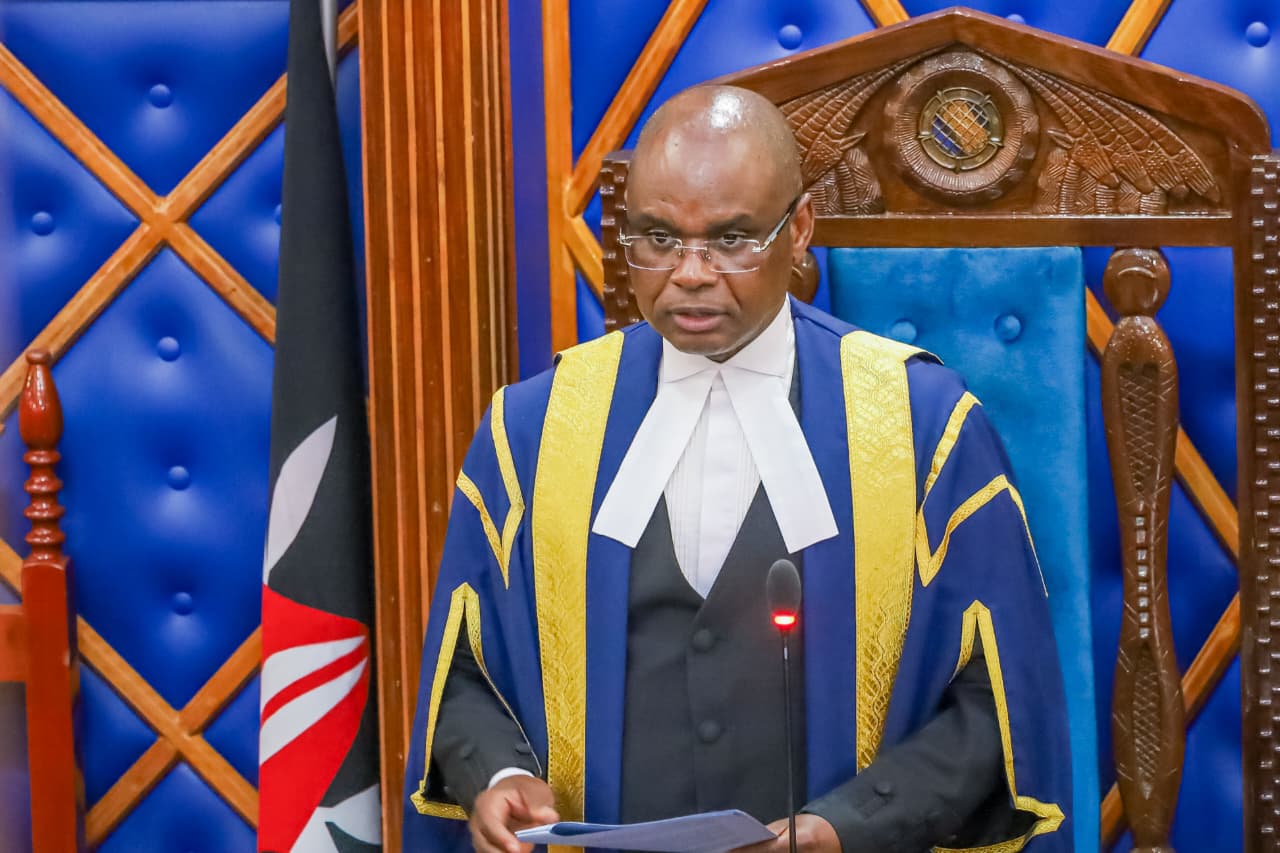
On Thursday evening, Senate Speaker Amason Kingi said the
House would vote on the impeachment motion on Friday after marathon hearings.
“The Senate will rise at exactly midnight tonight. We hope
to conclude the case before then and resume tomorrow for deliberations and
voting,” Kingi said.
The assembly, led by advocate Elisha Ongoya – the lead
counsel – lifted the lid on how the governor has been a “rogue” county boss
in his less than three years in office.
In a blow-by-blow account of the allegations facing the
embattled governor, the assembly’s legal team rallied senators to uphold the
resolution by the MCAs to remove the governor from office by impeachment.
The assembly explained to the Senate how the county
government allegedly lost up to Sh8.4 million in double payments of retention
money to some eight companies contracted by Governor Mutai’s administration.
The firms include Mengro Products Limited, Prospera Ventures
Limited, Bree Ray Limited, Beet World Holdings Limited, Cherire Holdings
Limited, Green 80 Limited, Spike Investments Limited, and Roli Ventures
Limited.
“Unlike in the past where people have come here with
generalised allegations on misappropriation of funds, the county assembly of
Kericho has meticulously compiled vouchers pointing to these transactions,” Ongoya
said.
Mutai countered the accusations, insisting he was the victim
of a flawed process engineered to cut short his career.
At the heart of his defence is the ICT-based electronic
voting system used in his impeachment, which he claims was porous and
manipulated.
He alleged that some MCAs voted more than once, while others
who lacked internet connectivity or even their phones were still recorded as
having voted.
According to Mutai, the system was insecure because login
credentials — MCAs’ national ID and Integrated Payroll and Personnel Database
(IPPD) numbers — were publicly announced by the speaker. This, he argued,
exposed the platform to manipulation.
His case was bolstered when Speaker Kingi admitted into
evidence an affidavit and expert report by ICT specialist Job Okuon Oguya,
which flagged flaws in the voting system.
Kingi further directed the Senate clerk to seek assistance
from the ICT Authority of Kenya by availing two experts to scrutinise the
system.
“I allow the application by Counsel for the Governor to
admit the affidavit by Mr. Job Okuon Oguya and his Report on the cybersecurity
audit on the Kericho County Assembly Electronic Voting System,” Kingi said,
dealing a blow to the assembly.
The governor claimed that some MCAs voted more than once through
the system, while others did not vote at all but were indicated to have voted.
“Some of the 18 MCAs who opposed the impeachment lacked
internet connectivity on the material date and yet have allegedly been recorded
as having participated in the vote,” he said.
In addition, some of the MCAs also reported not having their
phones, but were reported to have voted.
He argued that the platform utilised for voting was
inherently insecure due to several factors.
According to the governor, the login credentials – the
national ID number (password) and the Integrated Payroll and Personnel Database
(IPPD) number (username) – of each MCA were publicly announced by the speaker.
As such, the system lacked any provision for MCAs to
generate or customise their own passwords, exposing the system to unauthorised
users.
The national ID number and the Integrated Payroll and
Personnel Database (IPPD) number are publicly accessible information,” he said.
He claimed that the voting link provided to the MCAs was not
secured through end-to-end encryption.
This omission rendered the transmission of the login
credentials and voting selections vulnerable to interception, manipulation, or unauthorised
access during voting and transmission of the results.
During his cross-examination, Alfred Korir Kimutai, Head of
ICT at the Kericho County Assembly, admitted that the link was not secured
through end-to-end encryption, triggering a barrage of questions from senators
about the integrity of the system.
“Mr. Alfred Korir, cybersecurity demands the highest
standards; that is why end-to-end encryption is the standard, to make it
impossible for unauthorised persons to gain access.”
“Given that you have openly admitted your system is not
foolproof, do you still want the Senate to rely on your evidence to remove the
Governor?” Kakamega Senator Boni Khalwale posed.
On corruption, the governor fought off claims of overseeing
fictitious and double payments to “friendly’ firms, mismanagement of the Sh9
million Londiani accident victims’ fund.
According to the MCAs, the governor failed to implement
their report on fictitious payments, which unearthed massive financial irregularities
such as overpayments and payments for work not done.
“Cunningly, I have been impeached based on this report
before I was even served with it,” the governor said.
According to the governor, most of the corruption allegations
are not directly linked to him.
“It is improper and unfair when I am asked to answer and
suffer for every action and responsibility that other parties ought to answer
for in law,” he said.
He cited the refurbishment of 15 residential houses for
Sh2.99 million.
“The department informs me that the contractor would have
completed all the works if he had gotten a report from NEMA,” he said.
On the allegation that goods were not delivered, including
soya beans, maize germ, sunflower seeds and cotton seed cake, Sh14.98 million,
he said all the items were delivered.
“The supporting requisition documentation and related
materials are availed in the elaborate defence lodged herewith,” he said.
The governor termed as erroneous claims that he misappropriated
Sh351 million meant for the National Agricultural Value Chain Development
Program (NAVCDP).
“The NAVCDP Funds and
World Bank Funds are donor-controlled, 28 regulated and audited. They are
implemented by third parties, who have not complained. No funds have been
misappropriated, nor lost as alleged,” he said.
Further, the county boss denied allegations that he had undertaken
skewed, uncompetitive and nepotic appointments of the county employees of
various cadres.
The authority to hire personnel, whether nurses or revenue
clerks, rests solely with the County Public Service Board.
INSTANT ANALYSIS
The governor faces charges of gross violation of the
constitution, abuse of office, and gross misconduct. Under the charges of gross
violation of the constitution and misuse of county funds, Mutai is accused of
authorising fictitious payments worth Sh85.7 million for undelivered goods,
inflated contracts and incomplete works. Among the irregular claims were the
supposed maintenance of 15 residential houses, overpriced supplies and
agricultural inputs that never reached farmers. He is further charged with contravening
procurement laws by splitting contracts, neglecting to conduct market surveys,
and paying suppliers in advance despite Kericho county accumulating pending
bills of Sh1.1 billion.



![[PHOTOS] Raila Odinga Stadium construction enters home stretch](https://cdn.radioafrica.digital/image/2026/06/45f6990c-4882-4cd2-b83c-8fc730dcdce5.jpg)