The unfolding storm has exposed deep fissures between the Executive and the
Legislature, raising fears of a full-blown standoff that could cripple the
House’s ability to discharge its oversight mandate.
The fallout could also turn into a political nightmare for Ruto as some MPs
could reconsider their political backing—at a time the President’s popularity
is believed to have suffered a major beating.
At the heart of the row are allegations that
huge sums of money have changed hands in parliamentary committees, with some
lawmakers accused of extorting witnesses and demanding inducements to influence
legislation.
The claims, which the President himself amplified, have not only
embarrassed Parliament but also cast doubt on its capacity to act as the
guardian of accountability.
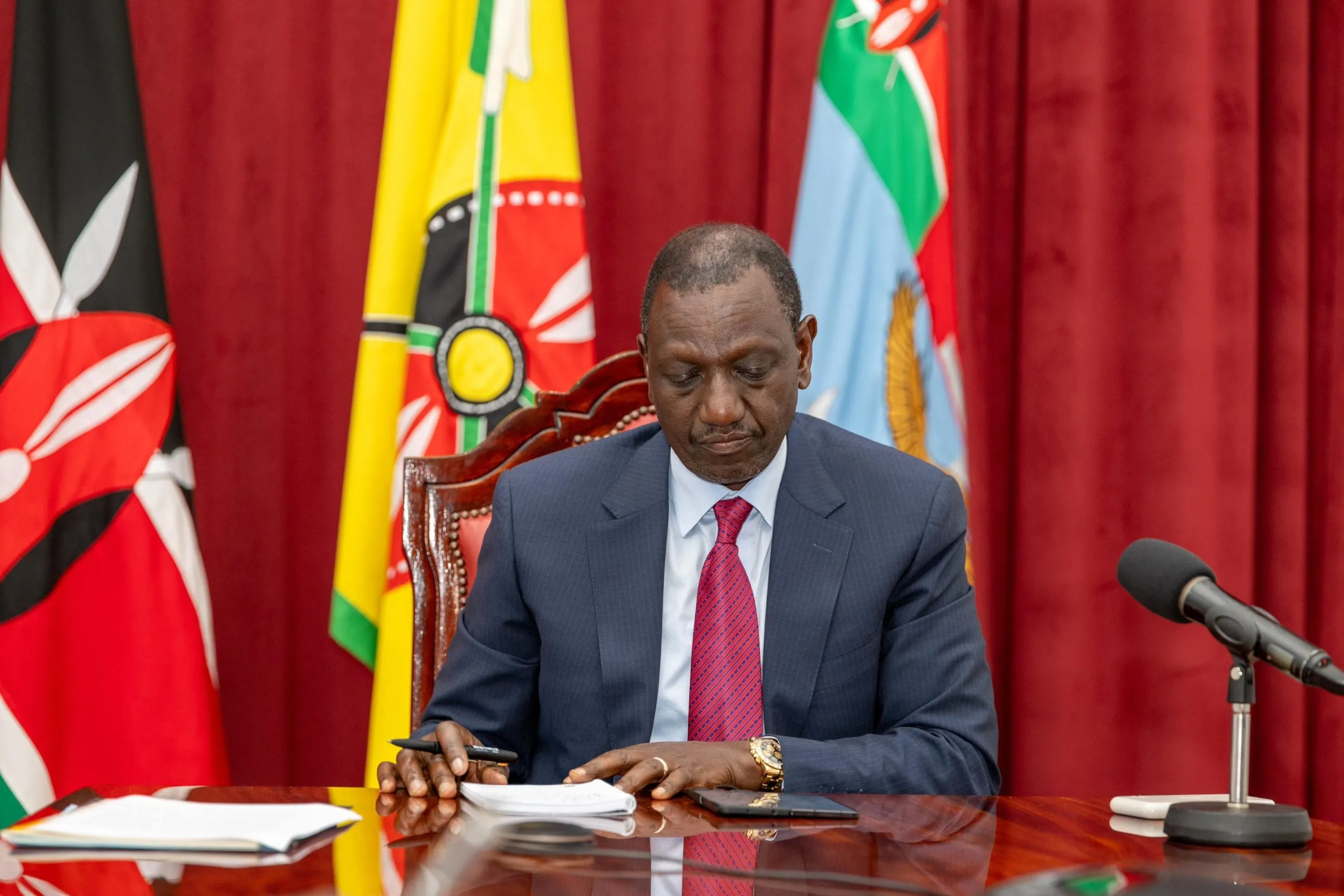
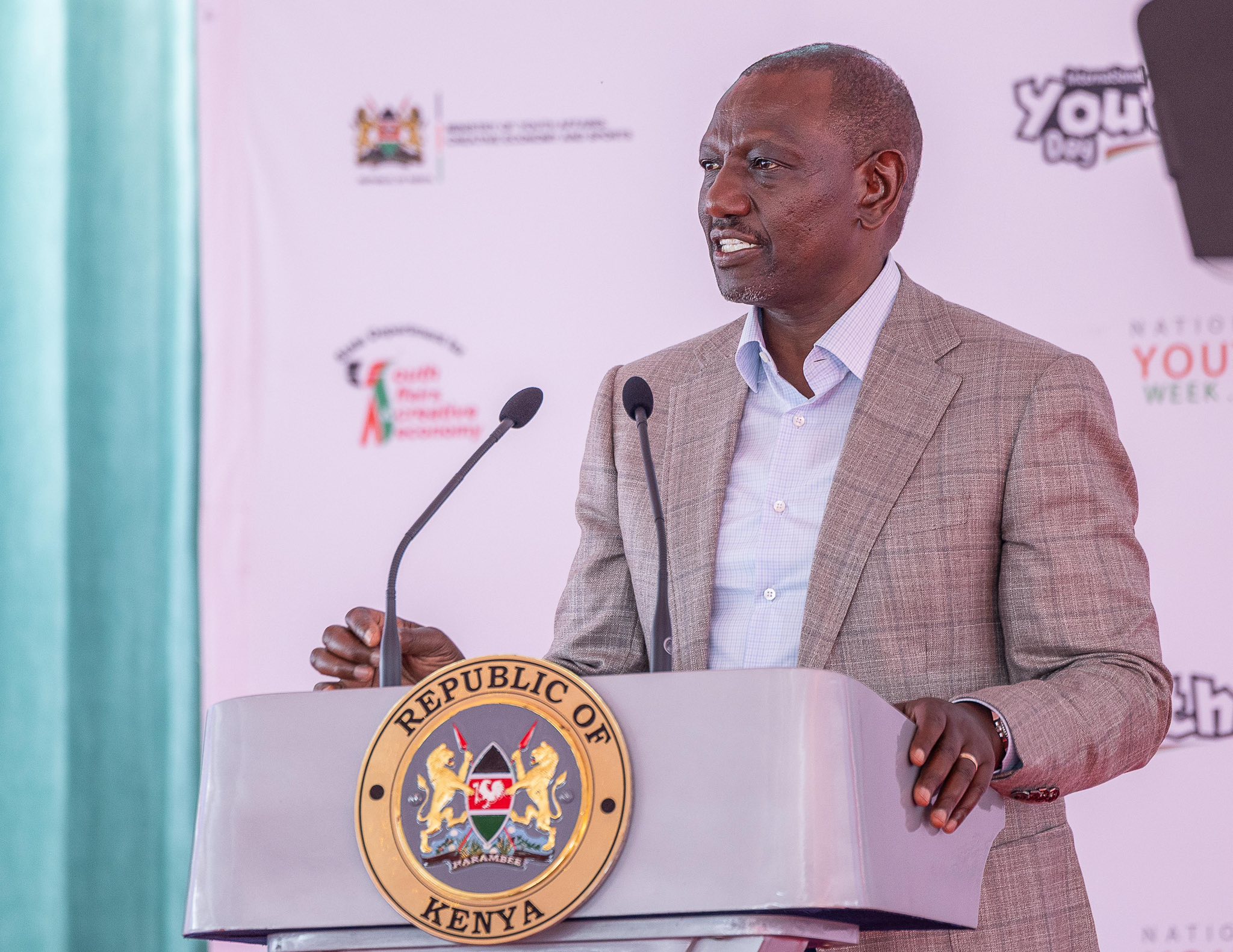
Speaking during a joint Kenya Kwanza–ODM
Parliamentary Group meeting at the KCB Leadership Centre in Karen, President
Ruto accused unnamed legislators of turning committees into marketplaces where
legislation and oversight are traded for cash.
In a stinging rebuke, he revealed that some MPs allegedly pocketed
Sh10 million to frustrate the passage of the Anti-Money Laundering Bill.
Ruto went further to claim that a governor was recently pressured to part
with Sh150 million in the Senate.
He described the alleged scheme as a “soko huru” (open-air market)
that was bleeding public coffers and undermining the fight against graft.
“Do you, for example, know that a few members of your committee
collected Sh10 million so that you don’t pass that law on anti-money
laundering? Did you get the money?” the President posed.
“For example, the latest soko huru in
the Senate. By virtue of the position I hold—I am a consumer of raw
intelligence—I know what is going on. Where does somebody find Sh150 million?
That is money that belongs to the county,” the President said.
To demonstrate his seriousness, the Head of
State on Tuesday announced the creation of a powerful multi-agency team that
will spearhead the war against corruption, economic crimes, and related
offenses.
The agency, domiciled in the Office of the President and with the
Attorney General as its secretary, will bring together an array of institutions
including the NIS, EACC, ODPP, DCI, KRA, Central Bank, Financial Reporting
Centre, Asset Recovery Agency, and the Public Procurement Regulatory Authority.
But if Ruto expected applause from Parliament,
he was instead met with fury.
MPs across the political divide fired back, accusing the President of
maligning them and dragging the integrity of the entire institution into
disrepute.
Saboti MP Caleb Amisi dismissed the claims as
political grandstanding, insisting that unless evidence is tabled and culprits prosecuted,
the President’s words would remain empty rhetoric.
“The President will be construed as politicking, unless something
legal comes out and people are arrested and charged. The President is playing
politics,” Amisi charged.
Lawmakers now want the President summoned to
substantiate his claims.
Homa Bay Senator Moses Kajwang’, who chairs the powerful County Public
Accounts Committee, invoked Article 125 of the Constitution, which gives
parliamentary committees powers similar to those of the High Court to summon
witnesses.
“Our position is that the Speakers should use
Article 125 to summon the President to come and give evidence of Sh150 million
and Sh10 million on the Anti-Money Laundering Act,” Kajwang’ said.
He challenged Ruto to go beyond lamentations.
“If you know these people, do not mourn and cry like any other common person.
As a consumer of raw intelligence and as the person who can direct the DCI to
investigate, please Kenya wants action.”
Nairobi Senator Edwin Sifuna, the Senate’s
Deputy Minority Whip, echoed Kajwang’s position, insisting that Parliament has
the constitutional power to summon anyone, including the President.
“The Speaker must defend this institution and call out the hypocrites who
are pointing fingers at Parliament, when we know they are the originators of
corruption in this country,” Sifuna said.
Rarieda MP Otiende Amolo supported the push,
citing Standing Order 191 which empowers the Powers and Privileges Committee to
summon any person.
“Our only way forward is for the committee to summon the President to
explain the Sh10 million allegations,” Otiende said.
The confrontation escalated when MPs threatened
to impeach the two Speakers—Moses Wetang’ula (National Assembly) and Amason
Kingi (Senate)—accusing them of failing to defend Parliament.
Kajwang’ warned that, “The Speakers must stand up; if they are not going to
do it, then these members will do unto them what they did to Gachagua,”
referencing the impeachment of former Deputy President Rigathi Gachagua.
Sifuna was even more scathing, accusing the
leadership of abdicating responsibility.
“As aspersions are cast on the conduct of the committees, we have the
Speaker who says nothing, majority and minority leaders who say nothing. We
have a leadership that doesn’t know how to protect the institution. Our Speaker
is nowhere to be seen,” he said.
Nandi Senator Samson Cherargei declared that
the House had been invaded because its leaders failed to act.
“While Parliament is under attack, it is the responsibility of the Speakers
to defend the House. We are putting them on notice: they will go before we go,”
he said.
Other lawmakers expressed outrage at being
vilified while still expected to pass critical government business, including
the implementation of the bipartisan Nadco agenda.
Tetu MP Geoffrey Wandeto cautioned against what he termed an “unholy
dalliance” with the Executive.
“There are things we must stop doing. We have seen attacks even on NG-CDF by
the Executive whom we have helped in difficult circumstances,” he said.
Kathiani MP Robert Mbui rallied colleagues to
unite in defense of Parliament’s dignity.
“The Executive must respect this House. Members have stood with this
government, and now they are being thrown under the bus. We must fight
together,” he urged.
Suba South MP Caroli Omondi warned that MPs
would not sit back and watch while being scapegoated. “Some of us have held the
sharp end of the knife to protect him,” he said, referring to Ruto.
The revolt now threatens to destabilise the
bipartisan cooperation between Ruto and Raila.
Lawmakers have vowed to stall government business until their dignity is
restored.
On Tuesday morning, the National Assembly was thrown into embarrassment
after a mass boycott left the chambers virtually deserted, with fewer than 10
MPs showing up.
With a quorum set at 50, the absence meant business ground to a halt.
The situation became so dire that the number
of sergeants-at-arms and parliamentary clerks in the chamber far exceeded the
MPs present.
Deputy Speaker Gladys Shollei ordered the quorum bell rung for 15 minutes,
but the threshold was never met.
At 10:21 am, she adjourned the sitting to the afternoon.“Pursuant to Article
35(2), there being no quorum, the House stands adjourned to Tuesday, August 19,
2025, at 2:30 pm,” Shollei ruled.
In the afternoon, the Justice and Legal
Affairs Committee, which handled the Anti-Money Laundering Bill, moved to clear
its name.
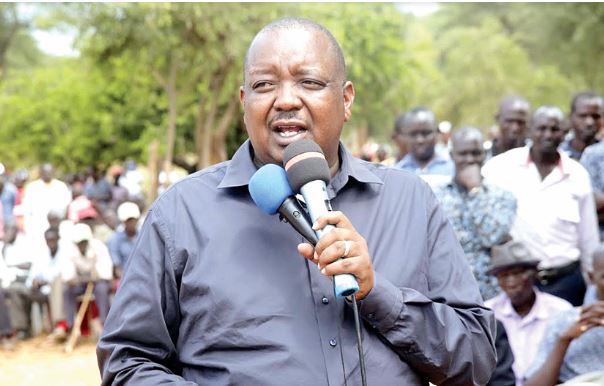
Chairman George Murugara (Tharaka) categorically denied receiving
inducements.
“On behalf of JLAC, the committee did not solicit and did not receive any
inducement from any member or quarter as alleged,” he said, urging anyone with
evidence to present it to investigative authorities.
INSTANT ANALYSIS
President William Ruto and ODM leader have in recent days unleashed scathing
attacks on MPs, accusing them of demanding bribes from witnesses and to pass
legislation. MPs have however denied the allegations, demanding that the Head
of State be summoned to substantiate his allegations.